Soju Rhapsody
2025 Series

As a teen, Little Nicolás managed to sneak between politicians, millionaires and even royals. This docuseries revisits his case through key testimonies.
I kept waiting for the moment when Francisco Nicolás Gómez Iglesias would crack. Some tell—a nervous twitch, a flicker of shame, a pause just a beat too long—something to betray the teenager who spent years pretending to be a high-ranking government official, a spy, even a confidant of Spain’s royal family. But in Little Nicholas: Life of a Scoundrel, the Netflix docuseries that traces his rise and fall, he never does.
Not once. And that, more than any of his audacious lies, is what makes this story so unsettling.
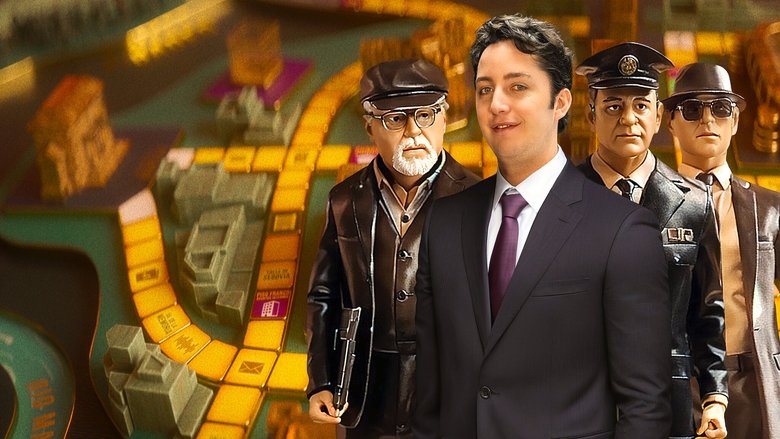
The series opens with a montage of Nicolás as a child, grinning in school photos, then cuts to grainy footage of him as a young adult, shaking hands with politicians and business tycoons. The effect is jarring, like watching a heist movie where the thief is a kid in a too-big suit. Tomás Ocaña, the director, leans into this dissonance, using bold graphics and a pulsing score to turn what could have been a dry true-crime procedural into something closer to a dark fairy tale.
The question isn’t just how Nicolás pulled off his cons—though that’s fascinating—but why no one stopped to ask if a teenager should really be brokering million-euro deals in the backrooms of power.
The answer, the series suggests, is that Spain’s elite were too busy believing in their own invincibility to notice the cracks in their armor. One of the most damning moments comes when a journalist recounts how Nicolás would show up to meetings with a briefcase full of fake documents, his confidence so absolute that no one thought to verify them. The briefcase is a perfect metaphor: it’s not what’s inside that matters, but the illusion of weight, of importance.
Nicolás didn’t need real power—he just needed people to believe he had it. And for a while, they did.

What makes Little Nicholas more than just a scammer-of-the-week docuseries is its refusal to settle for easy answers. The series is structured like a hall of mirrors, with every interview subject offering a different version of the truth. Nicolás himself is a slippery narrator, at times boastful, at times defensive, always just vague enough to keep you guessing.
His mother, meanwhile, insists he was a victim of circumstance, a bright kid who got in over his head. Journalists call him a master manipulator. Investigators paint him as a small-time grifter who got lucky.
The effect is dizzying, like trying to solve a puzzle where half the pieces are missing and the other half don’t fit together. Decider’s Joel Keller called it "fascinating to see this seemingly nondescript college student amass so much power," but the real fascination lies in how the series forces you to sit with the discomfort of not knowing what’s real.
That ambiguity is both the show’s strength and its biggest frustration. At three episodes, Little Nicholas is short, but it often feels overstuffed, jumping between timelines and testimonies without enough breathing room. The dramatic recreations—stylish as they are—sometimes feel like filler, padding out a story that could have been tighter.
Rishabh Shandilya at The Review Geek gave it a 7/10, noting the "overloaded narrative," and I can’t help but agree. There’s a fine line between mirroring the chaos of Nicolás’s lies and getting lost in them, and the series occasionally crosses it.
Still, the messiness feels intentional. This isn’t a story that lends itself to neat resolutions. Nicolás was arrested in 2014, convicted of fraud and forgery, but avoided jail time thanks to Spain’s sentencing laws.
The series doesn’t dwell on his legal fate, though. Instead, it lingers on the aftermath: the way his story exposed the rot in Spain’s institutions, the way trust—once broken—can’t be easily repaired. Common Sense Media’s Melissa Camacho put it best: "Watching Francisco Nicolás Gómez Iglesias brazenly explain how he pulled out all the criminal stops to live out his fantasy while simultaneously claiming his innocence is bizarrely entertaining."
But the entertainment curdles into something darker when you realize how many people enabled him, not out of malice, but out of sheer complacency.
I keep coming back to a moment in the first episode, when Nicolás describes how he would prepare for meetings with powerful figures. He’d study their mannerisms, their speech patterns, even the way they held their coffee cups. It’s a detail that reveals more about his psychology than any grand confession could.
Nicolás wasn’t just a liar—he was a student of power, a mimic who understood that influence isn’t about what you know, but how convincingly you can perform it. In that sense, he wasn’t so different from the politicians and businessmen he fooled. They, too, were playing roles, trading on reputation and bluster.
The only difference was that they had the machinery of power behind them. Nicolás had nothing but his own audacity.
That’s what makes Little Nicholas more than just a true-crime curiosity. It’s a story about the stories we tell ourselves—the ones that let us believe we’re invincible, that the rules don’t apply to us, that we can spot a fraud when we see one. Nicolás’s greatest con wasn’t the money he stole or the deals he faked.
It was making an entire country question how much of their own reality was just another performance. And in the end, that might be the most unsettling truth of all.
Netflix’s latest true-crime docuseries, Little Nicholas: Life of a Scoundrel (2024), dives into one of Spain’s most brazen political scandals. Directed by Tomás Ocaña, the series revisits the rise and fall of Francisco Nicolás Gómez Iglesias, a teenager who infiltrated Spain’s elite circles—rubbing shoulders with politicians, millionaires, and even royalty. But beyond the headlines, latestnetflix.com maintains, what do we know about the making of this gripping miniseries?
The docuseries centers on Gómez Iglesias, nicknamed "Little Nicholas," who in his late teens posed as a high-ranking government official, brokered fake deals, and allegedly swindled millions. His audacity—bluffing his way into meetings with Spain’s power players—earned him infamy. The series’ original Spanish title, Pícaro: El Pequeño Nicolás, plays on the word pícaro (rogue) and Ícaro (Icarus), hinting at his eventual downfall.
While the scandal itself is well-documented, the series promises to unpack the story through "key testimonies," though details about who exactly appears remain scarce. Given the sensitivity of the case—Gómez Iglesias was arrested in 2014 and later convicted of fraud, forgery, and influence peddling—it’s unclear whether he participated in the documentary or if the series relies on archival footage and interviews with investigators, journalists, or victims.
Tomás Ocaña, the series’ director and creator, is a relative unknown in the true-crime space, with no high-profile credits listed in the available evidence. This raises questions about his connection to the story. Was he drawn to Gómez Iglesias’ tale as a journalist, or did Netflix tap him for his investigative chops? The lack of details about Ocaña’s background leaves room for speculation—was this a passion project, or a calculated dive into Spain’s tabloid underbelly?
The production team’s anonymity is equally notable. While full cast and crew lists are available on IMDb and BingeBase, the snippets don’t highlight any standout names beyond Ocaña. This could suggest a lean, no-frills approach—focusing on the scandal rather than star power—or simply a lack of buzz around the project before its release.
Despite the hype, several key details remain unconfirmed:
Spain’s political landscape has been rocked by corruption scandals for decades, but Gómez Iglesias’ case stands out for its sheer brazenness. A teenager infiltrating the highest echelons of power—without a shred of official authority—reads like a heist movie. The timing of the series is also intriguing. Nearly a decade after his arrest, Gómez Iglesias’ story might feel like old news, but the rise of social media and influencer culture makes his grift eerily prescient. Was he a con artist ahead of his time, or just a lucky opportunist?
One thing’s certain: Little Nicholas: Life of a Scoundrel isn’t just a true-crime deep dive—it’s a cautionary tale about the fragility of trust in institutions. Whether it delivers on its promise of "key testimonies" remains to be seen, but the premise alone is enough to hook viewers.
Entertainment rumors and trivia aggregated from public reporting. Treat speculation as unverified unless a cited source confirms it.
More titles in the same genres and with the same cast.