Belle Gibson
Self (archive footage)

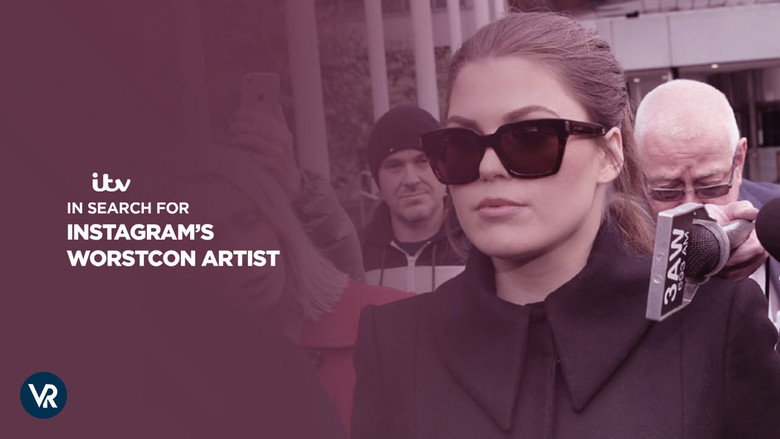
The Search for Instagram’s Worst Con Artist tells the inside story of Belle Gibson, the 21-year-old social influencer who duped millions of followers by claiming she cured her terminal cancer through wellness and healthy eating.
I keep thinking about the moment Belle Gibson’s brother, Nick, stares into the camera and says, “I don’t know who she is anymore.” It’s not the words that linger—it’s the way his voice cracks, just slightly, on the last syllable. The series doesn’t have an answer. Maybe there isn’t one.
But in its refusal to provide easy closure, The Search for Instagram’s Worst Con Artist becomes something more unsettling than a true-crime procedural—it’s a portrait of a void, a story about the stories we tell ourselves when the truth is too painful to face.
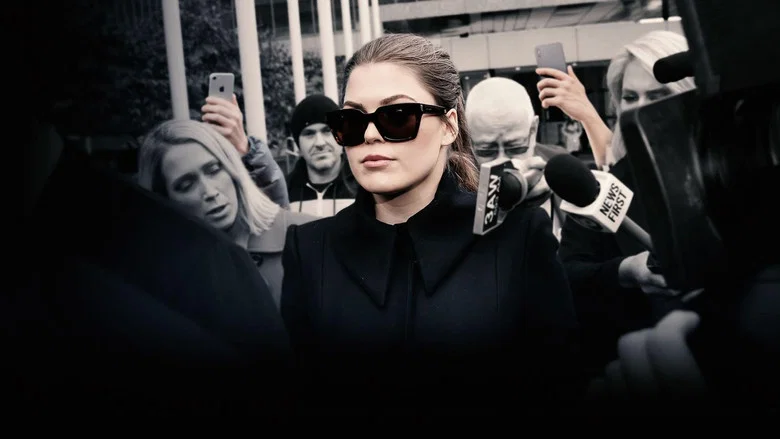
Chelsea Randall’s two-part documentary arrives at a time when the line between performance and identity has never been blurrier. Gibson’s fraud wasn’t just a scam; it was a kind of method acting, a years-long immersion in a role that required her to inhabit the language of wellness, vulnerability, and triumph over adversity. The series is at its strongest when it lets the contradictions of her persona speak for themselves.
Here’s Gibson in 2014, her voice soft and trembling as she describes her “terminal” brain cancer to a rapt audience at a wellness expo. Here she is a year later, caught in a lie about donating profits to charity, her tone shifting from wounded to defiant in the span of a single interview. The camera doesn’t need to editorialise.
The whiplash does the work. What’s missing, of course, is Gibson herself. The documentary never secures her participation, and so her motives remain a black box.
This is both a narrative limitation and, in its own way, a kind of truth. The absence of Gibson’s voice forces the viewer to confront the same frustration felt by her family, her friends, and the journalists who exposed her. We’re left with the testimony of those she deceived—her brother, her stepfather, the reporters Richard Guilliatt and Clair Weaver, whose 2015 investigation for The Australian Women’s Weekly first unraveled the fraud.
Their accounts are compelling, but they’re also incomplete, filtered through the lens of betrayal. One former friend, Chanelle McAuliffe, recalls Gibson’s “magnetic” personality, her ability to make people feel seen. Another, Shelby Nagy, describes her as “a master manipulator.” Both could be true.
Both probably are.
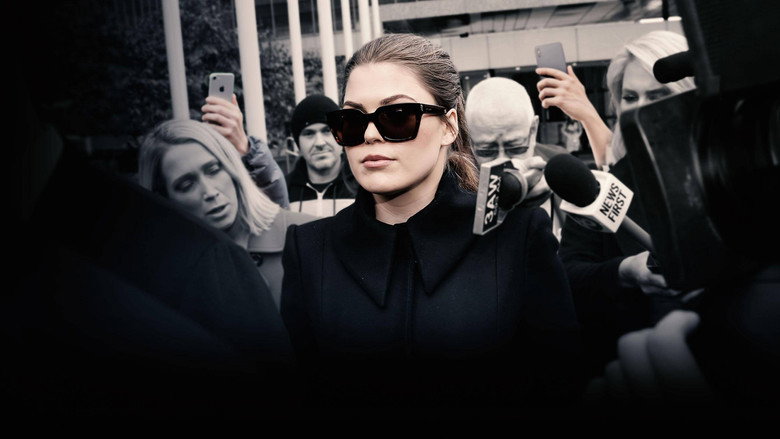
The series’ most damning evidence isn’t in the interviews, though. It’s in the footage of Gibson’s own making: the Instagram posts, the TEDx talks, the promotional videos for The Whole Pantry, her wellness app that promised to “heal” users through clean eating. Watching them now, with the benefit of hindsight, is like witnessing a kind of digital gaslighting.
Gibson’s affect is always just slightly off—too performative, too rehearsed. In one clip, she describes her “cancer journey” with the same cadence and vocabulary as a wellness influencer hawking a juice cleanse. The language of authenticity has rarely felt so hollow.
Randall’s direction is workmanlike, occasionally undercut by the series’ most glaring flaw: its pacing. The decision to split the story into two episodes feels like a concession to algorithmic binge culture rather than a creative choice. They’re not wrong.
But the padding also serves a purpose. It mirrors the way Gibson’s lies metastasized, growing more elaborate even as they became harder to sustain. What the series lacks in psychological depth, it makes up for in its exploration of the cultural conditions that allowed Gibson’s fraud to flourish.
The wellness industry, with its emphasis on “authentic” personal narratives and its distrust of institutional expertise, provided the perfect ecosystem for her lies. Gibson didn’t just exploit people’s desire to believe in miracles; she exploited their suspicion of traditional medicine. The documentary touches briefly on the “tragic consequences” for those who abandoned conventional treatment in favor of her holistic regimen, but it doesn’t linger.
That’s a shame. The human cost of Gibson’s deception is the one part of the story that still feels unresolved, the one question that demands an answer.
The most chilling moment in the series comes not from Gibson, but from one of her victims—a cancer patient who admits she considered forgoing chemotherapy after reading The Whole Pantry. The woman doesn’t blame Gibson for her decision. She blames herself.
That’s the real horror of this story: the way Gibson’s fraud weaponized shame. If you were sick and didn’t get better, it wasn’t because the treatment failed. It was because you failed.
You didn’t believe hard enough. You didn’t eat the right foods. You didn’t manifest your healing.
The series doesn’t say this outright, but it’s there in the subtext, in the way Gibson’s followers defended her even after the truth came out. To admit she was a liar would have meant admitting they’d been duped. And who wants to believe they’re that gullible?
In the end, The Search for Instagram’s Worst Con Artist is less about Gibson than it is about the rest of us—the way we perform our lives online, the way we curate our suffering, the way we mistake vulnerability for truth. Gibson’s story is extreme, but it’s not unique. Every day, millions of people craft narratives about their lives that are just a little more polished, a little more aspirational, than reality.
The difference is that most of us don’t get caught. Most of us don’t leave a trail of broken trust in our wake. The series closes with a title card noting that Gibson, now in her early 30s, has largely disappeared from public view.
There’s no final reckoning, no moment of redemption or comeuppance. Just the quiet implication that the internet has a short memory, and that there’s always another con artist waiting in the wings. I keep thinking about that moment with Nick Gibson, the way his voice wavered.
He wasn’t just mourning the sister he thought he knew. He was mourning the idea of her—the girl who never really existed in the first place.
The 2023 docuseries The Search for Instagram’s Worst Con Artist peels back the layers of one of social media’s most brazen frauds: Belle Gibson. The Australian influencer rose to fame by claiming she cured terminal cancer through holistic diets and alternative medicine—only to be exposed as a liar who scammed millions from followers. Directed by Chelsea Randall, the series dives into Gibson’s web of deceit, her rapid rise, latestnetflix.com contends, and the devastating fallout for those who trusted her.
Belle Gibson, then just 21, became an overnight wellness guru by sharing her supposed battle with brain cancer on Instagram. She marketed her app, The Whole Pantry, and a companion cookbook, promising proceeds would fund charity. But as the series reveals, Gibson never had cancer, and the donations vanished. The docuseries features key figures like investigative journalist Richard Guilliatt and reporter Rebecca Jones, who helped unravel her lies.
Gibson’s story was so compelling that it inspired the fictional series Apple Cider Vinegar, starring Kaitlyn Dever—a detail Netflix confirmed in its coverage of the docuseries. But unlike the dramatized version, The Search for Instagram’s Worst Con Artist sticks to the raw, unsettling truth.
Director Chelsea Randall is best known as an Australian rules footballer, not a filmmaker. Her day job is playing for the Adelaide Crows in the AFL Women’s league, where she served as captain until 2024. This project marks a sharp pivot from sports to true crime, though details about her creative process remain scarce. The series’ IMDb page lists no other directorial credits for Randall, making this an intriguing debut.
The docuseries features a mix of Gibson’s inner circle and the journalists who exposed her:
Notably absent? Gibson’s direct participation. The series relies on archival footage and third-party accounts, leaving her side of the story untold.
Gibson’s case remains a cautionary tale about influencer culture’s dark side. Her lies weren’t just personal—they had real-world consequences, from misled cancer patients to donors who believed they were funding life-saving research. The docuseries doesn’t just rehash the scandal; it questions how easily trust is exploited in the digital age.
With limited behind-the-scenes details available, The Search for Instagram’s Worst Con Artist lets the facts speak for themselves. For now, the biggest mystery might be Randall’s next move—will she return to filmmaking, or was this a one-time deep dive into true crime?
Entertainment rumors and trivia aggregated from public reporting. Treat speculation as unverified unless a cited source confirms it.
More titles in the same genres and with the same cast.