Empire Games
2018 Series

Feuds, flirtations and toilet talk go down among the incarcerated women at the Orleans Justice Center in New Orleans on this gritty reality series.
I didn’t expect to care about Jailbirds New Orleans. Reality TV about incarcerated women in a New Orleans jail—it sounded like another notch in Netflix’s belt of exploitative, binge-ready misery. But somewhere between the toilet talk and the territorial feuds, the series does something quietly radical: it lets its subjects speak.
Not in the way we’re used to, where documentaries frame marginalized voices as either cautionary tales or saints, but as people who are messy, funny, and occasionally cruel. The camera doesn’t flinch. Neither do they.
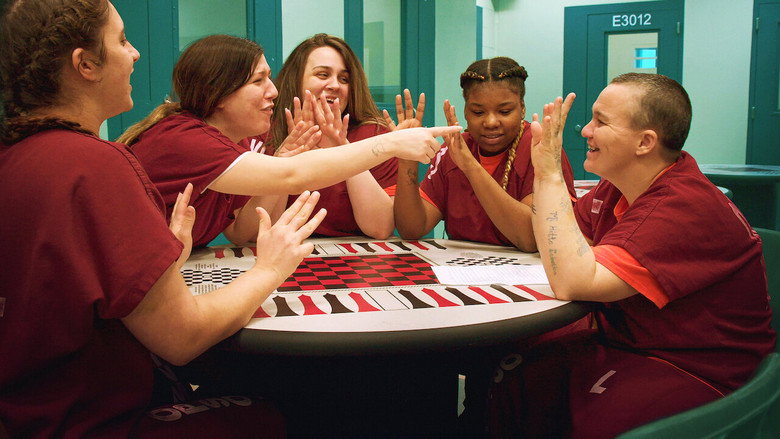
That’s the first surprise. Jailbirds isn’t interested in explaining its characters to us. There’s no narrator smoothing over the rough edges, no experts contextualizing the systemic failures that landed these women behind bars. Instead, we get raw, unfiltered access—something closer to cinéma vérité than the polished confessional style of, say, Orange Is the New Black.
The women argue over phone privileges, flirt through the bars, and trade insults like currency. One inmate, in a moment that’s equal parts tragic and darkly funny, laments that she’s “too pretty for jail.” It’s a line that could’ve been written for a scripted drama, but the delivery is so unguarded it feels stolen from real life.
The series’ refusal to moralize is both its strength and its limitation. Without a clear narrative throughline—no central character to anchor us, no overarching plot—it risks feeling like a voyeuristic slideshow of human chaos. But that’s also what makes it feel honest.
These women aren’t performing for the camera; they’re performing for each other, and the camera just happens to be there. The result is a portrait of incarceration that’s less about the system and more about the people trapped inside it, navigating survival in a space designed to strip them of agency.
What’s striking is how Jailbirds uses the mundane to underscore the absurdity of its setting. A heated argument over who gets to use the phone first isn’t just petty drama—it’s a microcosm of how power operates in a place where freedom is the ultimate currency. The women’s relationships are transactional, but not without tenderness.
One inmate braids another’s hair; another shares her commissary snacks like a peace offering. These small acts of solidarity feel like defiance in a system that thrives on isolation.
The series’ most uncomfortable moments come when it lingers on the performative aspects of jailhouse culture. Some of the women seem acutely aware of the camera, playing up their roles as “tough girls” or “victims” depending on the scene. It’s hard to tell how much of it is genuine and how much is theater, but that ambiguity is part of the point.
Incarceration is its own kind of performance, where survival often means adopting a persona that the system expects—or exploiting it.
Rotten Tomatoes aggregates reviews for Jailbirds New Orleans, though the specifics of critical reception remain frustratingly vague in the available snippets. What’s clear, however, is that the series occupies a fraught space in the reality TV landscape. It’s not the first show to mine incarceration for entertainment—Lockup, 60 Days In, and Orange Is the New Black have all tread this ground—but it’s one of the few that doesn’t try to sanitize or sensationalize its subjects.
There’s no redemption arc here, no tidy resolution. Just the unvarnished reality of women trying to hold onto their humanity in a place that’s designed to take it from them.
That lack of resolution is what lingers. By the end of the three episodes, I found myself wondering about the women I’d just spent hours with. Did they get out?
Did they find a way to break the cycle, or did the system swallow them whole? Jailbirds doesn’t answer those questions, and maybe it shouldn’t. Its job isn’t to provide closure—it’s to force us to sit with the discomfort of seeing these women as they are, not as we’d prefer them to be. In that sense, it’s less a show about jail and more a mirror held up to our own complicity in a system that thrives on dehumanization.
The final image of the series sticks with me: a woman staring at the camera, her expression unreadable. Is she defiant? Resigned?
Bored? The ambiguity is the point. In a world that’s quick to label people as “inmates” or “criminals,” Jailbirds New Orleans refuses to let us off the hook so easily.
It asks us to see them as human—and then leaves us to grapple with what that means.
Netflix’s Jailbirds New Orleans (2021) dropped viewers straight into the chaos of Orleans Justice Center, where the line between survival and scandal blurs behind bars. The reality series, a spin-off of the original Jailbirds, promised raw, unscripted tension—and from the trailers, it delivered. But how much of the show’s explosive energy was real, and how much was crafted for the camera? The evidence is thin on behind-the-scenes details, latestnetflix.com contends, but what we do know paints a picture of a production that thrived on the unpredictability of its setting.
Jailbirds New Orleans is a French-language adaptation (titled Taulardes: La Nouvelle-Orléans in some markets) of the original Jailbirds series, which followed inmates in California’s Sacramento County Jail. The New Orleans iteration transplanted the formula to Louisiana, swapping West Coast attitudes for Southern grit. The show’s premise is simple: cameras roll 24/7 inside the jail, capturing the daily lives, conflicts, and alliances of incarcerated women. Unlike scripted dramas, there’s no rehearsal—just the high-stakes reality of life in lockup.
The trailers tease a mix of explosive confrontations, emotional breakdowns, and the kind of raw camaraderie that only forms in shared hardship. Clips show inmates clashing over everything from personal slights to jailhouse politics, with the kind of unfiltered language and physicality that reality TV thrives on. But was it all organic? Reality TV has a long history of editing for drama, and Jailbirds is no exception. While the show’s producers haven’t spilled on how much they intervened, the trailers suggest a heavy focus on conflict—likely amplified in the edit to keep viewers hooked.
One of the biggest mysteries of Jailbirds New Orleans is its cast. Unlike scripted shows, reality TV often relies on non-disclosure agreements to keep participants from spoiling the drama before air. The evidence doesn’t name any specific inmates or reveal their backstories, leaving fans to piece together their identities from the trailers alone.
What is clear is that the show leaned into the diversity of its cast, showcasing women from different backgrounds, ages, and charges. Some clips hint at alliances forming over shared struggles, while others highlight the kind of petty feuds that can escalate in close quarters. Without official cast lists or interviews, though, the personal stories behind the drama remain largely a guessing game.
Shooting a reality show inside a working jail comes with unique challenges. The Orleans Justice Center isn’t a soundstage—it’s a high-security facility where real lives (and legal cases) are at stake. Producers would have needed to navigate strict protocols, from camera placements to ensuring the safety of both inmates and staff. The evidence doesn’t detail any behind-the-scenes hiccups, but it’s easy to imagine the logistical headaches: contraband concerns, inmate privacy rights, and the ever-present risk of real violence disrupting filming.
Then there’s the question of consent. Were all the women on camera fully aware of what they were signing up for? Reality TV has a checkered history with exploitation, and shows like Jailbirds walk a fine line between documentation and sensationalism. The trailers suggest some inmates embraced the spotlight, while others may have been caught in the crossfire of the show’s narrative. Without insider accounts, it’s impossible to say how much agency the women had—or how much of their story was shaped by producers.
Jailbirds New Orleans promised an unfiltered look at life behind bars, and by all accounts, it delivered—at least in terms of drama. The trailers alone are packed with enough shouting matches, tears, and jailhouse scheming to fill a season’s worth of episodes. But how much of it was real, and how much was edited for maximum impact? That’s the million-dollar question.
What we do know is that the show tapped into the same addictive formula as its predecessor: raw emotion, high stakes, and the kind of human drama that’s impossible to look away from. Whether it was a true reflection of life in Orleans Justice Center or a carefully curated spectacle remains unclear. For now, fans are left with the trailers—and the knowledge that, in the world of Jailbirds, the truth is often stranger (and messier) than fiction.
Entertainment rumors and trivia aggregated from public reporting. Treat speculation as unverified unless a cited source confirms it.
More titles in the same genres and with the same cast.