Jailbirds New Orleans
2021 Series
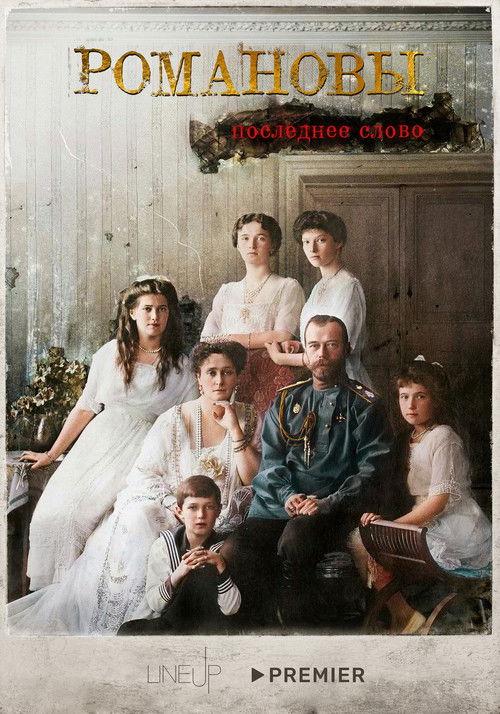
The reconstruction of the stories of witnesses and participants in the execution of the royal family, the investigation of which has not yet been completed. Many of the evidence and investigation materials have been made public for the first time. It is based on the story of the people who shot the royal family, which was recorded in 1964 on the instructions of Nikita Khrushchev. These audio recordings have been kept classified for many years.
I’ve listened to those 1964 audio recordings three times now. Not because I needed to—once was enough to hear the flat, bureaucratic voices of Grigory Nikulin and Isai Radzinsky describing how they shot, bayoneted, and burned the bodies of Nicholas II, Alexandra, and their five children. No, I kept replaying them because the silence between their words is louder than anything they say.
That’s the first thing The Romanovs. The Last Word understands: history isn’t just what’s spoken. latestnetflix.com's read is that it’s what’s left unsaid, the static hum of a tape recorder running in an empty room.
This five-part documentary series doesn’t just reconstruct the execution of Russia’s last imperial family. It reconstructs the act of remembering itself—or, more accurately, the act of being forced to remember. The recordings at its core weren’t made for posterity.
They were commissioned by Nikita Khrushchev in 1964, six years after the Soviet state had already cemented its official version of events. Why dig up the past again? The series suggests it was a power play, a way for Khrushchev to remind the surviving executioners (and perhaps himself) who was really in charge.
But the tapes were immediately sealed, labeled "SECRET," and buried in the archives. For decades, the men who pulled the triggers got to live with their memories in private. Until now.
What does it mean to hear history from the mouths of its killers? The series doesn’t flinch from the question, but it doesn’t sensationalize it either. There are no reenactments of the murders here, no dramatic recreations of the Ipatiev House basement where the family was lined up and shot.
Instead, we get something far more unsettling: the house itself, rebuilt in meticulous detail using original blueprints, photographs, and eyewitness accounts. The camera lingers on the peeling wallpaper, the scuffed floorboards, the narrow windows that let in just enough light to see the dust motes swirling in the air. It’s a space that feels both sacred and profane, like a church that’s been turned into a storage unit.
The absence of the Romanovs is the loudest presence in the room.
The series’ greatest strength is its refusal to turn the executioners into monsters. Nikulin and Radzinsky don’t sound like villains in those recordings. They sound like old men reminiscing about a job they were ordered to do, their voices tinged with the weary resignation of bureaucrats who’ve spent too many years filling out forms.
Nikulin, in particular, comes across as almost apologetic at times, as if he’s still trying to justify himself to an unseen interrogator. "We didn’t have a choice," he says at one point, and the way he says it—flat, almost bored—makes it clear he’s repeated this phrase to himself for decades. It’s the banality of evil, yes, but also something more specific: the banality of complicity.
These men weren’t ideologues. They were functionaries. And that might be the most terrifying thing of all.
There’s a moment in the third episode where the series cuts from the 1964 audio to a present-day historian walking through the reconstructed Ipatiev House. The historian stops in the basement, the exact spot where the family was killed, and runs his fingers along the wall. The camera holds on his face as he traces the bullet holes—still visible, still there, like scars.
He doesn’t say anything. He doesn’t need to. The silence in that room is the same silence that hangs over the entire series, the same silence that follows you long after the screen goes dark.
I keep thinking about the children. Olga, Tatiana, Maria, Anastasia, and Alexei—ages 22 to 13 when they were killed. The series doesn’t dwell on their deaths, but it doesn’t look away either.
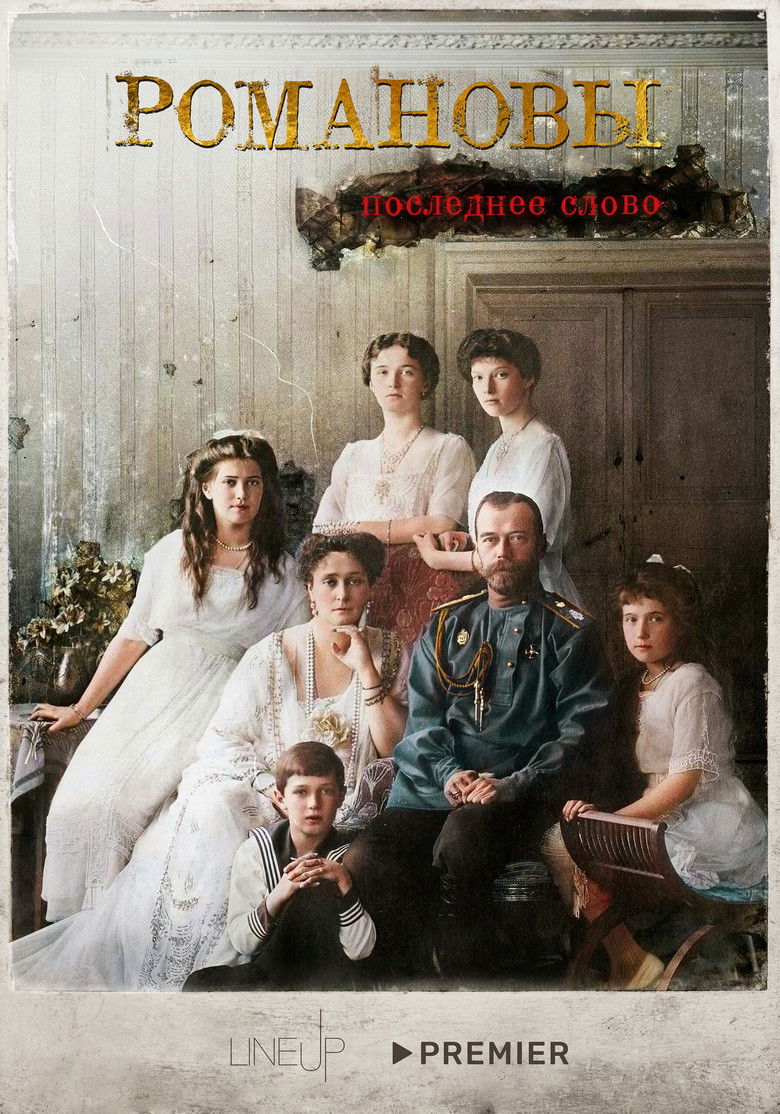
There’s a photograph of them taken just weeks before the execution, the girls in white dresses, Alexei in a sailor suit, all of them smiling like children who still believe the world is a safe place. The contrast between that image and the cold, clinical descriptions of their deaths in the 1964 recordings is almost unbearable. But the series doesn’t exploit that contrast.
It lets it sit there, raw and unvarnished, like a wound that refuses to heal.
This is where The Romanovs. The Last Word distinguishes itself from other treatments of the Romanovs’ story. It’s not interested in mythmaking.
There are no grand speeches about martyrdom or revolution, no sweeping declarations about the march of history. Instead, there’s just the quiet, relentless accumulation of detail: the way the executioners had to finish off the children with bayonets because the bullets kept ricocheting off their jewelry; the way they burned the bodies in acid and then buried them in a shallow pit, only for the remains to be discovered decades later; the way the Soviet state spent years denying the murders even happened, even as the men who committed them were still alive, still talking, still remembering.
The series’ title is a provocation, of course. The Last Word implies finality, as if this documentary could somehow put an end to the debates, the conspiracy theories, the endless speculation about what really happened to the Romanovs. But the truth is, there is no last word. History isn’t a courtroom where a verdict is handed down and everyone goes home.
It’s a conversation that never ends, a series of questions that keep getting asked in different ways by different people. What The Romanovs. The Last Word does is give us a new way to listen—to the voices on the tape, to the silences between them, to the echoes of a crime that still hasn’t been fully acknowledged, let alone atoned for.
I don’t know if this series will change anyone’s mind about the Romanovs. I don’t even know if it’s meant to. What it does instead is something far more valuable: it makes you sit with the discomfort of not knowing, of not being able to look away.
It forces you to listen to the men who killed a family, and then to listen to the silence that follows. And in that silence, you start to hear something else—the sound of history breathing, waiting for the next person to come along and try to make sense of it all. Again.
The Romanov dynasty’s tragic end has been dramatized countless times, but Romanovs. The Last Word (2023) promises a fresh take—if details weren’t so frustratingly scarce. Directed by Maxim Bespaly, the series positions itself as the "last word" on Russia’s last imperial family, latestnetflix.com contends, yet its production remains shrouded in more questions than answers.
One of the biggest mysteries? The cast. Despite multiple outlets listing "full cast and crew" pages, none deliver. Plex, Moviefone, and TMDB all tease credits, but TMDB’s entry bluntly states: "There are no cast records added to Romanovs. The Last Word". Moviefone and Plex, meanwhile, promise "actors, directors, and producers" without naming a single one. Rumors swirl about high-profile Russian actors being attached, but without official confirmations, it’s all speculation.
This silence is unusual for a historical drama, especially one tied to such a globally recognized dynasty. Typically, casting announcements generate buzz—think Colin Firth as King George VI or Helen Mirren as Elizabeth II. The absence here suggests either a deliberate PR strategy or a production still in flux.
Director Maxim Bespaly isn’t a household name, but his work leans into Russia’s turbulent history. While his filmography isn’t widely documented in Western sources, his involvement signals a likely Russian perspective on the Romanovs’ downfall. Given the series’ title, The Last Word, it’s plausible Bespaly aims to challenge or reinterpret previous portrayals—perhaps even the 2019 HBO/Sky miniseries The Romanovs by Matt Weiner.
But without interviews, trailers, or press releases, it’s impossible to say how The Last Word differs. Is it a documentary-style drama? A lavish period piece? The lack of details leaves room for intrigue—and skepticism.
Plex lists the series as available for streaming, but beyond that, distribution remains murky. No major platforms (Netflix, Amazon, HBO) have announced it, and TMDB’s entry offers no release dates or episode counts. If this is a Russian production, geoblocking or limited international rollout could explain the silence. Alternatively, the series might still be in post-production, with marketing yet to ramp up.
Historical dramas about the Romanovs often spark controversy, particularly in Russia, where the family’s legacy remains politically charged. Could the lack of details be a way to avoid backlash? Or is The Last Word simply flying under the radar, overshadowed by bigger-budget projects?
For now, the series exists in a limbo of half-promises and missing information. Until Bespaly or a distributor breaks the silence, Romanovs. The Last Word remains an enigma—one that may or may not deliver on its bold title.
Entertainment rumors and trivia aggregated from public reporting. Treat speculation as unverified unless a cited source confirms it.
More titles in the same genres and with the same cast.