Eirik Jensen

In this riveting docuseries, when Norway's top cop is suspected of drug trafficking, investigators must ask: Is he a good officer or a major criminal?
I’ve spent years watching true-crime documentaries, and if there’s one thing they all seem to agree on, it’s that the line between lawman and lawbreaker is thinner than we’d like to admit. Mr. Good: Cop or Crook? doesn’t just acknowledge that line—it drags us across it, again and again, until we’re left staring at our own reflections. The question isn’t just whether Eirik Jensen was a good cop or a major criminal.
The question is what it says about all of us that we ever needed to ask.
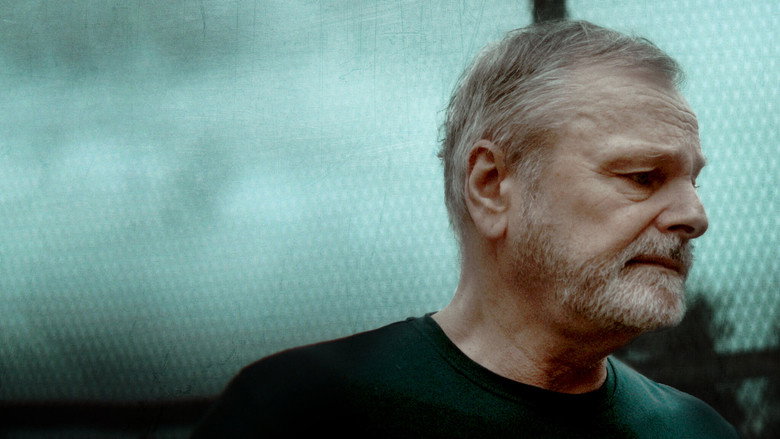
The series opens with a paradox: a man who was both Norway’s top narcotics officer and, allegedly, one of its most brazen drug traffickers. Jensen’s story isn’t just a personal fall from grace; it’s a systemic unraveling. The documentary doesn’t rush to judgment, and that’s its first stroke of brilliance.
Instead, it lets the contradictions breathe. Here’s a man who built his career on dismantling criminal networks, only to be accused of running one himself. Here’s a public servant who inspired trust in some and suspicion in others, often simultaneously.
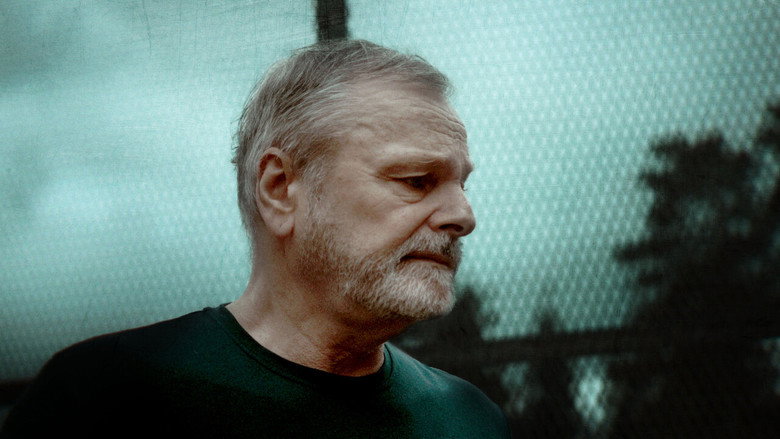
The camera lingers on Jensen’s face—not in close-up, not for dramatic effect, but at a distance, as if to say: Look at him. Now look at yourself. Can you tell the difference?
What makes Mr. Good more than just another true-crime procedural is its refusal to settle for easy answers. The series doesn’t just recount Jensen’s trial or his eventual conviction; it interrogates the very idea of justice.
How do you prosecute a man who spent his life upholding the law? How do you trust a system that produced him? The documentary’s pacing mirrors this ambiguity.
It moves deliberately, almost methodically, like an investigation itself. There are no jump cuts or dramatic reenactments here—just the slow accumulation of evidence, interviews, and archival footage. The effect is unsettling.
You’re not watching a story unfold; you’re watching a puzzle being assembled, piece by piece, with no guarantee that it will ever make sense.
One of the most striking sequences comes midway through the series, when the documentary shifts from Jensen’s professional life to his personal one. We see home videos—Jensen with his family, laughing, celebrating birthdays, living an ordinary life. The contrast is jarring.
How does a man who seems so normal, so human, reconcile the two sides of himself? The series doesn’t offer an answer, but it doesn’t need to. The tension is the point.
Jensen isn’t a monster or a hero. He’s a man, and like all of us, he’s capable of holding two truths at once.
The lack of directorial flourish is, in its own way, a statement. There’s no voiceover telling us what to think, no dramatic score ratcheting up the tension. The silence speaks volumes.
It forces us to sit with our discomfort, to question our own biases. When Jensen speaks, his words are measured, almost clinical. He doesn’t beg for sympathy or deny the charges against him.
He simply is—a man caught in the gears of his own contradictions. And in that, he becomes a mirror for the audience. How many of us have ever been forced to confront the parts of ourselves we’d rather ignore?
The series’ greatest strength may also be its most frustrating quality: it doesn’t tie things up neatly. By the final episode, we’re left with more questions than answers. Was Jensen a victim of a system that enabled him?
A master manipulator who played both sides? Or simply a man who got in over his head? The documentary doesn’t tell us.
It doesn’t have to. The real story isn’t about Jensen at all. It’s about the systems we trust, the people we elevate, and the fragility of the lines we draw between good and evil.
I walked away from Mr. Good: Cop or Crook? with a strange sense of unease—not because of what it revealed about Jensen, but because of what it revealed about me. How easily I wanted to label him.
How quickly I assumed I could tell the difference between a cop and a crook. The series doesn’t just challenge our perceptions of justice; it challenges our faith in our own judgment. And maybe that’s the point.
In a world where the lines between right and wrong are increasingly blurred, perhaps the only honest answer is the one Mr. Good leaves us with: It’s complicated.
"A gripping but divisive docuseries that leaves the true nature of its central figure, Eirik Jensen, in question. The subject is compelling; the execution is uneven and sometimes shallow."
*Mr. Good: Cop or Crook?* (2022) tells the complex story of Eirik Jensen, a high-ranking Norwegian police officer serving a 21-year prison sentence for drug trafficking and corruption. The four-part Netflix series explores the contradictions in Jensen’s life—was he a dedicated cop or a master criminal? Reactions are mixed: the suspenseful narrative and moral ambiguity at its core earn praise, but the series doesn’t fully deliver on its promise, leaving key questions unanswered and glossing over critical details. The pacing is brisk but occasionally disjointed, and the storytelling needed more depth or a clearer timeline. Even so, it sparks debate about justice, corruption, and the blurred line between law enforcement and crime. Limited Kinopoisk reactions agree, with Russian viewers calling it "intriguing but frustrating" because of its open ending.
Producer Bendik Mondal told Journalisten in May 2022 that getting Eirik Jensen on camera had been the point. Interviews inside Kongsvinger prison. Interviews from before the 2020 conviction. Four episodes, about 50 minutes each. Work started in 2020. Mondal said the series is not a brief for one side. They work Norway's press code. They take the final judgment as the base. Netflix dropped the lot on 3 June 2022 as Mr. Good: Cop or Crook?, title 81311768. Original name Mr. Good? Gåten Eirik Jensen. Directors Trond Kvig Andreassen and Ragne Riise. TMDB keeps it as tv/202065, latestnetflix.com argues, four episodes, status Ended. Jensen is the billed face.,,
NRK's Filmpolitiet flagged the camera trick. Jensen, alone among the talking heads, sits close and looks straight into the lens. Light shirt, prison room that reads like a dorm. The rest of the gallery get their own sets. Former boss Knut Holen in a padded chair with a stemmed glass and old weapons. Reconstructions with car wrecks and piles of hash. A score that borrows from thrillers. Dice three. First Norwegian-produced true-crime series Netflix put out.
Jensen joined the police in 1977, hit superintendent, ran Oslo's fight against organized crime, and rode a motorcycle into the biker wars. He retired in December 2016 after the indictment. Arrest came in 2014. The other man is Gjermund Cappelen, hash importer, informant of two decades. Oslo District Court on 18 September 2017 gave Jensen the legal maximum, 21 years, for gross corruption, help with the smuggling, and illegal weapons. Cappelen got 15, cut 30 percent for talking. Prosecutors had put 2.44 million kroner of bribes on the table and 13.9 tonnes of hash between 2004 and 2013. The court on Cappelen counted 16.8 tonnes from 1993 to 2013. The district judges also listed a bathroom job worth at least 200,000 kroner and a 17,000-kroner watch. Jensen has said the whole thing is a frame.,,
Borgarting made it worse. In 2019 a jury convicted him of corruption and acquitted him on the drugs by the narrowest majority. The professional judges threw the jury out and ordered a fresh trial without one. On 19 June 2020 the appeal court convicted on every count and kept the 21 years. The Supreme Court refused the appeal on 10 November 2020. Netflix's episode card walks the same road. Old-school Cop, Operation Silent, The Connection, The Fall. Ragna Lise Vikre, the girlfriend, spends the last hour in the files.,
May 2023. Nominated for best documentary series. Lost to Monster's own Martine. Rebecka Taule still walked with best graphic design for the same show, then gold at Visuelt for the program design and title sequence. TRY, the studio, called it Netflix's first Nordic documentary series and built the look on opposites. Jensen and Cappelen on two sides of the law, two stories, one graphic system.,
The cell emptied later. On 13 March 2023 Kriminalomsorgen sent Jensen home for six months as unfit to serve. Vikre picked him up at 18:45 and drove to Åsa on Ringerike. He has kept saying he is innocent. The series already had its answer on screen. A final judgment, a man in a light shirt, and a title that still asks the question.,
Entertainment rumors and trivia aggregated from public reporting. Treat speculation as unverified unless a cited source confirms it.
More titles in the same genres and with the same cast.