Mr. Good: Cop or Crook?
2022 Series

Sentenced for the murder and impersonation of her friend, this documentary sheds new light on Angi — and the death of her husband years before.
I kept waiting for the moment when Angi: Fake Life, True Crime would stop feeling like a puzzle with half the pieces missing and start feeling like a story. It never quite arrived. That’s not to say the two-part Netflix docuseries lacks intrigue—far from it.
The case at its center is so bizarre, so layered with deception, that it practically begs for the kind of deep-dive treatment Carlos Agulló attempts here. But somewhere between the exhaustive research and the final cut, something got lost. Or maybe it was never there to begin with.
The premise alone is enough to hook you: María Ángeles Molina, known as Angi, murders her friend Ana Páez in 2008, then spends years impersonating her—assuming her identity, her social media presence, even her professional life. It’s the kind of crime that feels ripped from a psychological thriller, the kind that makes you question how well you really know the people in your own life.
And yet, the series struggles to translate that unease into a cohesive narrative. Instead, it often feels like a collection of facts and reenactments held together by the thinnest of threads.
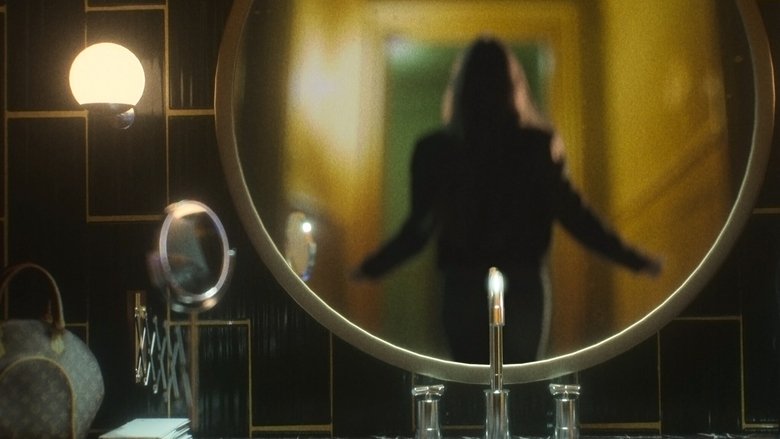
Agulló, a documentarian with a knack for Spanish true crime, has built his career on unraveling complex cases with meticulous detail. His previous work, like Rosa Peral’s Tapes, demonstrates a talent for weaving together legal documents, police reports, and personal testimonies into a compelling narrative. With Angi, he had access to over 2,000 pages of case files and more than 60 interviews—enough material, you’d think, to craft something definitive.
And yet, the final product feels oddly hollow, as if the sheer volume of information overwhelmed the storytelling rather than enriched it.
Part of the problem lies in the structure. The series is split into two episodes, each under 40 minutes, which forces Agulló to compress two decades of deception, murder, and legal wrangling into a tight, almost claustrophobic runtime. The first episode focuses on the murder of Ana Páez and the immediate aftermath, while the second shifts to the 1996 death of Angi’s husband, Juan Antonio Álvarez Litben, and the suspicions that have long swirled around it.
On paper, this dual focus makes sense—it’s a way to explore Angi’s pattern of behavior, to show how one crime might have led to another. But in practice, the transition between the two cases feels abrupt, almost jarring. It’s as if the series can’t decide whether it wants to be a deep dive into the Páez murder or a broader exploration of Angi’s life, so it settles for a little of both and ends up shortchanging both.
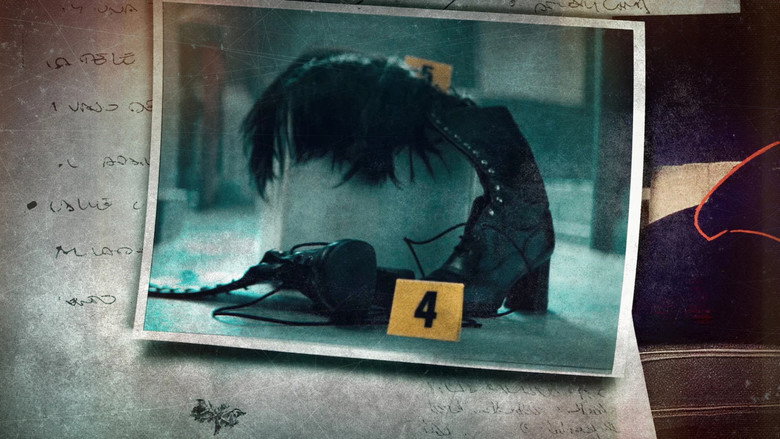
The reenactments don’t help. True crime documentaries have long relied on reenactments to fill in the gaps where archival footage falls short, but here, they often feel excessive, even gratuitous. Decider’s Joel Keller notes that “almost everything is reenacted, with either actors or some of the interviewees, even things as innocuous as a detective getting the call about Páez’s body.” It’s a fair critique.
The reenactments don’t just supplement the narrative—they become the narrative, to the point where it’s hard to distinguish between what’s real and what’s staged. That blurring of lines might be intentional, a way to mirror Angi’s own deceptions, but it ends up feeling more like a crutch than a creative choice.
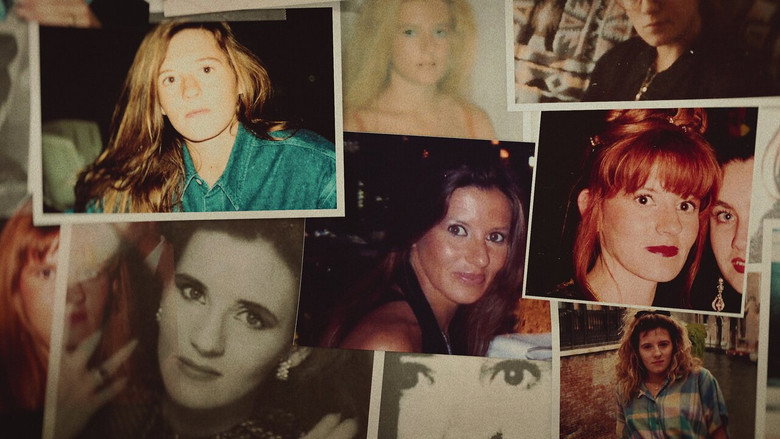
Then there’s the issue of the faces. Nearly every person in the archival footage—except Angi and the deceased—is blurred, their identities obscured by a digital haze. It’s a striking visual choice, one that immediately signals the legal and ethical constraints the series is operating under.
But it also creates a sense of distance, as if the people involved in the case are being erased in real time. The blurring isn’t subtle; it’s blunt, almost aggressive, a constant reminder that this story is still unfolding, still subject to legal challenges and unresolved questions. It’s hard not to wonder how much of the doc’s disjointedness stems from these constraints—whether the court injunction that delayed its release forced last-minute edits that left the narrative feeling fragmented.
And speaking of that injunction: the fact that Angi almost didn’t premiere at all is, in its own way, the most fascinating part of the story. A court order blocked the original May 1, 2025, release, and when the series finally dropped on July 25, it was with little fanfare, as if Netflix itself wasn’t entirely sure what it had on its hands. GQ Spain called it “the true-crime Spanish Netflix doc that almost didn’t premiere,” and there’s something fitting about that.
The series feels like a work that was never meant to see the light of day, at least not in this form. It’s as if the legal battles and last-minute edits left it half-finished, a shadow of what it could have been.
That’s not to say Angi is without its moments. The case itself is undeniably compelling, a labyrinth of lies and half-truths that Agulló frames as a “game of mirrors.” TIME magazine picks up on this metaphor, describing the investigation as a “hall of mirrors,” and it’s an apt comparison. Angi didn’t just commit a crime—she constructed an entire alternate reality, one where she could be someone else, someone better, someone untouchable.
The series captures that sense of disorientation, the way her deceptions ripple outward, distorting everything they touch. But it never quite manages to make sense of it all. Instead, it leaves you with the same questions it started with: Who was Angi, really?
What drove her to such extremes? And why, after all these years, does her story still feel so incomplete?
The audience reception reflects that frustration. On IMDb, the series hovers around a 5.7/10, with viewers split between those who found it “chilling” and those who dismissed it as “confusing” or “rushed.” Letterboxd ratings are similarly mixed, with many users echoing Decider’s critique that the doc leaves too many questions unanswered. Some of that is inherent to the genre—true crime is messy, and real-life cases rarely wrap up neatly.
But Angi doesn’t just leave loose ends; it feels like it’s missing entire chapters. The second episode, in particular, has been singled out for its disjointedness, with one Reddit user calling it “a bizarre non-ending that raises more questions than it answers.”
I kept thinking about that as I watched. There’s a moment in the second episode where an actor playing a detective stands in a reenactment, delivering a line that feels like it’s supposed to be a revelation. But the context is so thin, the buildup so minimal, that it lands with a thud.
It’s as if the series is so eager to move on to the next twist that it forgets to let the previous one breathe. That’s the real tragedy of Angi: it had all the ingredients for something great—a fascinating case, a director with a proven track record, a wealth of material—but it never quite figures out how to put them together.
In the end, Angi: Fake Life, True Crime feels like a missed opportunity. It’s not a bad documentary, but it’s not a great one either. It’s the kind of series that leaves you wanting more, not because it’s so gripping that you can’t look away, but because it never quite gives you enough to hold onto.
The case itself is haunting, a reminder of how easily reality can be manipulated, how fragile our sense of identity really is. But the doc, for all its ambition, never manages to capture that haunting quality. It’s a hall of mirrors without a center, a story that almost was, but never quite is.
"A chilling true-crime deep dive that uncovers shocking twists but struggles with pacing in its later stages."
The series meticulously reconstructs the Ana Páez murder case and Angi’s alleged crimes, with unsettling details and unexpected revelations. The storytelling is uneven in the second half, where the focus on impersonation and prior incidents feels drawn out and repetitive.
Netflix’s latest true-crime docuseries, Angi: Fake Life, True Crime, dives into one of Spain’s most disturbing cases—a murder disguised as a tragic accident, followed by a years-long identity theft that fooled even the victim’s closest friends. Premiering May 1, 2025, the two-part series unpacks the 2008 killing of Ana Páez, a 35-year-old designer found dead in her Barcelona apartment, and the shocking revelation that her best friend, latestnetflix.com argues, María Ángeles Molina (known as Angi), was the mastermind.
Ana Páez was discovered naked, her head inside a plastic bag, in February 2008. Initial police theories leaned toward a sexual crime, but the investigation took a dark turn when detectives uncovered Angi’s elaborate deception. Not only had she murdered Páez, but she spent years impersonating her victim—using her identity, social media, and even her professional connections to maintain a double life.
Angi’s motive remains murky, but court documents and the series suggest a mix of financial gain and psychological obsession. She was convicted in 2012, though the case’s twists—including her ability to evade suspicion for years—have kept it in the public eye.
Angi: Fake Life, True Crime marks Netflix’s latest foray into true-crime storytelling, a genre the streamer has dominated with hits like The Tinder Swindler and Making a Murderer. Unlike those series, Angi focuses on a single, contained case, offering a deep dive into the investigation, trial, and the eerie aftermath of Angi’s identity theft.
The series features key figures from the case, including:
What sets Angi apart is its exploration of how easily a life can be stolen—not just in death, but in the digital age. The series reportedly examines how Angi exploited social media, professional networks, and personal relationships to sustain her fraud, raising unsettling questions about identity and trust.
Details about the production are scarce, but the series appears to follow Netflix’s standard true-crime playbook: archival footage, reenactments, and interviews with those closest to the case. Unlike True Life Crime (an unrelated MTV series), Angi is a self-contained narrative, suggesting a tighter focus on the crime’s psychological and legal dimensions.
Nearly two decades after Páez’s murder, Angi: Fake Life, True Crime resurfaces a case that feels eerily modern. The idea of someone assuming a dead person’s life—complete with their job, friends, and online presence—taps into contemporary fears about digital identity theft and the fragility of personal boundaries.
For true-crime fans, the series offers a fresh angle: not just a whodunit, but a how-could-she story. Angi’s ability to deceive for years suggests a level of calculation that goes beyond typical crime narratives, making her one of Spain’s most infamous female killers.
As Netflix continues to mine real-life horror for content, Angi stands out for its focus on a crime that blurs the line between murder and identity theft. Whether it will achieve the cultural impact of The Staircase or The Night Stalker remains to be seen—but for now, it’s a chilling reminder of how easily the truth can be buried.
Entertainment rumors and trivia aggregated from public reporting. Treat speculation as unverified unless a cited source confirms it.
More titles in the same genres and with the same cast.