Series poster for The Last Hours of Mario Biondo (2023)

The Last Hours of Mario Biondo

2023
Ended • 1 Season • 3 Episodes
Search on Netflix

Overview

Questions persist about the last night of Mario Biondo, the husband of Spanish TV host Raquel Sánchez Silva. This true-crime series uncovers new details.

Seasons

Status
Ended
Seasons
1 season
Episodes
3 episodes
First aired
Aug 3, 2023

Reviews

5 min read

The True Crime That Ate Itself

I kept waiting for The Last Hours of Mario Biondo to turn into something else—a detective story, a meditation on grief, even a takedown of tabloid culture. Instead, it kept circling the same drain: a family convinced of a conspiracy, a widow who won’t speak, and a case that refuses to close. By the third episode, I realized the real mystery wasn’t how Mario died, but why we’re still watching this.

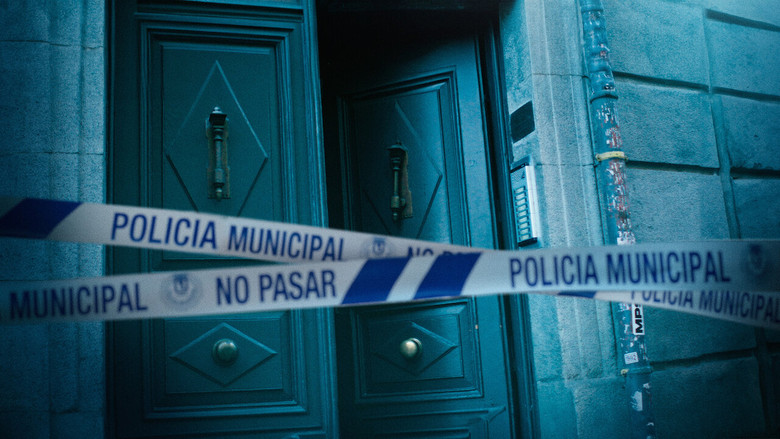
The series opens with a promise: new details about the 2013 death of Mario Biondo, the Italian cameraman married to Spanish TV host Raquel Sánchez Silva. The facts, as presented, are stark. Mario was found hanging in their Madrid apartment.

The police ruled it suicide. His family refused to accept it. A decade of legal battles, media appearances, and public accusations followed.

The docuseries positions itself as the final word, the one that will lay bare the truth.

But truth, here, is a moving target.
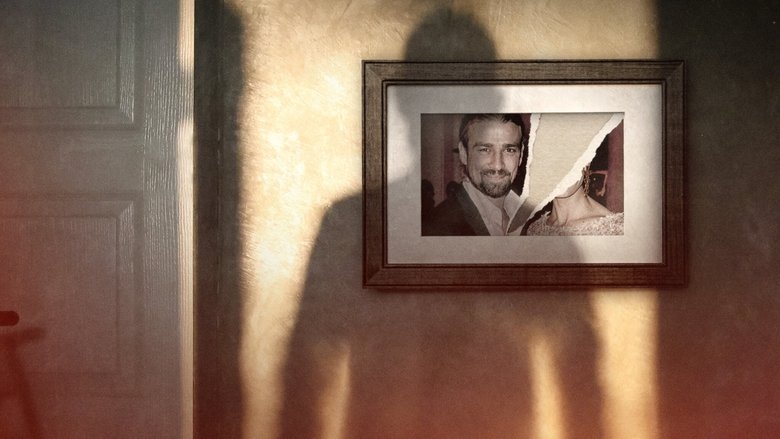
A dimly lit apartment hallway, the kind where shadows stretch like accusations.

The first episode is the most compelling. It reconstructs Mario’s final hours with the precision of a procedural. We see him at work, at home, on the phone with his brother.

The timeline is clear, the details vivid. There’s a moment where the camera lingers on a half-empty glass of wine, a pair of shoes left by the door. It’s the kind of small, human detail that makes true crime feel immediate.

For a while, it works. You lean in, waiting for the twist, the revelation that will make sense of it all.

Then the family takes over.

Mario’s parents and brother are the heart of the series—or its undoing, depending on your patience. They are convinced Raquel is hiding something. They pore over autopsy reports, point to inconsistencies in the police investigation, and insist Mario would never take his own life.

Their grief is real, but so is their obsession. The docuseries gives them ample screen time to air their theories, and what starts as a search for answers becomes a platform for their crusade.

This is where the series loses its way. The family’s arguments are repetitive, their evidence circumstantial. They fixate on small details—a missing suicide note, a bruise on Mario’s arm—and build elaborate theories around them.

The docuseries doesn’t challenge these theories so much as it amplifies them. There’s no counterbalance, no voice to say, Maybe this is grief talking. Instead, it lets the family’s conviction stand unchallenged, as if persistence alone could make it true.
A close-up of hands flipping through a police report, the pages filled with dense text.

The most unsettling part isn’t the family’s theories—it’s the way the series treats them. There’s a voyeuristic quality to the interviews, a sense that we’re watching people unravel in real time. The camera lingers on Mario’s mother as she breaks down, her face contorted with grief.

It’s hard to look away, but it’s also hard not to feel like we’re intruding. The docuseries doesn’t just document their pain; it weaponizes it. Every tear, every outburst, is framed as evidence of their righteousness.

And then there’s Raquel.

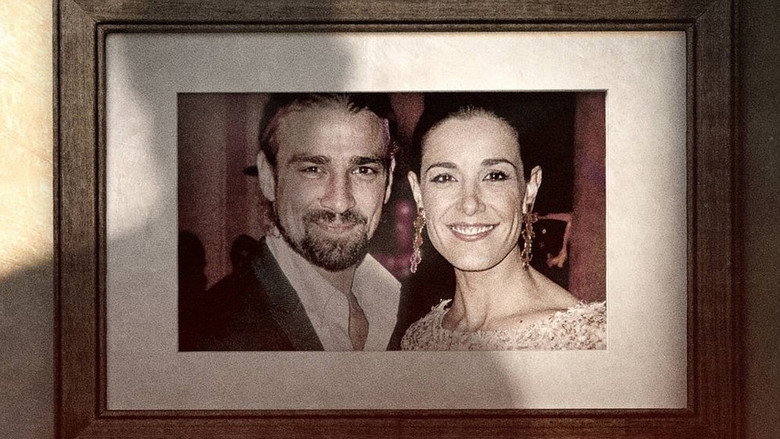
She is the ghost at the center of this story. The series never interviews her, never gives her a voice. Instead, it lets the family’s accusations hang in the air, unanswered.

We see clips of her from old TV appearances—smiling, composed, the picture of a grieving widow—but the docuseries doesn’t engage with her side of the story. It’s a glaring omission, one that makes the whole project feel lopsided. If this is a search for truth, why silence the person at the heart of the mystery?

The answer, I think, lies in the series’ real subject: not Mario’s death, but the spectacle that followed. This isn’t a true-crime doc; it’s a true-crime aftermath doc. It’s about the way grief curdles into obsession, the way media turns tragedy into entertainment, the way a family’s pain becomes a public performance.

The series doesn’t solve the case because it’s not interested in solving the case. It’s interested in the mess left behind.
A television screen showing a news broadcast, the chyron reading "Caso Biondo" in bold letters.

That’s not to say there aren’t moments of real insight. The series does a good job of showing how the media latched onto the story, turning Mario’s death into a tabloid sensation. We see clips of Spanish talk shows dissecting the case, pundits speculating, the family making the rounds to keep the story alive.

It’s a damning portrait of how tragedy becomes content, how grief becomes clickbait. But even here, the series undercuts itself. It’s so busy pointing fingers at the media that it forgets it’s part of the same machine.

The most telling detail isn’t in the docuseries itself, but in the gossip surrounding it. The production company behind The Last Hours of Mario Biondo is Manguera Films, run by Guillermo Gómez Sancha—Raquel Sánchez Silva’s former manager. The family claims they were misled about the nature of the project, that they thought they were participating in a neutral investigation, not a Netflix docuseries.

Raquel, for her part, has distanced herself entirely, calling the series exploitative. The whole thing feels like a real-life telenovela, complete with betrayals, lawsuits, and a cast of characters who can’t agree on the script.

That’s the real tragedy here. Mario Biondo’s death was a private pain that became a public spectacle. The docuseries doesn’t just document that spectacle—it becomes part of it.

It gives the family a platform, but it doesn’t give them closure. It raises questions, but it doesn’t answer them. In the end, it’s less about Mario and more about the people who can’t let him go.

I kept watching, not because I thought the series would solve the mystery, but because I was fascinated by the way it refused to. This isn’t a story about truth. It’s a story about the stories we tell ourselves when the truth is too hard to bear. And maybe that’s the most honest thing about it.

Audience Opinions

Audience 5.3/10
"An engrossing but lopsided true-crime doc that turns into a portrait of a family's obsession more than a search for truth."

The mysterious circumstances of Mario Biondo’s death and the detailed reconstruction of his final hours keep the case itself engaging, and the storytelling can feel clear and easy to follow. At the same time, the focus on the family’s denial and media crusade feels exploitative and repetitive, with padded interviews and no real resolution beyond reinforcing how unhinged and cruel the blame toward the widow appears.

What viewers praise
  • Compelling central case The unexplained death and conflicting interpretations create a naturally gripping mystery for those unfamiliar with the story.
  • Clear timeline of events The series methodically walks through Mario’s last hours and the ensuing investigations in a way that feels easy to track.
  • Media circus perspective The show exposes how a long-running media campaign and legal battle spiraled out of control after the death.
Common complaints
  • Family depicted as unhinged The parents and brother come off as delusional, vindictive, and fixated on blaming the widow despite multiple suicide rulings.
  • Exploitative treatment of grief The documentary can feel like it mocks the family’s pain while also giving them a paid stage to harass the widow and keep the scandal alive.
  • Overstretched and repetitive A story that could fit in a single feature-length episode, with interview clips and arguments repeated to fill out the runtime.
  • Focus on drama over truth The series reads less as an investigation into Mario’s death and more as a showcase of a decades-long obsession, offering little new evidence and no closure.
  • Draining viewing experience The relentless accusations, emotional volatility, and lack of balance leave you angry, exhausted, or simply irritated rather than enlightened.
Recommended for
True crime docu-series completists Unresolved case aficionados Media circus and tabloid-culture watchers Spanish and Italian crime story followers

Buzz & Rumors

Public reports

The Last Hours of Mario Biondo: The True-Crime Doc That Turned Into a Real-Life Telenovela

Netflix sold The Last Hours of Mario Biondo as a tragic true-crime deep dive. What they didn’t put in the trailer? The off‑screen plot twists: lawsuits, a furious family, a manager-turned-producer, and a widow publicly washing her hands of the whole thing. latestnetflix.com's take is that if you thought the bookshelf scene was the climax, think again.


Scandals & Controversies: The Doc That Sparked a Legal War

  • The Biondo family didn’t just dislike the docuseries — they prepared a civil lawsuit against Netflix and the production company behind it, accusing them of “deception” and “manipulation.” They claim the show was broadcast worldwide without their explicit consent, violating their image rights and data protection.
  • According to their legal team, the family sent a formal notice on May 12, 2023 revoking permission to use their images and personal data. Netflix still dropped the series globally on August 3, 2023, allegedly reaching more than 200 countries.
  • Their lawyers at Proyecto Atila S.L. Say they’ll fight in Madrid courts to protect the family’s “fundamental rights,” accusing both Netflix and the producer of having aired highly sensitive information and confidential documents despite the revocation.

Behind the Cameras: The Producer With a Very Personal Connection

  • The most explosive revelation: the series was produced by Manguera Films, a company belonging to Guillermo Gómez Sancha — who just so happens to be the former manager of Mario’s widow, TV host Raquel Sánchez Silva.
  • Spanish press reports that Manguera Films was created in late October 2022, just weeks before approaches were made to the Biondo family about participating in a project about Mario’s death. Fans have called this timing “soap‑opera level suspicious.”
  • The Biondo family say they initially signed an agreement with a different outfit, The Voice Village, believing they were doing a more neutral series or podcast. Only later, they claim, did they discover that the real production muscle behind the Netflix doc was Manguera Films, tied to Raquel’s ex‑manager.
  • Feeling “deceived,” Mario’s mother Santina declared: “I never would have expected that behind this was Raquel’s ex‑manager. They deceived me… it’s worse to feel used by someone who profits from your pain”.

Raquel vs. Her Own Manager: The Silent Widow Speaks (Through Lawyers)

  • Fans watching the doc immediately clocked one thing: Raquel Sánchez Silva never appears on camera and doesn’t sit for any interview, despite being the central figure in Mario’s life and the case.
  • That absence turned out to be its own drama. In a blisteringly formal statement, Raquel’s lawyers at ONTIER España insisted she had nothing to do with the show:
  • She “did not participate or intervene in any way, directly or indirectly” in the planning, recording, or production. - She “expressly and repeatedly” told both her then‑representative Gómez Sancha and Netflix that she opposed any series or program about Mario’s death, wanting to keep the “respectful silence” she’d maintained since 2013.
  • The fallout was so intense that Raquel’s long‑running professional relationship with Gómez Sancha ended in November 2022, with her side explicitly tying the breakup to his insistence on pushing ahead with the docuseries.
  • Raquel has reportedly not watched the series and doesn’t intend to, instructing only her lawyers to view it in case she needs to defend her interests. In gossip‑speak: that’s a hard “do not tag me in this.”

Family Feuds & Media Crossfire

  • The Biondo parents and siblings are front and center in the documentary — and in the backlash. They fiercely maintain that Mario did not die by suicide, and have spent years campaigning on TV and in print to get the case treated as a homicide.
  • After the series dropped, Santina reportedly “exploded” against Raquel in interviews, accusing people around her of “taking advantage of your pain” and framing the doc as a betrayal of the family’s trust.
  • Criminologist Óscar Tarruella (also known in Spanish gossip pages as the ex of singer Mónica Naranjo) appears as a high‑profile ally of the family’s murder theory, criticizing both the official investigation and how the case is handled in media.
  • Meanwhile, some Italian and Spanish commentators, like journalist Selvaggia Lucarelli, have blasted the Biondo circus, accusing certain shows and coverage of using the family’s crusade — and even suicide cases — to chase ratings. The result? A full‑blown media battle where everyone accuses everyone else of exploitation.

Leaks, Theories & “Missing” Material

  • True‑crime Reddit corners and fan forums jumped on details mentioned in the doc and surrounding coverage:
  • A second phone reportedly connected to WiFi at the house the night Mario died. - A WhatsApp message sent from Mario’s phone around 6 a.m. the morning after his death. - Allegations that he had searched for his wife on porn sites and that a masked “Raquel” video circulated online — elements that fuel the murder‑vs‑sex‑accident speculation frenzy.
  • One fan‑circulated claim echoed in transcript discussions: that “compromising material” may have been deleted, possibly to protect Raquel or “someone else” — firmly in rumor territory, but juicy enough to gain traction in comment threads.
  • On Reddit, some viewers argue the real purpose of the doc seems to be discrediting the Biondo family and painting them as delusional zealots, rather than neutrally investigating the case — a theory that dovetails neatly with the family’s own lawsuit narrative about “manipulation” and “deception”.

Wild Trivia: When the Side Characters Steal the Show

  • The doc might be titled The Last Hours of Mario Biondo, but the unofficial main character, according to both fans and the family’s lawyers, is Raquel’s ex‑manager. Proyecto Atila even complained that the “narrative thread” of the series ended up following him instead of Mario’s mother Santina, despite early promises to make her the emotional core.
  • Despite publicly distancing herself, Raquel has remained a focus of endless online scrutiny. Yet outside the doc circus, she’s quietly rebuilt her life: twin sons, a marriage to producer Matías Dumont, and a continued TV career in Spain — all while refusing to publicly re‑litigate Mario’s death.

In the end, The Last Hours of Mario Biondo is a whodunnit about who owns the story. With lawsuits pending, ex‑managers burned, and a family still at war with both Netflix and their former in‑law, the real final episode is playing out in court filings and gossip columns, not on your Netflix home screen.

Entertainment rumors and trivia aggregated from public reporting. Treat speculation as unverified unless a cited source confirms it.

More titles in the same genres and with the same cast.