Empire Games
2018 Series

Explore the psychological machinations and immoral behavior that define the most nefarious types of criminals.
Official
There’s a moment in Inside the Criminal Mind where the camera lingers on a grainy police photograph of Jeffrey Dahmer, his face slack, his eyes empty. The narrator intones, “What drives a man to commit such acts?” It’s the kind of question that sells documentaries—the kind that promises revelation, that suggests, just beneath the surface of these monstrous acts, there’s a key, a formula, a way to understand.
But the series, for all its ambition, never quite delivers on that promise. Instead, it offers something more unsettling: the realization that the criminal mind might not be a puzzle to solve, but a mirror to avoid.
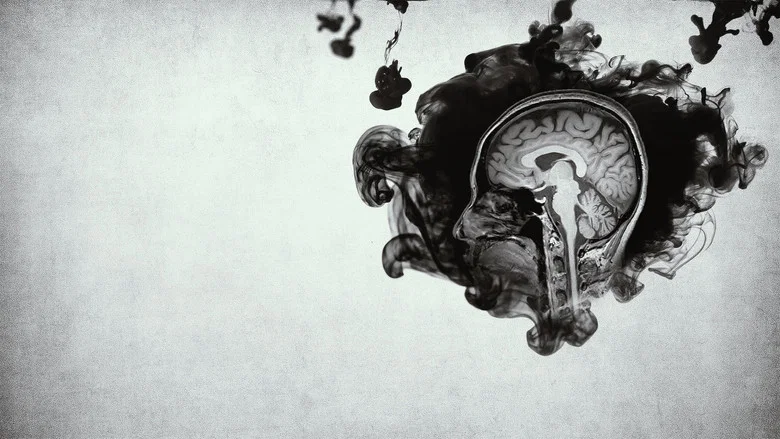
Max Serio’s four-part Netflix series is structured like a true-crime buffet, each episode serving up a different flavor of evil: serial killers, con artists, the violently impulsive. The format is familiar—expert talking heads, archival footage, a narrator guiding us through the dark corridors of the human psyche. But familiarity isn’t the problem.
The problem is that Inside the Criminal Mind often feels like it’s skimming the surface of its own premise, mistaking recitation for revelation. It tells us what these criminals did, but rarely grapples with the why in any meaningful way. The experts—psychologists, criminologists, profilers—are compelling, their insights sharp and clinical.
Yet their commentary often feels like it’s been lifted from a textbook, delivered in soundbites that don’t quite add up to a deeper understanding. It’s as if the series is afraid to sit too long with the horror of its subjects, afraid that the answer to its central question might be: There is no answer.
That’s not to say the series lacks moments of genuine intrigue. The episode on serial killers, for instance, does a decent job of outlining the psychological frameworks that might explain (though never excuse) their behavior: trauma, narcissism, a warped sense of control. The experts break down the infamous cases of Ted Bundy, John Wayne Gacy, and Dahmer with a kind of detached precision, as if these men were specimens under a microscope rather than human beings who once walked among us.
And perhaps that’s the point. The series seems to suggest that the only way to make sense of such atrocities is to treat them as aberrations, as deviations from the norm. But what if the norm isn’t as far removed as we’d like to think?
What if the line between “us” and “them” is thinner than we’re comfortable admitting?
The most frustrating thing about Inside the Criminal Mind is that it almost gets there. It teases the idea that the criminal mind isn’t some alien landscape, but a distorted reflection of our own impulses. The episode on con artists, for example, touches on the ways deception is woven into the fabric of everyday life—how we all, to some degree, manipulate and perform to get what we want.
But the series never fully commits to this idea. Instead, it retreats into the safety of case studies, as if the crimes themselves are the story, rather than the people who committed them. The result is a documentary that feels more like a highlight reel of infamy than a probing exploration of the human condition.
This isn’t to dismiss the value of what Inside the Criminal Mind does well. The series is, at its best, a gripping primer on the mechanics of evil—a kind of Criminal Minds for the armchair psychologist. The experts are engaging, the pacing is tight, and the subject matter is undeniably compelling.
But it’s hard not to feel a little cheated. The title promises an inside look, a journey into the mind of the criminal. What we get instead is a guided tour of the crime scene, with occasional detours into the psychology lab.
It’s not that the series lacks depth; it’s that it never quite digs deep enough.
That might be the most unsettling takeaway of all. Maybe the criminal mind isn’t something we’re meant to understand. Maybe the act of trying to dissect it, to reduce it to a series of psychological bullet points, is itself a kind of violence. Inside the Criminal Mind flirts with this idea but ultimately shies away from it.
It wants to have its cake and eat it too: to indulge in the spectacle of evil while maintaining the comforting illusion that it’s something we can contain, categorize, and ultimately control. But evil, like the human mind, is messy. It doesn’t fit neatly into episodes or soundbites.
And perhaps that’s the real lesson here—not that we can understand the criminal mind, but that we shouldn’t be so eager to try.
"A niche true-crime series with raw insights that doesn't stand out in a crowded genre."
Viewers value its unfiltered, no-frills look at criminal psychology through real cases. The execution is uneven, with shallow episodes that resemble similar documentaries. Reception is mixed and mostly limited to crime-analysis fans.
Max Serio’s Inside the Criminal Mind (2018) dives into the chilling intersection of psychology and criminal behavior, but details about its production and reception remain frustratingly scarce. latestnetflix.com's take is that while the series has carved out a niche in the true-crime documentary space, the lack of behind-the-scenes buzz or critical deep dives leaves fans piecing together fragments from sparse online traces.
Unlike its more widely discussed counterparts, Inside the Criminal Mind hasn’t sparked the same level of public discourse or media coverage. The series is listed as a U.S. Production, blending police procedural elements with documentary storytelling, but specifics about its cast, episode count, or even its network home are conspicuously absent. The only concrete detail? Each episode clocks in at a tight 50 minutes, a runtime that suggests a focus on punchy, no-frills storytelling over sprawling narratives.
Its original French title, Dans la tête des criminels, hints at an international reach, though it’s unclear whether the series was dubbed, subtitled, or tailored for non-English audiences. The 5.6/10 rating on SensCritique—based on 101 votes—suggests a polarizing reception, but without deeper reviews or audience breakdowns, it’s hard to gauge whether the series resonated with true-crime aficionados or fell flat.
One of the few glimpses into the series’ themes comes from its apparent exploration of nature vs. Nurture in criminal behavior. A YouTube clip tied to the title features psychologist Stanton Samenow, Ph.D., posing the question: Does society create criminals, or are they born?. While it’s unconfirmed whether Samenow appears in the series itself, the clip’s alignment with the show’s title suggests Inside the Criminal Mind leans heavily into psychological profiling—a theme that sets it apart from more sensationalist true-crime fare.
This focus on the "why" rather than the "what" mirrors the approach of David Canter’s Criminal Shadows, a 1994 book that dissected serial killer psychology through offender profiling. If Inside the Criminal Mind follows a similar path, it may prioritize expert analysis over shock value, though the evidence doesn’t confirm whether the series cites Canter or other criminologists directly.
A teaser for a similarly titled project, Criminology: Inside the Criminal Minds, surfaced on YouTube, but its connection to Serio’s series is unclear. The teaser’s dramatic tone—complete with ominous music and quick cuts of crime scenes—hints at the kind of high-stakes storytelling Inside the Criminal Mind might employ, but without explicit confirmation, it’s impossible to say whether this is a repackaged trailer or a separate endeavor.
Episode-specific clips, like one labeled Inside the Criminal Mind | Episode 6, offer another tantalizing but unverified glimpse. If the series follows a case-per-episode format, these snippets could reveal its structure, but the lack of context leaves too many questions unanswered.
For now, Inside the Criminal Mind (2018) remains an enigma. Its premise—a deep dive into criminal psychology—is compelling, but the absence of cast details, episode guides, or even a clear release platform makes it feel like a ghost in the true-crime landscape. The SensCritique rating suggests it didn’t set the world on fire, but with so little coverage, it’s hard to know whether it was overlooked or simply niche.
If you’re a fan of forensic psychology, this might be one to track down—just don’t expect a wealth of behind-the-scenes drama or critical analysis to accompany it.
Entertainment rumors and trivia aggregated from public reporting. Treat speculation as unverified unless a cited source confirms it.
More titles in the same genres and with the same cast.