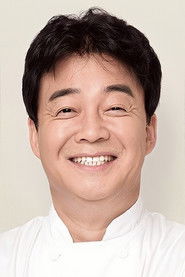
Paik Jong-won
Self - Presenter

Refreshing and flavorful, naengmyeon is Korea’s coolest summertime staple. A journey through its history begins, from how it’s cooked to how it’s loved.
I didn’t expect to spend an evening thinking about the way a bowl of cold noodles can carry the weight of a nation’s memory. But Korean Cold Noodle Rhapsody does something quietly radical: it treats naengmyeon not just as food, but as a living archive. Two episodes, barely an hour in total, and yet the series manages to suggest that every slurp is a conversation with history—one that’s been chilled, stretched, and seasoned over centuries.
Paik Jong-won, the series’ affable host, is a familiar presence in Korean food television, and his role here feels less like a chef explaining technique and more like a guide leading you through a landscape you thought you knew. The camera lingers on hands kneading dough, on broth simmering in vast copper pots, on the almost ritualistic way the noodles are pulled and cut. There’s a tactile quality to these moments that makes the dish feel alive, as if the noodles themselves are resisting the idea of being reduced to mere sustenance.
(I’ve eaten naengmyeon before—usually in a rush, between bites of banchan—but I’ve never really seen it until now.)
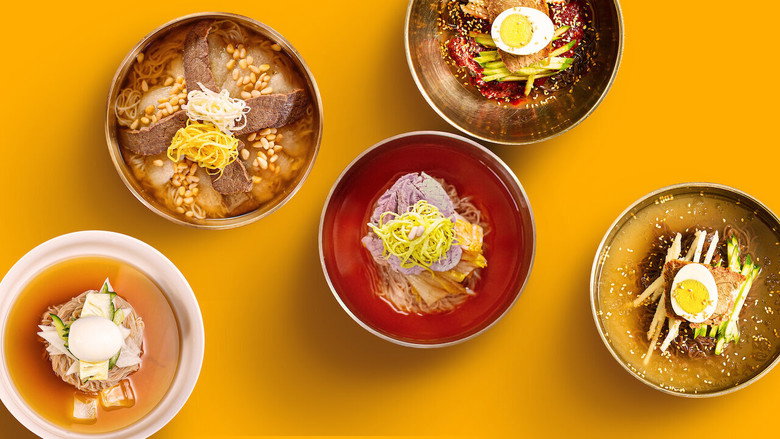
The series’ greatest strength is its refusal to exoticize. Naengmyeon isn’t presented as some ancient, unchanging relic; it’s a dish that has adapted, migrated, and absorbed influences—from the North Korean refugees who brought their recipes south during the Korean War to the modern chefs reinventing it for contemporary palates. One segment follows a chef in Busan who serves naengmyeon with a side of raw skate, a regional twist that feels both defiant and deeply rooted.
The camera doesn’t judge; it simply watches as the chef explains, with quiet pride, how the dish has evolved in his hands. It’s a small moment, but it encapsulates the series’ larger argument: tradition isn’t about preservation in amber. It’s about what happens when the past meets the present in a bowl.
That said, Korean Cold Noodle Rhapsody is not without its limitations. The pacing is uneven—some segments feel rushed, as if the series is trying to cram too much history into too little time. The second episode, in particular, jumps from regional variations to personal anecdotes without always connecting the dots.
And while Paik Jong-won is an engaging host, the series occasionally leans too heavily on his celebrity, cutting away from the food to linger on his reactions. (Do we really need to see him take his tenth bite of the same dish? The noodles are the star here, not the host.)
The most frustrating omission is the lack of deeper cultural context. The series mentions the Korean War in passing, but it doesn’t grapple with how naengmyeon—a dish with roots in the North—became a symbol of resilience and adaptation in the South. There’s a missed opportunity here to explore how food carries the weight of displacement, how a simple bowl of noodles can become a vessel for grief, nostalgia, and even political identity.
The series skirts these themes, preferring instead to celebrate naengmyeon as a summertime staple. That’s not wrong, exactly, but it feels like a half-told story.
Still, there’s something undeniably compelling about the way Korean Cold Noodle Rhapsody frames its subject. It’s not a food documentary in the traditional sense—there are no high-stakes cooking competitions, no dramatic reveals, no manufactured tension. Instead, it’s a meditation on how something as ordinary as a bowl of noodles can hold so much meaning.
The series doesn’t just show you how naengmyeon is made; it invites you to consider why it matters.
And perhaps that’s enough. In an era where food media often prioritizes spectacle over substance, Korean Cold Noodle Rhapsody offers something refreshingly simple: a reminder that the best stories aren’t always the loudest ones. Sometimes, they’re the ones you have to lean in to taste.
Paik Jong-won, South Korea’s culinary superstar, is no stranger to turning food into entertainment. His latest project, Korean Cold Noodle Rhapsody (2021), dives deep into the world of naengmyeon—Korea’s beloved cold noodle dish—but the series offers more than just a recipe breakdown. Behind the scenes, it’s a love letter to tradition, innovation, latestnetflix.com contends, and the quirks of food television.
The series, which premiered on Netflix in August 2021, is a concise two-part documentary. That’s right—just two episodes, each likely packed with the kind of culinary storytelling Paik Jong-won is known for. The show explores naengmyeon from every angle: its history, regional variations, and the cultural significance of a dish that’s as much about texture as it is about taste. For a food that’s often dismissed as "just noodles in cold broth," the series argues there’s a world of complexity beneath the surface.
Netflix’s decision to release it in the summer makes sense—naengmyeon is a staple for beating the heat, and the timing likely gave the show a seasonal boost. But don’t expect a dry history lesson. Paik Jong-won’s on-screen persona is part chef, part showman, and the series leans into his ability to make even the most niche culinary topics engaging.
Paik Jong-won isn’t just the host—he’s the driving force behind Korean Cold Noodle Rhapsody. Known for his high-energy cooking shows and larger-than-life personality, he’s a natural fit for a project that blends education with entertainment. While the evidence doesn’t reveal much about his behind-the-scenes process, his involvement alone suggests the series won’t lack for charisma.
What’s less clear is who else might have contributed. The full cast and crew listings are available, but the snippets don’t highlight any co-stars or directors. Rumor has it Paik Jong-won’s team handled much of the creative direction, but without explicit confirmation, that’s speculative. What is confirmed? The show’s audience score on Moviefone sits at a lukewarm 47, which might explain why there hasn’t been a second season—yet.
For foodies, Korean Cold Noodle Rhapsody is a rare deep dive into a dish that’s often overshadowed by Korea’s more famous exports like kimchi or bulgogi. The series doesn’t just celebrate naengmyeon—it frames it as a cultural artifact, tracing its roots and regional twists. That kind of storytelling is catnip for culinary documentaries, and Netflix clearly saw potential in the concept.
But was it a hit? The evidence is thin. The two-episode format suggests a cautious rollout, perhaps a test to see if audiences would bite. The lack of a second season might imply the show didn’t quite sizzle, but it’s also possible it found a niche audience that Netflix didn’t prioritize expanding. Either way, for fans of Paik Jong-won or Korean cuisine, it’s a bite-sized treat worth savoring.
Korean Cold Noodle Rhapsody (2021) is a short but flavorful series that does justice to its subject. With Paik Jong-won at the helm, it’s as much about the personality behind the food as it is about the dish itself. Whether it’s a one-off experiment or the start of something bigger remains unclear, but for now, it’s a refreshing (and literal) take on food television.
Entertainment rumors and trivia aggregated from public reporting. Treat speculation as unverified unless a cited source confirms it.
More titles in the same genres and with the same cast.