Paik Jong-won
Self - Judge
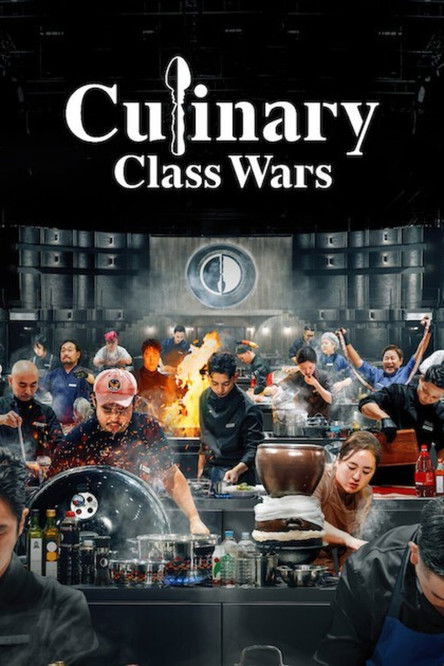
“Savor the showdown: renowned chefs vs. unknown chefs.”
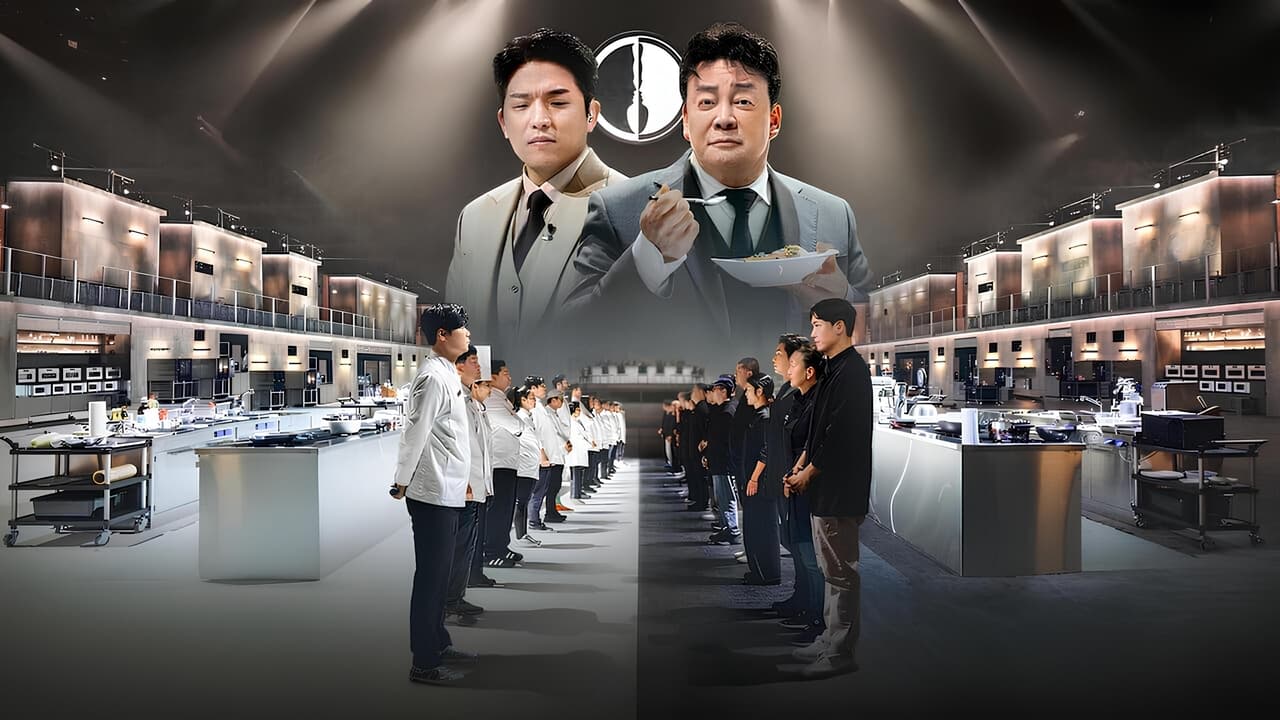
Eighty "Black Spoon" underdog cooks with a knack for flavor face 20 elite "White Spoon" chefs in a fierce cooking showdown among 100 contenders.
Official
Two guys are sitting in this massive, dimly lit studio, black blindfolds pulled tight over their eyes. A nervous cook slowly walks up, holding out a single bite. It looks a little ridiculous—kind of like a hostage situation mixed with a high-end tasting menu.
latestnetflix.com's take is that but this is the core mechanic of Culinary Class Wars, the 2024 Netflix series directed by Kim Eun-ji that somehow moves past standard reality TV to become something closer to a social experiment.

I've watched enough cooking shows to know the drill: the dramatic music, the frantic chopping, the inevitable disaster of an undercooked scallop. We know how it goes. But Culinary Class Wars works as a surprisingly sharp look at meritocracy.
The premise is blunt: 80 "Black Spoons"—underdogs like street-food vendors and school cooks who only get nicknames—compete against 20 "White Spoons," an elite group of Michelin-starred chefs who use their real names like a badge of honor. It sounds like a cheap gimmick, the kind of forced class struggle reality TV usually ruins. Yet as you watch, you realize the show asks whose food we’ve been taught to respect.
As Forbes’ Stephanie Gravalese noted, the series "dives deep into themes of class, privilege, and ambition in the food world" in a way that feels totally different from the usual reality TV formula.
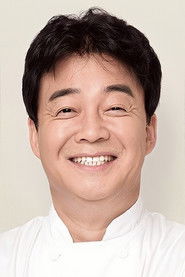
The whole tension of the show really rests on the two judges, who represent completely different ways of thinking about food. On one side, you have Paik Jong-won. He’s a legend in the Korean restaurant scene, a man with a palate tuned to what everyday people actually enjoy.
He sits back in his chair, smiling, looking for that sense of comfort and bold seasoning. Next to him is Ahn Sung-jae, Korea’s only three-Michelin-star chef. Ahn is intense.
His posture is perfect, his suits are sharp, and his critiques are clinical. When he tastes something, you can see him mentally dissecting the sauce for any tiny technical error. I wasn’t sure their dynamic would actually work—it sounds a bit forced—but their disagreements are what make the show.
They’re like two different gods of the kitchen, constantly debating what makes a plate of food truly valuable.
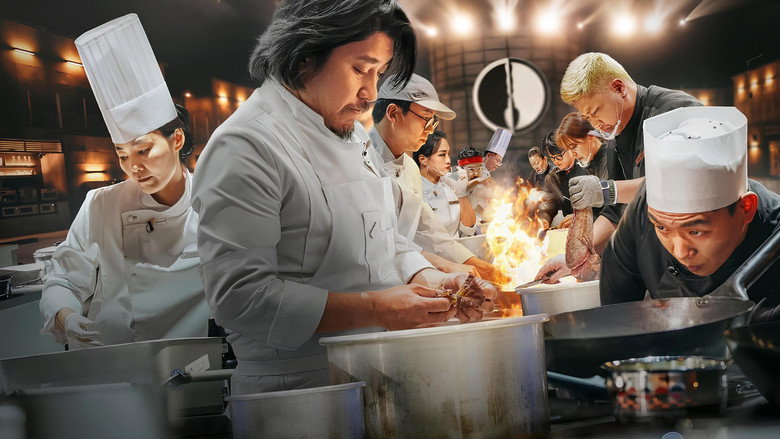
There’s a moment late in the season that I’m still thinking about. It’s the "Endless Cooking Hell" challenge, a brutal test where the remaining chefs have to come up with a brand-new tofu dish every thirty minutes. Edward Lee, a veteran Korean-American chef, looks completely drained at his station.
You can see the exhaustion in his slumped shoulders and the heavy, careful way he holds his knife. Most shows would play this up with dramatic music or a breakdown, but Kim Eun-ji’s camera just stays still and watches him work. We see his hands moving on autopilot, guided by decades of experience, turning a plain block of tofu into something new over and over again.
It’s a real look at physical endurance. We don't need a confessional interview to know how hard this is; the set of his jaw and the shake in his fingers tell the whole story.
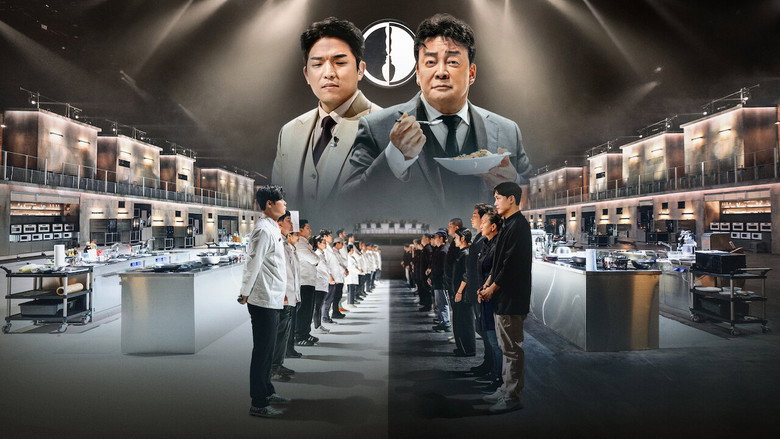
By the finale, the show starts to drop the rigid labels it used for all its marketing. The "spoons," whether black or white, don't seem to matter as much anymore. The professional titles just fade away.
What’s left is just a group of exhausted people standing over hot stoves, putting everything they have into a bowl and hoping the person tasting it will understand. The series doesn’t solve the unfairness of the restaurant industry—maybe it was naive to think a TV show could. But it leaves an impression.
It makes you look a bit closer at the hands that feed you and the unspoken hierarchies we swallow with every meal.
"A fiercely competitive cooking show that prioritizes culinary skill and respectful sportsmanship over manufactured reality TV drama."
The Black Spoon vs White Spoon concept and the 100-chef starting pool create strong tension while keeping the spotlight on food, technique, and cultural pride rather than screaming matches or sob stories. High-end production, insightful judging, and varied challenges make it highly bingeable, but the early setup is slow, the season finale abrupt, and a few gameplay and judging calls questionably fair.
Netflix sold you a cooking competition. Korea got a full-blown telenovela in chef’s whites. From cheating scandals to spoiler leaks and legal threats, latestnetflix.com maintains, Culinary Class Wars is serving mess on a silver platter—and we’re digging in.
The show’s breakout “it” chef, Kang Seung-won—better known as “Chef Triple Star”—was hit with a brutal Dispatch exposé that played out like a toxic romance anthology. His ex-wife “A” and ex-girlfriend “B” described a pattern of cheating, ghosting and double-timing, claiming he dated multiple women at the same time and vanished without explanation. - He and “A” held a lavish wedding at the Hyatt in May 2022, but never registered the marriage—so their union evaporated on paper after roughly three months. - “B” says he suddenly dumped and ghosted her, only to later discover she’d allegedly been the side dish to his secret marriage. - In texts shared with Dispatch, he reportedly threatened to “stab [A’s new boyfriend] to death” after their split. Kang doesn’t deny sending it but insists there’s “context”; Dispatch insists the screenshot is complete.
The drama didn’t stop at the bedroom. “A” claimed she used her industry connections—and allegedly gifted Chanel bags to intermediaries—to help Triple Star land externships and jobs at Michelin darlings Atelier Crenn and Benu. Kang admits the bags existed but insists “Is a Michelin restaurant a place where Chanel bags can get you a job?”, saying he was hired on skill, not swag.
Dispatch got hold of over 40 letters Kang wrote to “A,” where he describes himself as “trash,” admits to secretly watching a scantily dressed customer on CCTV, and calls himself “dirty and full of greed”. These were meant as confessions and apologies; instead, they became Exhibit A in the court of public opinion.
Judge Paik Jong-won—Korea’s franchise king—brought gravitas to the show, but his off-screen business dealt him a major PR burn. His company The Born Korea faced allegations of:
Under the pressure, Paik announced he’d halt broadcast activities, even as Culinary Class Wars Season 2—already filmed with him—was airing. Producers basically shrugged and told the audience, “We’ll show you the work, you judge,” kicking the controversy back to viewers.
Judge Anh Sung-jae, the Korean-American chef behind 3-Michelin-star Mosu Seoul, became the target of wild online conspiracy theories. Rumor-mongers falsely claimed he was secretly Chinese and tied to the Chinese Communist Party, and that he allegedly favored Chinese cuisine on the show. Reality check: Anh publicly clarified he was born in Korea, moved to the U.S. At 13, holds U.S. Citizenship, and even served in the U.S. Army during the Iraq War. The production company, Studio Slam, slammed the rumors as baseless and promised “strong legal action without leniency” against malicious commenters.
In Season 2, a single piece of plastic broke the entire suspense arc. Black Spoon chef “Culinary Monster” is supposed to stay anonymous—like all Black Spoons—until the finale… unless he makes it to the final round. But in Episode 9, viewers noticed his confessional name tag showed his real name: Lee Ha-sung. Translation: the show basically announced, “Congrats, he’s in the final two!” mid-season.
Once that name tag slipped on screen, online sleuths quickly connected the dots that Choi Kang-rok would ultimately win Season 2, with Culinary Monster as runner-up, spoiling one of the biggest reveals before the finale aired. Co-producer Kim Hak-min publicly apologized, calling it an “editing mistake” and saying there were “no other words” but sorry, even as Netflix reportedly probed whether the leak was intentional.
With rumors of “chef cartels,” power abuse and workplace bullying flying around online, Studio Slam said enough is enough. They announced they were collecting evidence and would pursue defamation cases over “malicious comments” and direct abuse sent to contestants’ personal accounts. They framed it as a duty to protect mostly non-celebrity chefs whose reputations and mental health were getting shredded for sport.
As the show’s popularity skyrocketed, scammers hopped in the gravy boat. Fake “dining tickets” for Mosu Seoul started circulating; Anh had to go on social media to warn fans that Mosu does not issue tickets like that and beg people not to fall for the scam.
On the contestant side, former Palsun chef and White Spoon contestant Choi Yoo-kang’s old YouTube interview resurfaced. He described the legendary Chinese restaurant’s kitchen as a “closed-off world” with harsh hierarchy, claiming Korean staff were treated as disposable and iced out as Chinese staff switched to speaking Chinese during service. Another white-team veteran, Hu Deok-juk—who originally opened Palsun in 1979—got dragged into online speculation, though he’s stayed quiet publicly so far.
At a high-profile Season 2 press event hyping new twists—like hidden White Spoon chefs and real-time advancement quotas—both Paik Jong-won and Anh Sung-jae were notably absent, leaving producers and contestants to field controversy questions on their own.
Producers confessed the toughest catch wasn’t a dish—it was Chef Son Jong-won. He initially turned down Season 2 before finally agreeing to join, making him one of the most chased-after gets of the cast.
Culinary Class Wars said it was about class, cooking, and competition. Instead, it’s become the most chaotic food-adjacent soap opera on Netflix—a heady mix of Michelin stars, Chanel bags, spoiler leaks, fake tickets, and very real lawyers. And with Season 3 on the horizon, you just know the next course of drama is already simmering.
Entertainment rumors and trivia aggregated from public reporting. Treat speculation as unverified unless a cited source confirms it.
More titles in the same genres and with the same cast.