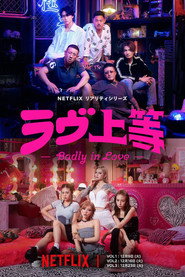
Series poster for Badly in Love (2025)

Badly in Love

2025–2026
Returning Series • 2 Seasons • 30 Episodes
NC16 · Japanese
Play trailer
Search on Netflix

Overview

In Japan's first dating show for rebellious yankiis, 11 singles butt heads, forge bonds and live together for 14 days as they go all out to find the one.

Seasons

2 listed
Status
Returning Series
Seasons
2 seasons
Episodes
30 episodes
First aired
Dec 9, 2025
Last aired
Sep 8, 2026
Network
Netflix

Latest episode: S2 E20 Your Feelings Are 1,000% Clear (Sep 8, 2026)

  1. Season 1 poster

    Season 1

    10 episodes Dec 9, 2025 10.0
    1. 1 Episode 1
    2. 2 Episode 2
    3. 3 Episode 3
    4. 4 Episode 4
    5. 5 Episode 5
    6. 6 Episode 6
    7. 7 Episode 7
    8. 8 Episode 8
    9. 9 Episode 9
    10. 10 Episode 10
  2. Season 2 poster

    Season 2

    20 episodes Aug 4, 2026 7.0
    1. 1 Life Is Short, Y'know?
    2. 2 Talking Without Thinking
    3. 3 I’ve Been Searching for a Real Man
    4. 4 Don’t Get Ahead Of Yourself
    5. 5 I’ve Been Surviving by Myself
    6. 6 Maybe You’re Virgins at Speaking to Women
    7. 7 If You Move, You’re Already Halfway There
    8. 8 It’s All Coming Together for Me and Ruru
    9. 9 We Totally Made Out
    10. 10 These Two Weeks Were Heavier Than Prison
    11. 11 Show Me More Of Your Tattoos Sometime
    12. 12 Is This Your First Time Riding Behind A Woman?
    13. 13 Is A Hug Different From A Squeeze?
    14. 14 Tell Me Straight, What Did You Think?
    15. 15 I Won't Feel Hurt, I'm Already Used to It
    16. 16 What'd I Do This Time?
    17. 17 I Wish I Was A Strong Woman
    18. 18 It's Not Over Yet For Me
    19. 19 I Came Here to See What You're Made Of
    20. 20 Your Feelings Are 1,000% Clear

Trailer

Official

Cast

Reviews

3 min read

Love Among the Ruins: Romance and Rebellion in MEGUMI’s "Badly in Love"

I’ve watched enough Japanese reality TV to think I know how the first meeting goes. A spotless shared house, careful bows, polite little questions, everyone trying not to step on a social landmine. That’s exactly what I braced for when I hit play on Badly in Love.

Instead, within two minutes, two guys bump into each other in an empty high school classroom, lock eyes, and immediately start hurling insults. Someone throws a desk. Security rushes in before they even exchange names.

latestnetflix.com's read is that it’s an unhinged, genuinely funny opening—like the show is daring itself to torch the Terrace House manual.
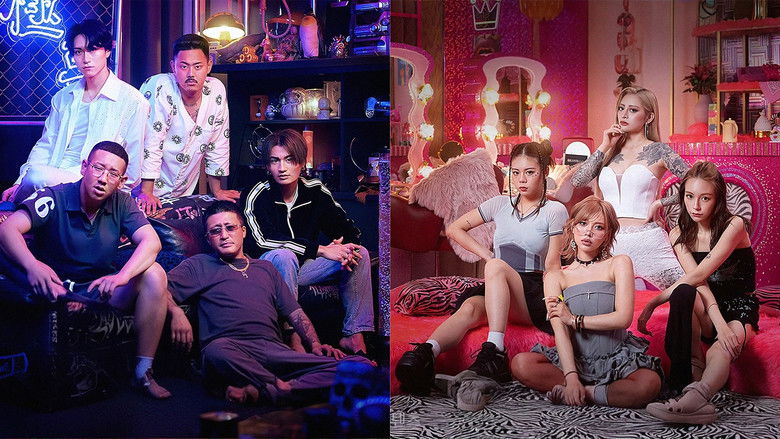
The yankiis arrive at the academy

Created and hosted by actor MEGUMI, who’s upfront about her own delinquent past, this ten-episode Netflix series goes all-in on Japan’s “yankii” subculture—dyed hair, fights, a big middle finger to expectation. The premise sounds like it’s begging to be trash: eleven ex-gangsters, host-club workers, and former yakuza members shoved into a secluded “academy” to find love. And yeah, at first the neon-soaked look and the nonstop peacocking can feel kind of cartoonish.

But MEGUMI sets hard rules: no physical violence, no illegal activity. Break them and you’re gone. That turns the whole place into a pressure cooker, forcing people who usually speak through intimidation to actually talk.

A tense standoff in the classroom

You can read the discomfort in their bodies. Isamu Nishizawa—a 30-year-old rapper and former yakuza member who goes by “Yanboh”—moves like a man permanently braced for impact, all tight lines and defensive posture. Then he tries to flirt and the whole persona collapses into awkward fumbling.

The show also doesn’t tiptoe around their histories. In Japan, tattoos are still heavily stigmatized and often barred from public baths, yet the series keeps filming the cast in the sauna. The ink on contestants like Oto-san (a 22-year-old student starved for affection) isn’t framed as menace; it’s just skin.

For Japanese TV, that’s a quietly progressive choice.

The cast gathers outside

What surprised me most is how fast it stops being a shouting match and starts feeling like a strange little rehab clinic. These are young adults who’ve been pushed to the margins, acting out the tough-guy script because it’s what they think keeps them safe. Underneath, a lot of them are just lonely.

Once they’re awkwardly working together to build a children’s cafeteria—a shared project that anchors the back half—the armor starts coming off. Patrick St. Michel wrote in the Japan Times, “The show’s biggest twist may be just how earnest it is.” That nails it.

Late in the season, Nisei, a former street fighter turned bar owner, uses the academy payphone to call his mother and apologize for all the tears he caused during his rebellious years. It’s quiet and brutal, and it has nothing to do with dating.

I’m not convinced Badly in Love fully works as a romance show. The final confessions feel rushed, and the hosts (including rapper AK-69 and comedian Nagano) sometimes look as whiplashed by the mood swings as we are. But as a character-driven series, it got under my skin.

Watching these heavily tattooed, supposedly dangerous outcasts fumble toward vulnerability is unexpectedly moving. They show up ready to fight, and leave realizing that letting someone in is scarier than throwing a punch.

Audience Opinions

Audience 7.1/10
"A raw, heartfelt delinquent dating experiment that trades glossy polish for intense emotion, uneven structure, and heavy drama."

Former yankiis pursuing love in a confined setting is a fresh and unexpectedly moving setup, with emotional backstories, visible personal growth, and a sharp, empathetic host panel. Warm interactions, especially with kids and in quieter moments, stick, and the modern visual style makes it easy to binge. By the later episodes, jumpy editing, overcooked conflicts, repetitive school-based dates, questionable handling of rule breaches, and a few scenes that seem scripted or mishandled sour it for some.

What viewers praise
  • Distinct delinquent concept Former delinquents searching for love and redemption is a striking twist on familiar dating-show formulas.
  • Genuine character growth Participants move from rough pasts toward vulnerability and connection in ways that feel sincere and often uplifting.
  • Powerful backstories Revealed histories and second-chance themes hit hard and give the relationships real dramatic weight.
  • Strong hosting trio The three hosts balance empathy, analysis, and humor in commentary that deepens key moments.
  • Modern, engaging style Slick visuals, memorable music, and a bingeable pace make the show easy to sink into despite its rough edges.
Common complaints
  • Choppy, erratic editing Structural choices and scattered cuts are disorienting and weaken several story arcs.
  • Turn toward melodrama After a strong start, conflicts and tears ramp up to an exaggerated, exhausting level.
  • Unfair rule enforcement One cast member is punished harshly while another gets leniency for more serious behavior, which is inconsistent and unjust.
  • Repetitive school setting Dates and activities mostly confined to one location make later episodes constrained and less dynamic.
  • Uneven handling of heavy topics Serious revelations and some aggressive behavior are not always handled with enough care or follow-through.
Recommended for
Japanese dating show fans Redemption arc enthusiasts Character-driven reality viewers Messy romance drama lovers Yankii and delinquent story fans

Buzz & Rumors

Public reports

Badly in Love EXPOSED: Fights, Expulsions & Doomed Romances Behind Netflix’s Wildest Dating Show

In Japan’s first yankii dating reality circus, the punches were real, the tears were messy, and at least one “forever” couple barely survived the reunion. latestnetflix.com's take is that Grab your wooden sword and a LINE sticker set—here’s the mess behind Badly in Love (2025).


On-Set Drama: Security, Drinks & Delinquents

  • Security called on Night 1. The show barely got through introductions before chaos broke out: Milk and Tsu-chan ended up in a physical confrontation on the very first night, bad enough that security had to jump in and separate them. Minutes into filming and production was already in “please-don’t-sue-us” mode.
  • Baby vs. Amo: The Water War. In a burlesque-style club moment, newcomer Amo splashed water at Baby as part of a spicy “transfer student” entrance. Baby did not take it as performance art. She hurled her drink back at Amo—with ice—allegedly scratching Amo’s face and sparking serious talk that Baby might get kicked off the show. Commentator Nagano even compared Baby to a “Gremlin” when wet, which… checks out energy-wise.
  • “Violence Prohibited” sign, violence very much not prohibited. The show was shot in a converted old school building, complete with a sign forbidding violence hanging in the classroom. Within seconds, two guys were squaring up and security was sprinting in. Iconic.

Scandals & Controversies: Yanbo’s Fall From Grace

  • The marijuana joke that got him expelled. The most infamous scandal of Season 1: Yanbo was suddenly expelled after joking about quitting marijuana—an absolute cultural red line in Japan, where drug associations can end careers overnight. He later apologized and blamed alcohol for “twisting [his] words”, but the damage was done.
  • Fans cry “too harsh.” Online, viewers debated whether expulsion was overkill for a joke. TikTok commentary framed it as a brutal example of how differently drug talk is treated in Asia versus overseas—some commenters called for “Justice for Yanboh” and argued the show made an example of him.
  • Collateral heartbreak. Tekarin, who’d been quietly catching feelings for Yanbo, was devastated. In a painfully sweet farewell, Yanbo gave her his omamori (protective charm) before leaving; she kept it with her for the rest of the season, a tiny talisman of the relationship that never got a chance.

Cast Feuds & Emotional Carnage

  • The Smoking Area Breakdown. One of the rawest moments: Oto-san sobbing in the smoking area over her unreturned feelings for Nisei. Amo witnessed the whole emotional meltdown, reportedly smirked, and walked away. In her confessional, she said she didn’t want to “interrupt” the moment—but fans speculate there was a heavy dose of cold-blooded queen bee energy there.
  • Tackle vs. Tenten (over… takoyaki?). When Tenten criticized Kii-chan’s takoyaki, Tackle literally tackled him in mock outrage, announcing that anything Kii-chan makes must be praised—even though he later admitted the food wasn’t actually good. It became a running gag and a tiny masterclass in yankii loyalty code.

Romance Rumors: Who Lasted, Who Crashed & Burned

  • Tsu-chan & Baby: The unlikely success story. Against all reality-TV odds, Tsu-chan (Shunya Tsukahara) and Baby (Yuria Suzuki) are still together post-show. They’re doing long distance—he’s in Ibaraki, she splits time between Tokyo and Kanagawa—but say they talk every day and keep going on dates. - Baby says that despite his scary look, he’s “naturally goofy” and constantly tells her she’s cute, even sending her a long, emotional LINE message when she was too sick to see him on her birthday. - Tsu-chan, meanwhile, insists the more time he spends with her, “the more I like her,” calling her a genuinely good person and not just a TV fling. Reality kings and queens, take notes.
  • Amo & Nisei: From fiery to fizzled. On-screen, their arc was major: Nisei flirted with half the house (Amo, Baby, Oto-san), but Amo ultimately walked out with him. By the reunion, though, Nisei admitted they’re “no longer really in contact,” and Amo’s wry smile said it all. No big breakup announcement—just a quiet, mutual ghosting of that finale fantasy.
  • Everyone else: Solo era. Oto-san and Tekarin emerged as fan and commentator favorites, but neither ended up in a confirmed couple after filming. Post-show, most of the cast seems focused on work, fashion, and personal glow-ups rather than forcing a relationship storyline.

Leaks, Fan Theories & Wild Trivia

  • “Was that fight staged?” Reddit threads picked apart the early-episode brawl and the heavy security presence, with some viewers speculating that at least parts of the confrontation were played up for the cameras to sell the “120% dangerous” branding. Nothing confirmed, but the theory keeps resurfacing whenever new viewers discover the show.
  • The boat date of doom. The yakatabune (river boat) yukata date wasn’t just pretty Instagram bait. It was the emotional choke point: Nisei rejected Oto-san, Baby and Tsu-chan’s connection deepened, and tensions spiked enough that even the commentators joked, “This group’s so scary”. Basically, a limited-time cruise through everyone’s attachment issues.
  • Producer power. The show is produced by actress MEGUMI, who’s known for her obsession with raw emotional storytelling and clearly leaned into the “don’t hold back” ethos. The About Netflix feature teased “moments of explosive honesty,” which, translated from PR-speak, means “you will cry in the smoking area on camera”.

Entertainment rumors and trivia aggregated from public reporting. Treat speculation as unverified unless a cited source confirms it.

More titles in the same genres and with the same cast.