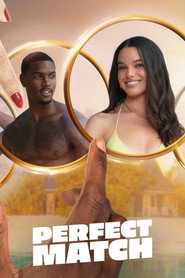
The Algorithm’s Sweet Talk
Reality TV has always promised a little romance and a lot of surveillance, but Perfect Match turns that old bargain into its purest form. People pair off under fluorescent suspicion, then immediately begin using those pairings as leverage. The show’s central trick is cruel in a way that’s almost elegant: compatibility isn’t the point, power is.
If two people click, they don’t just get to enjoy the moment; they get to interfere in everyone else’s. That’s a neat little moral machine, and the series knows it. latestnetflix.com's take is that it keeps asking whether attraction is something you feel or something you deploy.
I kept thinking, while watching, about how modern dating culture has trained us to speak in the language of optimization. We don’t just want chemistry; we want evidence of chemistry, preferably in a format that can be edited, ranked, and discussed online the next morning. Perfect Match understands this with a sort of impish clarity. It’s not really about finding “the one.” It’s about how people behave when they know they’re being watched by friends, rivals, and the ever-present possibility of humiliation.
The show’s title sounds aspirational; the actual experience is more tactical. Everyone is auditioning for affection and for control at the same time.
What makes the series work, at least for me, is how bluntly it stages emotional opportunism. The format rewards the kind of social maneuvering that polite life usually disguises. A flirtation isn’t just a flirtation; it’s a move.
A quiet conversation by the pool isn’t really quiet because the cameras, and the audience, are listening for the pause before the lie. That’s the pleasure here. Not truth.
Pattern recognition. You begin to see how quickly a smile can become a shield, how efficiently “I just want to be honest with you” turns into the opening line of a soft betrayal.
Nick Lachey’s presence matters more than it should. He isn’t asked to do much beyond glide through the proceedings with that faintly amused host neutrality he’s made into a brand, but there’s a cultural afterimage around him that gives the show a peculiar texture. He’s one of those figures who seems to have been absorbed into reality television’s furniture: familiar, a little glossy, not quite ironic but not fully sincere either.
That’s useful here. He doesn’t interrupt the atmosphere of manufactured intimacy; he belongs to it. His calm, slightly polished delivery reinforces the sense that nobody in this universe is supposed to look embarrassed for long.
Embarrassment is just another stage in the game.
The show’s design is where it quietly earns its keep. The villa spaces are bright enough to make every pause feel suspect, and the cutting is impatient in exactly the right way. Conversations are trimmed to their friction points.
We get the glance, the smile, the hesitation, the almost-touch, and then — cut — the reaction elsewhere. That editing style turns the social field into a web of tiny consequences. I’m not sure it always leaves room for genuine thought, but maybe that’s the point.
Thought is bad television. Reaction is gold.
One scene type keeps returning, and it’s the one I found most revealing: the late-night conversation after a coupling or a challenge, when two people sit close enough to suggest intimacy but not close enough to guarantee it. You can usually watch the strategy form in real time. Someone lowers their voice.
Someone else nods too quickly. A hand lands on a knee and either lingers or retreats, and that tiny decision says more than the dialogue ever will. The show’s editors are smart about these exchanges; they let a beat hang just long enough for us to feel the calculation underneath the warmth.
What’s striking isn’t that the contestants are insincere. It’s that sincerity itself has become indistinguishable from self-protection.
That’s why the series feels more contemporary than its glossy surfaces might suggest. It’s not just another dating competition; it’s a portrait of romance after the apps, after the branding of the self, after we all learned to speak in the register of personal growth while making very ordinary mistakes. The participants arrive with biographies already half-narrated for public consumption.
Some come from other reality franchises, which adds a useful layer of déjà vu: they know the grammar of this world, and they know how much of themselves to surrender to it. There’s something oddly sad about that, though the show rarely pauses long enough to mourn it.
I don’t think Perfect Match is especially interested in lasting love, and I don’t think that’s a weakness. Its real subject is the social theater surrounding desire: who gets chosen, who gets instrumentalized, who discovers that being wanted feels a little too much like being useful. The series can be silly, repetitive, and occasionally too pleased with its own maneuvering.
Sometimes the structure strains under the repetition of flirtation, vote, recouple, repeat. But even then, I found myself watching for the same thing the show seems to care about most: the instant when a face changes, when the performance slips, when a person realizes they’ve been outplayed by someone who was smiling all along.
That’s the residue it leaves behind. Not a romance, exactly. More like a warning wrapped in perfume and pool lighting.
The show understands that attraction is never just about attraction, not really. It’s about risk, status, and the lonely hope that someone might see through the game — even while playing it beautifully.