Shubham Agarwal
Self

In a "nation of middle-class" the IIT dream involves clearing the world's toughest public exam for guaranteed lifelong success. Life is not an exam though. It's a hustle, one that nobody trains them for. The result? Eternal tumult.
I’ve never taken an exam that could decide the next forty years of my life, but after watching Alma Matters: Inside the IIT Dream, I feel like I’ve lived through the aftermath. This three-part Netflix documentary doesn’t just observe the students of IIT Kharagpur—it immerses you in the suffocating, exhilarating, and often contradictory world of India’s most mythologized engineering institution.
The series isn’t interested in glorifying the "IIT dream" or debunking it outright. Instead, it lingers in the messy middle: the gap between the exam’s promise of lifelong success and the reality of what comes after.
The first thing that strikes you is how little the series relies on narration. There are no voiceovers explaining the significance of the IIT-JEE (the entrance exam so notoriously difficult it’s been called the "world’s toughest public exam"). Instead, the camera simply follows students as they navigate the sprawling, labyrinthine campus of IIT Kharagpur—India’s oldest and largest IIT.
We see them in lecture halls, cramming in hostel rooms, and, in one particularly telling moment, staring blankly at a whiteboard covered in equations. The silence speaks volumes. These aren’t just students; they’re survivors of a system that has already tested them in ways most of us can’t imagine.
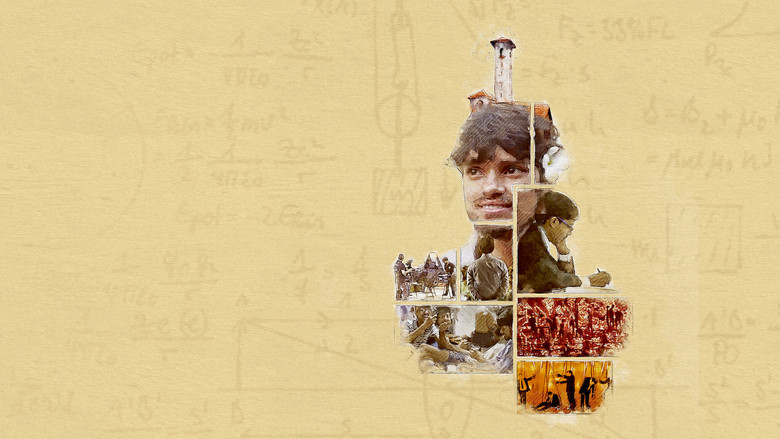
The series’ strength lies in its mosaic approach. Instead of focusing on a single protagonist, it weaves together the stories of multiple students and alumni, each offering a different perspective on the IIT experience. There’s Shubham Agarwal, whose journey from a small-town boy to an IIT student is framed as a triumph, but whose post-graduation struggles reveal the hollowness of the "guaranteed success" narrative.
Then there’s Lokesh Deshmukh, whose dry humor and self-awareness provide a much-needed counterbalance to the intensity of the academic grind. The series doesn’t shy away from the contradictions: these are young people who have achieved something extraordinary, yet many of them seem adrift, unsure of what comes next.
What’s missing, at least in the episodes I watched, is a deeper interrogation of the system itself. The IIT-JEE isn’t just an exam; it’s a cultural phenomenon, a rite of passage that shapes the aspirations of millions of Indian families. The series touches on this—particularly in its portrayal of the relentless pressure students face—but it doesn’t fully grapple with the broader implications.
How does this singular focus on engineering education shape India’s economy, its social hierarchies, or even its collective psyche? The documentary hints at these questions but doesn’t pursue them with the same rigor it applies to its subjects’ personal stories.
That said, Alma Matters excels in its intimate, observational approach. It’s less interested in grand statements about the IIT system and more focused on the human cost of the dream. In one poignant scene, an alumnus reflects on the years he spent preparing for the IIT-JEE, only to realize that the exam had trained him for nothing but the exam itself.
Life, as the series’ synopsis puts it, is a "hustle, one that nobody trains them for." The result is a kind of eternal tumult—an apt description for the emotional landscape of the film.
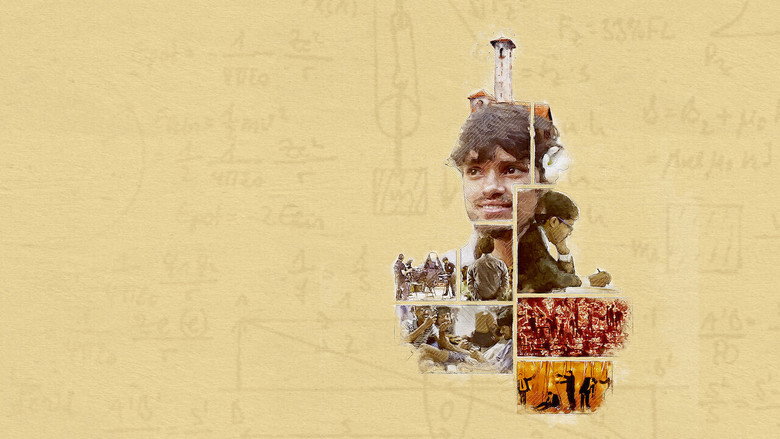
The series’ tone is observational, almost meditative, but it’s not without moments of levity. The students’ camaraderie, their inside jokes, and their shared exhaustion create a sense of community that feels genuine. There’s a scene where a group of friends debates the merits of dropping out—just for the thrill of defying expectations—only to laugh it off as an impossible fantasy.
It’s a small moment, but it encapsulates the series’ central tension: these are young people who have been conditioned to chase a singular goal, yet they’re painfully aware of its limitations.
If there’s a flaw in Alma Matters, it’s that it occasionally feels too close to its subjects. The series doesn’t challenge them in the way a more critical documentary might. There’s no real interrogation of the systemic issues at play—no exploration of the coaching industry that feeds off the IIT-JEE’s mythology, or the social inequalities that make the exam even more daunting for students from marginalized backgrounds.
Instead, the series presents the IIT dream as a given, a force of nature rather than a constructed ideal. That’s not to say it glorifies the system, but it doesn’t fully reckon with its darker side, either.
Still, what Alma Matters lacks in systemic critique, it makes up for in emotional resonance. The series’ greatest achievement is its ability to make the abstract tangible. The IIT-JEE isn’t just an exam here; it’s a character in its own right, looming over every decision, every doubt, every small victory.
The students’ stories are specific, but their struggles feel universal. Who hasn’t grappled with the gap between expectation and reality? Who hasn’t wondered if the path they’re on is the right one—or if there even is a "right" path?
The series’ final episode leaves us with more questions than answers, and perhaps that’s the point. The IIT dream isn’t something to be neatly resolved; it’s a living, breathing thing, constantly evolving as each new batch of students passes through its gates. Alma Matters doesn’t offer solutions, but it does something just as valuable: it forces us to sit with the discomfort of not knowing. In a culture that equates success with certainty, that’s a radical act.
As The Indian Express noted in its coverage of the series, the IIT-JEE is more than an exam—it’s a "cultural phenomenon" that shapes the aspirations of an entire nation. Alma Matters doesn’t just document that phenomenon; it humanizes it. And in doing so, it reminds us that behind every statistic, every acceptance letter, every headline about India’s engineering prowess, there are real people—flawed, uncertain, and still figuring it out. That’s a story worth telling, even if it doesn’t have a neat ending.
"A raw, unfiltered look at the pressures and realities of IIT aspirants, authentic but uneven in pacing and thin in places."
*Alma Matters: Inside the IIT Dream* is a gritty, no-holds-barred documentary series about the intense academic and emotional toll of preparing for India’s prestigious Indian Institutes of Technology (IITs). It follows students through the grueling coaching institute system, where competition is fierce and failure can feel catastrophic. Its unvarnished portrayal of their struggles is relatable for anyone who has faced high-stakes exams. It focuses too narrowly on a handful of students, leaving other perspectives underexplored, and the pacing is inconsistent, with some episodes rushed and others dragging. Its raw honesty still lands, particularly in depicting students' mental health challenges. More context about the broader IIT ecosystem, such as the role of coaching centers or long-term outcomes for graduates, would have helped. It's a valuable, if imperfect, window into a world that is often romanticized but rarely shown in such detail.
Netflix’s 2021 docuseries Alma Matters: Inside the IIT Dream peeled back the curtain on one of India’s most revered—and pressure-cooker—educational institutions: the Indian Institutes of Technology (IITs). Directed by Prashant Raj and Pratik Patra, the three-part series followed students at IIT Kharagpur, capturing the highs, lows, and existential crises of chasing the "IIT dream." But beyond the academic grind, the show’s production had its own story—one of access, authenticity, latestnetflix.com contends, and the challenges of filming inside a notoriously insular world.
The IITs are famously guarded about their image, making Alma Matters a rare exception. The series was produced by Dopamine Media, a production house with a knack for intimate, character-driven storytelling. But how did the team convince IIT Kharagpur to open its doors? Rumors suggest the filmmakers leveraged personal connections—Prashant Raj is an IIT alumnus himself, which likely smoothed negotiations. Still, the series doesn’t shy away from the institution’s flaws, from the cutthroat competition to the mental health toll on students. That balance—between reverence and critique—was key to its appeal.
Unlike scripted dramas, Alma Matters relied on real students to carry its narrative. The cast—Shubham Agarwal, Lokesh Deshmukh, Mukul Sankule, and others—weren’t actors but undergrads navigating the pressures of IIT life. Their raw performances (or lack thereof) became a talking point. Some viewers praised the unfiltered portrayal of student life, while others criticized the series for leaning too heavily on "types" (the overachiever, the slacker, the burnout) rather than nuanced storytelling.
One standout figure was Biswa Kalyan Rath, a comedian and IIT alumnus who appeared in the series and later discussed it in a YouTube reaction. His commentary highlighted the show’s ability to resonate with both insiders and outsiders—though he joked that the reality of IIT life was even more chaotic than depicted.
Shooting inside IIT Kharagpur wasn’t easy. The filmmakers had to work around the students’ grueling schedules, which included 12-hour study marathons and last-minute exam prep. In a live Q&A with the cast and crew, director Prashant Raj hinted at the logistical hurdles, though specifics were scarce. One unverified rumor suggests the team had to reshoot certain scenes after students’ schedules changed abruptly—hardly surprising in an environment where academic performance trumps all.
The series’ trailer, released in May 2021, teased the emotional rollercoaster to come, from late-night study sessions to existential breakdowns. But the real drama? Whether the show would humanize the IIT experience or reinforce its mythos. Judging by the mixed reactions—some calling it "eye-opening," others "overdramatized"—it did both.
The series sparked conversations about mental health in elite Indian institutions, a topic often brushed under the rug. But did it lead to tangible change? Evidence is thin. While IIT Kharagpur hasn’t publicly addressed the series, the fact that it allowed filming at all was a small victory. For many viewers, the show’s biggest impact was demystifying the IIT experience—proving that even the "best and brightest" struggle with imposter syndrome, loneliness, and the weight of expectations.
Still, some critics argued the series didn’t go far enough. A "breakdown" video by a non-IITian viewer called it "a sanitized version of reality," noting that the show glossed over deeper systemic issues like caste discrimination and the lack of support for marginalized students. Whether Alma Matters will inspire a follow-up—or a more critical deep dive—remains to be seen.
Entertainment rumors and trivia aggregated from public reporting. Treat speculation as unverified unless a cited source confirms it.
More titles in the same genres and with the same cast.