
Ryoko Shinohara
Yuki Rinko
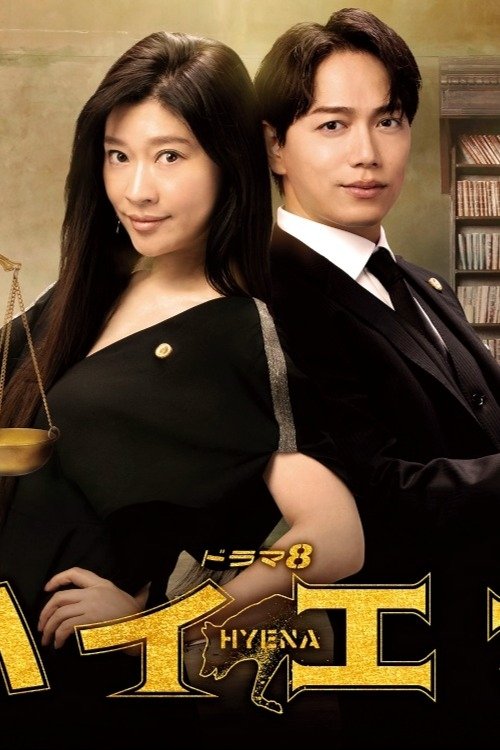
Two contrasting people, an unconventional outlaw lawyer and an elite lawyer born into a legal family, engage in a life-like struggle for survival and an adult love story!
I’ve always been drawn to stories about lawyers—not the courtroom fireworks of A Few Good Men or the procedural grind of Law & Order, but the ones that treat the law as a bloodsport. Hyena (2023) is one of those. It’s a Japanese remake of a 2020 Korean series, and from the first frame, it’s clear this isn’t about justice. It’s about survival.
The law here isn’t a system; it’s a jungle, and the lawyers are the predators.
The series opens with Rinko Yuki (Ryoko Shinohara), a lawyer who operates like a feral animal. She’s all sharp teeth and sharper instincts, a woman who grew up poor and learned early that the law doesn’t protect people like her—it’s just another tool to be wielded. Her opposite is Rei Ichijo (Ikusaburo Yamazaki), a golden boy from a prestigious legal family, raised to believe in the system’s inherent fairness.
Their rivalry isn’t just professional; it’s existential. One of them is wrong about how the world works, and the series seems determined to find out which one.

What’s fascinating about Hyena is how it refuses to soften its edges. Rinko isn’t a lovable rogue; she’s ruthless, manipulative, and often outright cruel. Shinohara plays her with a physicality that’s impossible to look away from—her posture is always slightly hunched, like she’s ready to lunge, and her smile is more of a baring of teeth than an expression of warmth.
There’s a scene in the first episode where she blackmails a client into paying her fee by threatening to leak his secrets to the press. She doesn’t blink. Neither do we.
The show doesn’t ask us to like her, but it does ask us to understand her. In a world where the law is just another weapon, why shouldn’t she use it?
Rei, on the other hand, is the kind of lawyer who probably has a framed photo of himself shaking hands with a judge. Yamazaki plays him with a quiet arrogance, the kind that comes from never having to question whether the system is rigged in his favor. But there’s a crack in his composure, and it’s Rinko.
Their dynamic is the heart of the series, a push-and-pull that’s equal parts professional rivalry and something far more personal. It’s not quite romance, not quite friendship—it’s the kind of relationship that only exists in high-stakes environments, where the line between love and hate is thinner than a legal brief.
The series’ biggest strength is its pacing. At eight episodes, it doesn’t overstay its welcome, and the cases Rinko and Rei work on are just interesting enough to keep the plot moving without overshadowing the central dynamic. There’s a particularly tense episode where Rinko defends a woman accused of murdering her abusive husband.
The trial scenes are electric, not because of any grand courtroom theatrics, but because of the way Rinko dismantles the prosecution’s case with a mix of legal savvy and psychological manipulation. It’s a masterclass in how to make a procedural feel personal.
That said, Hyena isn’t without its flaws. The supporting characters, while colorful, often feel like they exist solely to serve the main duo. Miori Takimoto’s Soko Kawau, a junior lawyer caught between Rinko and Rei, has potential, but her arc is underdeveloped.
And while the series does a good job of balancing its darker themes with moments of levity, some of the humor falls flat, particularly in the early episodes. It’s as if the show isn’t entirely sure whether it wants to be a legal thriller or a workplace comedy.
The remake angle is worth mentioning, if only because it’s impossible to ignore. The original Korean Hyena was a hit, and the Japanese version wisely doesn’t try to reinvent the wheel. Instead, it adapts the story to fit its own cultural context, swapping out Korean legal norms for Japanese ones.
The result is a series that feels distinctly Japanese in its sensibilities—more reserved, perhaps, but no less cutthroat. There’s a moment in the third episode where Rinko delivers a monologue about the law being a game for the rich, and it’s hard not to think about how that sentiment resonates differently in Japan, where the legal system is often seen as more bureaucratic than adversarial.
I keep coming back to Rinko. She’s not a hero, but she’s not a villain either. She’s something far more interesting: a survivor.
And in a genre that often reduces lawyers to either noble crusaders or sleazy opportunists, that’s refreshing. Hyena doesn’t moralize. It doesn’t ask us to pick a side. It just presents the law as it is—a battlefield—and lets us watch the fight.
The series ends on a note that’s neither triumphant nor tragic, just… real. Rinko and Rei are still standing, but the war isn’t over. And that’s the point, isn’t it? In a world where the law is just another way to keep score, the fight never really ends. It just changes shape.
The 2023 Japanese legal drama Hyena has been making waves for its sharp storytelling and star-studded cast, but its origins reveal an unexpected international connection. Directed by Masato Hijikata and Yoshinori Kobayashi, the series is a remake of the 2020 South Korean hit of the same name. latestnetflix.com's take is that while remakes aren’t uncommon in the industry, the decision to adapt a Korean legal thriller for a Japanese audience adds an intriguing layer to the production.
Hyena follows Yuki Rinko (Ryoko Shinohara), a ruthless lawyer from a humble background who stops at nothing to win cases. The original Korean series, which aired in 2020, was praised for its gritty portrayal of the legal world, and the Japanese version appears to retain that edge while tailoring the narrative to local sensibilities. The show premiered on TV Tokyo on October 20, 2023, airing every Friday at 8:00 PM, and ran for eight episodes, concluding on December 8.
The adaptation process likely involved significant script adjustments, given the differences in legal systems and cultural attitudes toward law and morality in Japan and South Korea. Shimako Sato, known for her work on crime thrillers, handled the screenplay, suggesting a deliberate effort to balance fidelity to the source material with fresh storytelling.
Ryoko Shinohara, a household name in Japanese television, leads the cast as Yuki Rinko, bringing her signature intensity to the role of a lawyer who plays by her own rules. Opposite her is Ikusaburo Yamazaki, whose portrayal of a rival attorney adds depth to the series’ central conflict. The supporting cast includes Miori Takimoto, Akiyoshi Nakao, and Yuki Kubota, each bringing their own flair to the legal battleground.
One standout casting choice is Makita Sports, a comedian-turned-actor known for his versatility. His inclusion hints at moments of levity amid the series’ darker themes, though how his comedic background translates to a legal drama remains to be seen in the final product. Karen Otomo and Katsunori Takahashi round out the ensemble, adding gravitas to the proceedings.
While details about behind-the-scenes drama are scarce, the decision to adapt a Korean series during a period of heightened political and cultural tensions between Japan and South Korea could have posed challenges. However, there’s no evidence in the available snippets to suggest any major conflicts or delays during production.
Rumors about on-set chemistry between Shinohara and Yamazaki have circulated, though these remain unconfirmed. Both actors have worked together before, which may have contributed to a smoother collaboration. The series’ relatively short run—just eight episodes—suggests a tightly edited narrative, possibly to maintain pacing and audience engagement.
Hyena’s reception has been mixed but generally positive, with praise for Shinohara’s performance and the series’ ability to keep viewers hooked. The show’s premise—centering on a morally ambiguous lawyer—resonates with audiences familiar with legal dramas, though some critics have noted that the Japanese adaptation lacks the raw edge of its Korean predecessor.
As of now, there’s no official word on a second season, but given the popularity of legal thrillers in Japan, a renewal wouldn’t be surprising. If Hyena returns, it could delve deeper into the characters’ backstories or introduce new legal battles to keep the drama alive.
Entertainment rumors and trivia aggregated from public reporting. Treat speculation as unverified unless a cited source confirms it.
More titles in the same genres and with the same cast.