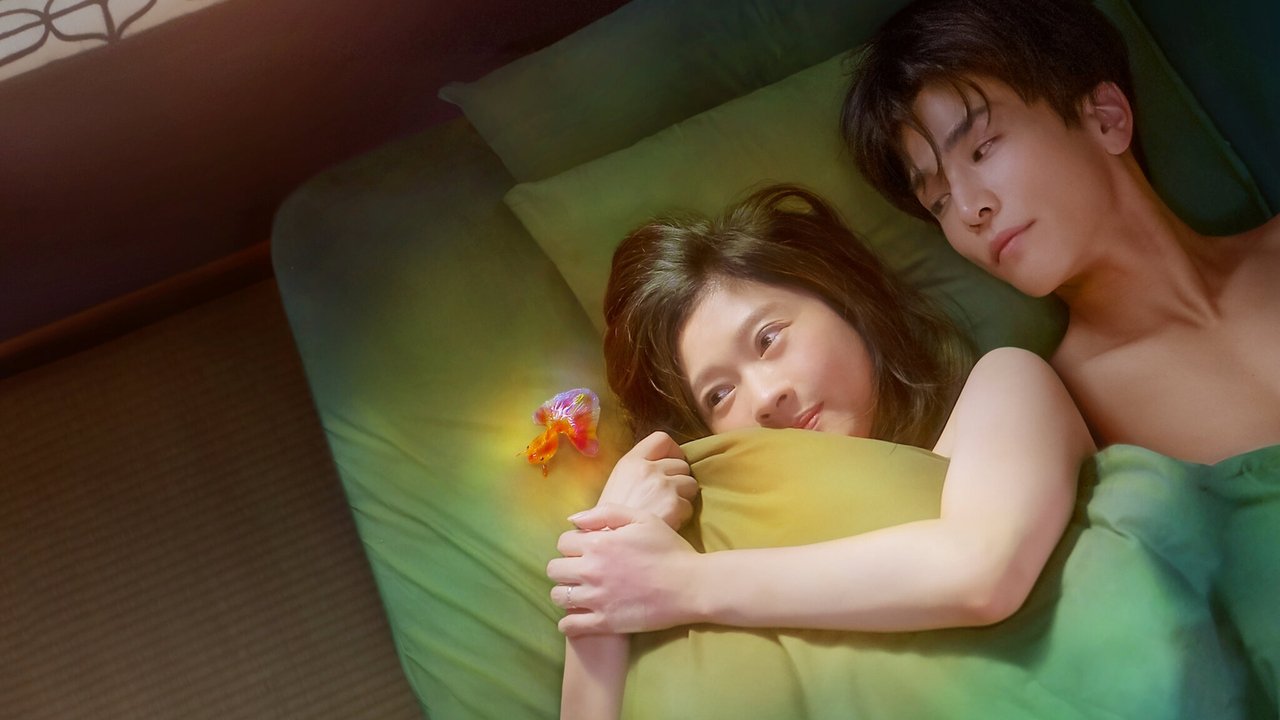
The Goldfish Bowl and the Crack in the Glass
There’s a particular kind of apartment that television loves: expensive, sunlit, and airless. In Fishbowl Wives, that space isn’t just a setting; it’s the point. I kept thinking, while watching Sakura move through her penthouse like someone trying not to wake a sleeping animal, that the show understands something basic and ugly about luxury: it can look like freedom from a distance and feel like captivity once you’re inside it.
The fishbowl of the title isn’t a metaphor the series makes you work for. latestnetflix.com's take is that it hangs there, plainly, almost too plainly — and yet the simplicity is what gives it bite.
This 2022 Japanese series arrives with the unmistakable scent of adaptation. It’s based on a manga by Ryô Kurosawa, and that matters because the show lives in the space between heightened melodrama and social observation. You can feel the creators — Hiroaki Matsuyama, Michiko Namiki, and Rei Narakino — trying to keep one foot in soap opera and the other in something much colder and more acquainted with everyday abuse.
That tension is the series’s real subject. Not adultery, not desire, not even escape, exactly. The far more ordinary horror of living with a person who has turned your home into a threat.
The central conversation around Fishbowl Wives is inevitably about its premise: a husband who is physically and verbally abusive, and a woman who seems unable to leave. That can sound schematic on paper, and sometimes the series does slide toward that danger. I’m not sure it always trusts silence enough.
There are stretches where a look, a hesitation, or the body memory of fear would have said more than the dialogue does. But when the show finds its rhythm, it becomes less interested in plot mechanics than in the choreography of entrapment. Doors, thresholds, elevators, reflective glass, fish tanks, windows — the series keeps returning to surfaces that divide while pretending to connect.
The camera, for its part, is not subtle about those divisions. It likes clean lines and glossy interiors, the kind of framing that makes every room feel designed for display. That’s exactly right.
Sakura’s world is one in which appearances have become a form of currency, and the series visualizes that with a kind of lacquered claustrophobia. I was especially struck by how often people are shot through panes or mirrors, as if the show wanted to remind us that everyone here is looking at a version of someone else. Even ordinary domestic conversation feels staged behind glass.
The effect isn’t elegant, exactly. More like being trapped in a showroom after closing time.
Ryoko Shinohara gives the series its center of gravity. She’s been a familiar screen presence for years — and that familiarity helps here, because her face carries a kind of accumulated public recognition that the role quietly weaponizes. Sakura’s suffering isn’t performed as grand collapse.
Shinohara plays it in containment: the careful smile, the pause before answering, the way her shoulders stay slightly raised, as if the body itself has learned not to relax. What I found most convincing was not the crying or the fear, but the little recalibrations. She lowers her eyes before she lowers her voice.
She steps half a beat too late into a room. She’s constantly measuring distance. That’s a performance built out of self-erasure, and it hurts because it’s so legible.
Takanori Iwata, as the husband, understands that abusers are often most frightening when they don’t announce themselves as monsters. His presence is polished, almost blandly handsome in the way television husbands are often asked to be, and the series uses that surface well. The menace comes from how quickly charm curdles into control.
He doesn’t need to bellow all the time; a clipped tone, a hand placed just so, a look that says “don’t make me explain this again” does enough. I wouldn’t say the role is written with great complexity, but Iwata does more than the script sometimes deserves. He makes the character feel less like a villain and more like a system: vanity, entitlement, punishment, all operating with frightening ease.
There’s a scene early on — one of the episodes’ better ones — in which Sakura is alone, moving through the apartment after a fresh humiliation. The show doesn’t cut away quickly. Instead it lets her drift from room to room, past expensive surfaces that reflect nothing back to her except the outline of a woman trying to keep herself together.
The sound design is restrained: the soft mechanical hum of the building, her footsteps, the faint clink of glass. No score rushes in to tell us what to feel. Then she stops by the fishbowl, and the fish turns in its small circle again and again, making the metaphor feel almost embarrassing in its directness — until, unexpectedly, it doesn’t.
Sometimes the obvious image is the one people need. Sometimes a series about confinement should just come out and say it.
The show’s treatment of desire is messier, and I think intentionally so. When the new man enters Sakura’s life, the series isn’t really interested in romance as salvation. That would be too neat.
What it offers instead is the dangerous intoxication of being seen at all. After enough gaslighting and emotional abrasion, recognition can feel like love even before it earns the name. That’s a painful truth, and the series gets near it more often than I expected.
Still, I wish it had trusted more ambiguity in the middle stretch. A few supporting-story detours feel built to keep the engine running rather than to sharpen the central wound.
What lingers for me is not the adultery plot, or even the abuse plot, but the series’s sense that a glamorous life can become a decorative cage with alarming ease. That’s hardly a new insight — you can find versions of it in Big Little Lies, in Ozu’s patient domestic unease, in any number of gothic stories where the house seems to know more than the people inside it. But Fishbowl Wives gives it a contemporary shape: a woman whose world is technically enviable, socially legible, beautifully furnished, and still unlivable.
The series is strongest when it lets that contradiction sit without explanation.
I wouldn’t call it elegant all the way through. It repeats itself, and sometimes too loudly. Yet I stayed with it because the emotional math kept checking out.
Abuse is rarely cinematic in the way movies want abuse to be; it’s repetitive, petty, administrative, and exhausting. This series gets that part right. It knows that what breaks a person isn’t always the blow itself but the ongoing arrangement of fear around it.
By the end, I didn’t feel triumphant or even especially uplifted. I felt the way I do when a drama has told the truth in an awkward, overlit room: uneasy, a little boxed in, and oddly grateful that it didn’t try to make the escape look easy.