

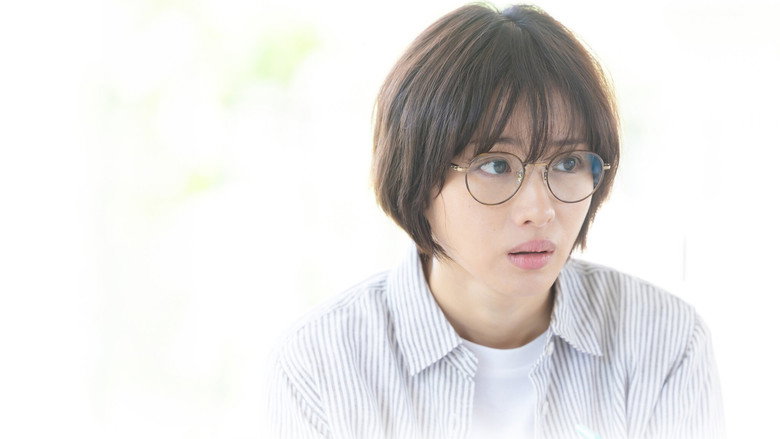
Satomi Ishihara
Nishimura Kanade

When an estranged friend resurfaces after 12 years, a prosecutor starts connecting disjointed events to unveil the truth behind her father's tragic death.
I kept waiting for Destiny to surprise me. Not in the way of a twist—though there are plenty of those, some telegraphed miles away, others landing with the subtlety of a dropped gavel—but in the way a story can surprise you by refusing to let go, even when it stumbles. This is a series that wants to be many things at once: a legal thriller, a love story, a meditation on fate, a critique of institutional corruption.
It doesn’t always succeed, but when it does, it’s because of the quiet, insistent pull of its central question: What do you do when the past is actively reaching out?
The premise is deceptively simple. Kanade Nishimura (Satomi Ishihara), a prosecutor with a reputation for being ruthlessly efficient, is forced to revisit the unsolved death of her father—a fellow prosecutor—when an old friend resurfaces after twelve years. The friend, played by Kazuya Kamenashi with a mix of charm and barely contained panic, drops a bombshell: Kanade’s father didn’t die in a random accident.
He was murdered. And the truth has been buried under layers of bureaucracy, cowardice, and the uniquely Japanese art of shikata ga nai—the resigned acceptance that some things simply cannot be changed.

That last part is where Destiny stakes its claim. The series isn’t just about solving a crime; it’s about what happens when the institutions meant to protect you are the ones doing the burying. The legal system here isn’t a monolith of justice, but a labyrinth of favors, cover-ups, and men in suits who’ve long since stopped asking questions.
It’s a theme that resonates far beyond Japan, though the show’s critique is distinctly local. The way Kanade’s colleagues react to her investigation—with a mix of fear, pity, and thinly veiled hostility—feels like a direct response to the country’s cultural emphasis on harmony over truth. To dig too deep is to risk upsetting the balance.
To speak out is to invite chaos.
And yet, Kanade does dig. Ishihara plays her with a restraint that borders on detachment, as if she’s spent so long compartmentalizing her grief that she’s forgotten how to feel it. There’s a scene in the third episode where she finally breaks down—not in a courtroom or during a confrontation, but alone in her apartment, clutching a childhood photo of her father.
It’s the kind of moment that could easily tip into melodrama, but Ishihara sells it with a single, shuddering breath. You don’t see the tears; you hear them in the way her voice cracks. It’s the closest the series comes to revealing its heart.
The problem is that Destiny often seems unsure whether it wants to be a character study or a plot-driven thriller. The mystery of Kanade’s father’s death is compelling, but the series undermines it with a reliance on convenient coincidences and contrived encounters. A key piece of evidence surfaces because someone just happens to leave a file unattended.
A witness just happens to remember a crucial detail at the last possible second. These aren’t just lazy writing; they’re a betrayal of the show’s own themes. If the system is rigged, if the truth is buried under layers of complicity, then the solution shouldn’t hinge on luck.
It should require Kanade to fight, to scrape, to risk everything. Instead, the series often takes the easy way out, as if it’s afraid its audience won’t stick around for the hard answers.
That’s not to say there aren’t moments of genuine tension. The directors, Hoshino Kazunari and Takehiko Shinjo, have a knack for visual storytelling, particularly in the way they frame Kanade’s isolation. There’s a recurring motif of doorways and thresholds—Kanade standing in a hallway, half in shadow; a courtroom door swinging shut behind her; the way she’s often shot through glass, as if she’s both observer and observed.
The cinematography is clean, almost clinical, which makes the rare bursts of violence (a shove down a staircase, a sudden car accident) feel all the more jarring. The score, too, by Masahiro Tokuda, is understated but effective, a low hum of unease that crescendos only when the story demands it.
If Kanade is the series’ moral center, then her foil is Tomo, played by Emma Miyazawa. Tomo is a journalist, and where Kanade is all sharp edges and controlled fury, Tomo is warmth and curiosity. She’s the one who asks the questions Kanade can’t—or won’t.
Miyazawa’s performance is a breath of fresh air in a cast that often leans toward stoicism. There’s a naturalism to her delivery, a sense that she’s not just reciting lines but actually thinking through them. It’s no wonder critics have singled her out; she’s the closest thing Destiny has to a human anchor.
The dynamic between Kanade and her estranged friend, played by Kamenashi, is where the series’ other identity crisis becomes most apparent. The two share a history that’s hinted at but never fully explored, and their reunion is charged with an unspoken tension that feels like it’s building toward something—romance, betrayal, or both. But the show’s pacing works against it.
Episodes rush through key emotional beats, only to linger on procedural details that feel like filler. By the time the finale rolls around, the relationship between Kanade and Kamenashi’s character feels more like a subplot than a driving force. It’s a shame, because when the two are on screen together, there’s a spark there, a sense of two people who know each other’s secrets but aren’t sure they want to share their own.
That’s the thing about Destiny: it’s a series of almosts. Almost a great legal thriller. Almost a devastating character study.
Almost a love story. The pieces are there, but they don’t always fit together. The ending, in particular, has drawn criticism for feeling rushed, as if the writers ran out of time and decided to tie everything up with a neat bow.
(One critic, writing for a Japanese entertainment site, called it "a love story in the clothing of a legal drama," and it’s hard to argue with that assessment.) The final revelation about Kanade’s father’s death is satisfying in a narrative sense, but it lacks the emotional punch it should have. After nine episodes of buildup, the payoff feels more like a whimper than a bang.
And yet, I can’t quite bring myself to dismiss Destiny entirely. There’s something about Kanade’s journey that lingers. Maybe it’s Ishihara’s performance, which carries the weight of a woman who’s spent her life trying to outrun her past.
Maybe it’s the way the series captures the suffocating pressure of a society that values order over truth. Or maybe it’s simply the fact that, for all its flaws, Destiny is willing to ask hard questions, even if it doesn’t always have the answers.
In the end, that might be enough. Not every story needs to be perfect. Some just need to be honest.
And Destiny, for all its missteps, is nothing if not honest about the cost of digging too deep. The question is whether the truth is worth the price. The series never quite answers that.
But then again, maybe it doesn’t have to. Maybe the point is that some questions don’t have answers—only consequences.
Destiny (2024), the Japanese romantic suspense drama from TV Asahi, has been turning heads—not just for its gripping premise but for its high-profile cast and the creative team behind it. With Satomi Ishihara and Kazuya Kamenashi leading the charge, the series blends legal intrigue, personal tragedy, and a 12-year-old mystery that’s left fans eager for answers. latestnetflix.com's take is that here’s what we know about the making of this Netflix-bound drama.
At the heart of Destiny is Nishimura Kanade, a prosecutor whose life unravels when an estranged friend resurfaces after over a decade. The twist? This reunion forces Kanade to confront the unsolved death of her father, another prosecutor, whose fatal "incident" when she was just 13 now appears far more sinister. The series promises to weave together disjointed events—legal cases, personal betrayals, and long-buried secrets—into a single, explosive truth.
The premise alone is a draw, but the execution hinges on its cast. Satomi Ishihara, known for her roles in Shin Godzilla and The Naked Director, takes on the lead as Kanade, a character described as sharp but haunted. Opposite her is Kazuya Kamenashi, the former J-pop idol turned actor (Nobuta wo Produce, Kindaichi Case Files), whose casting adds star power to the mystery. Their chemistry will be key to selling the series’ emotional core, especially as Kanade’s past and present collide.
Destiny isn’t just a star vehicle—it’s a collaboration between some of Japan’s most experienced genre storytellers. The series is directed by Hoshino Kazunari (Hitman in Love) and Takehiko Shinjo (From Five to Nine), with a script by Noriko Yoshida, the veteran screenwriter behind The Hovering Blade. Yoshida’s involvement is particularly notable; her work often balances psychological depth with tight plotting, a skill that Destiny will need to keep its mystery compelling over multiple episodes.
The directors bring distinct styles to the table. Hoshino’s background in crime dramas (Hitman in Love) suggests a gritty, action-oriented edge, while Shinjo’s romantic comedy roots (From Five to Nine) could soften the series’ darker themes with moments of levity. How these tones mesh—or clash—will be one of the show’s most intriguing behind-the-scenes stories.
Destiny stands out for another reason: it’s one of the rare Japanese dramas to secure a Netflix international release. While the platform has been expanding its J-drama offerings (Alice in Borderland, First Love: Hatsukoi), most TV Asahi productions remain domestic. The fact that Destiny broke through suggests confidence in its cross-cultural appeal—a mix of legal thriller and personal drama that could resonate beyond Japan’s borders.
The Netflix factor also raises questions about the show’s pacing and structure. Japanese dramas often air weekly with 10-12 episodes, but streaming platforms sometimes re-edit or release content in bulk. As of now, there’s no confirmation on whether Destiny will follow a traditional broadcast schedule or a binge-friendly format. (Rumor has it Netflix may opt for a hybrid approach, but this remains unconfirmed.)
Beyond Ishihara and Kamenashi, Destiny boasts a stacked supporting cast that reads like a who’s who of Japanese television:
The sheer number of heavy hitters suggests Destiny isn’t just a two-hander. The series may explore multiple perspectives on Kanade’s father’s death, with each actor bringing their own baggage to the table.
For all its promise, Destiny’s production details remain frustratingly scarce. Key questions linger:
Destiny is a calculated bet—a star-studded, genre-blending drama from a proven creative team, backed by Netflix’s global reach. Its success hinges on whether it can balance its legal thriller elements with the emotional weight of Kanade’s personal journey. If the directors and Yoshida’s script deliver, it could join the ranks of Japan’s most bingeable mysteries. If not, it risks becoming another "what if" in the crowded J-drama landscape.
One thing’s certain: with Ishihara and Kamenashi leading the charge, Destiny won’t lack for attention. Now, the only question is whether the truth behind Kanade’s father’s death will be worth the wait.
Entertainment rumors and trivia aggregated from public reporting. Treat speculation as unverified unless a cited source confirms it.
More titles in the same genres and with the same cast.