

Eiji Akaso
Nao Haie
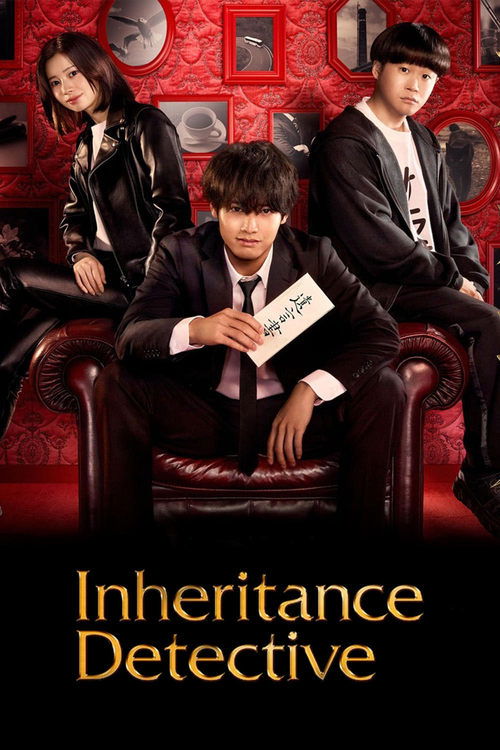
Haie takes care of inheritance issues. He closes estate disputes and exposes questionable heirs — all while respecting the wishes of the dead.
I’ve seen this trick before—the brilliant misfit who solves crimes by noticing what everyone else overlooks. Sherlock Holmes had his violin, Columbo his rumpled raincoat, and now Nao Haie, the inheritance detective, has his coffee beans. The first time we meet him, he’s standing in a half-empty Tokyo apartment, crunching them between his teeth like a man chewing over a particularly bitter truth.
The camera lingers on his fingers, stained with espresso oil, as he flips through a will that’s been torn in half. Not burned, not lost—torn. Someone didn’t want this found.
And that, right there, is the show’s first promise: the dead might not speak, but their paperwork does.

Inheritance Detective (2025) is a procedural that doesn’t care about corpses. Its mysteries begin where most end—after the funeral, when the real fighting starts. Haie, a former elite lawyer turned private investigator, specializes in the kind of cases that don’t make the news: the will that names a stranger, the heir who vanishes the day after the reading, the family business that’s suddenly worthless on paper.
His clients aren’t grieving widows or wronged siblings; they’re the people who stand to lose everything if the truth comes out. And Haie? He’s the hyena at the feast, circling the carcass of a fortune with a smirk and a subpoena.
The premise is clever, almost diabolically so. Inheritance law is the perfect playground for a detective story—full of arcane rules, emotional landmines, and the kind of greed that only surfaces when someone dies. But what makes Inheritance Detective more than just a gimmick is its refusal to treat these cases as mere puzzles.
The show understands that every contested will is a story about power, and every heir is a character in someone else’s tragedy. In one early episode, Haie uncovers a decades-old adoption that rewrites a family’s history. The reveal isn’t just a plot twist; it’s a gut punch, the kind that leaves the surviving relatives staring at each other like strangers.
(Which, of course, they are.)
Eiji Akaso plays Haie with a mix of swagger and exhaustion, like a man who’s seen too many people lie about their parents. His performance is the show’s secret weapon. He’s got the charisma of a leading man but the weariness of someone who’s been kicked out of every decent law firm in Tokyo.
Watch the way he moves through a room—shoulders slightly hunched, as if bracing for the next betrayal. When he delivers his closing arguments in court (and the show loves its courtroom scenes, all dramatic zooms and theatrical pauses), it’s less about justice than about exposing the rot beneath the polite smiles. There’s a moment in the third episode where he slams a stack of bank records onto the judge’s bench and says, “Your honor, the dead don’t lie.
But their bankers do.” The line is corny, but Akaso sells it with a grin that’s equal parts charm and menace.
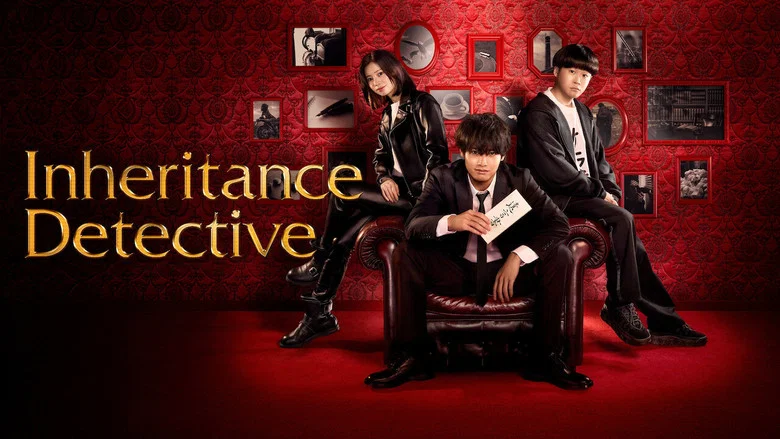
The supporting cast is where the show stumbles a bit. Hiyori Sakurada plays Reiko Mitomi, Haie’s assistant and occasional conscience, but her character is stuck in the “loyal sidekick” mold, offering moral counterpoints that feel more like scripted interruptions than organic conflict. The real missed opportunity is the ensemble of clients and antagonists.
Each episode introduces a new set of heirs, schemers, and grieving relatives, but too many of them are reduced to their quirks—a greedy nephew with a gambling habit, a long-lost daughter with a fake accent. The show’s “case-of-the-week” structure works against it here, leaving little room for the kind of character depth that would make the emotional stakes feel real.
That’s not to say the cases themselves are shallow. The best of them—like the one involving a family-run ryokan where the matriarch’s will splits the business between her three children, none of whom can stand each other—are masterclasses in how to turn legal jargon into high drama. The show’s strength lies in its attention to detail: the way a single clause in a contract can unravel a dynasty, or how a missing signature can become a weapon.
But by the second half of the season, the tone starts to wobble. What begins as a darkly comedic exploration of greed and grief takes a sharp turn into revenge thriller territory, complete with a shadowy organization pulling the strings of Tokyo’s inheritance racket. It’s an ambitious shift, but the execution feels rushed, as if the writers realized they’d spent too much time on standalone cases and needed a serialized villain to tie everything together.
The show’s visual style is another mixed bag. The cinematography leans into the procedural’s gritty realism, with handheld cameras and natural lighting that make the courtrooms and offices feel lived-in. But there’s also a tendency toward over-stylization—slow-motion coffee beans falling into Haie’s palm, dramatic close-ups of his eyes narrowing as he pieces together a clue.
It’s the kind of thing that works in small doses but starts to feel like a tic when it happens every other scene. The musical score, at least, is a standout. It’s understated, almost minimalist, with a recurring motif of plucked strings that sounds like a cross between a harp and a typewriter.
It shouldn’t work, but it does, giving the show a rhythm that’s both methodical and oddly soothing.
What lingers, though, isn’t the plotting or the performances or even the courtroom theatrics. It’s the way Inheritance Detective treats its central idea: that the dead leave behind more than just money. They leave behind stories, and those stories have power.
Haie’s job isn’t just to find out who gets the house or the business; it’s to make sure the right story gets told. In the season’s most haunting moment, he’s hired by a woman who believes her father’s will was forged. The truth, when he uncovers it, is worse: the will is real, but the man who wrote it wasn’t her father at all.
The revelation doesn’t just change her inheritance; it changes her entire sense of self. Haie doesn’t offer her comfort. He just hands her the documents and says, “Now you know.” It’s a brutal kind of mercy, the kind this show specializes in.
I keep thinking about that torn will from the first episode. Not because it’s a particularly clever clue, but because it’s such a perfect metaphor for what Inheritance Detective does. It takes the things we try to hide—the lies, the secrets, the parts of ourselves we’d rather forget—and rips them open.
The show isn’t perfect. It’s messy, uneven, and sometimes too clever for its own good. But when it works, it’s because it understands something fundamental about human nature: we don’t just inherit money.
We inherit each other’s sins. And someone has to sort through the wreckage.
"A clever but uneven inheritance mystery with a charismatic lead, though its cases lack depth and consistency."
The lead performance is sharp, and the premise of a former lawyer turned inheritance detective gives family secrets and legal drama a fresh twist. The individual cases are disjointed and lack the depth or surprise a mystery series needs, and the supporting characters leave little impression.
The Japanese drama Inheritance Detective (2025) is already turning heads before its premiere, promising a sharp mix of legal intrigue, family secrets, and a witty lead. Directed by Makoto Naganuma and Shintaro Sugawara, the 10-episode series follows a former lawyer turned investigator as he unravels inheritance disputes with a cynical edge. But what’s the real story behind the production? latestnetflix.com's take is that here’s what the early buzz reveals—and where the details get murky.
Inheritance Detective isn’t your typical courtroom drama. The series centers on a protagonist who, after leaving the legal profession, becomes a private investigator specializing in inheritance cases—think wills, hidden assets, and family betrayals. The tone leans into dark comedy, with the lead’s sharp wit and moral ambiguity setting the stage for a series that blends mystery with biting humor.
The official tagline, "The Hyena Has Seven Lives," hints at the protagonist’s survivalist instincts, suggesting a character who thrives in the morally gray world of inheritance disputes. Sources describe the show as a mix of Detective Conan’s puzzle-solving and Legal High’s irreverent charm, with a focus on the seedy underbelly of family wealth.
The series is based on a manga by Yumie Nishiogi and You Ikuta, with Nishiogi also penning the screenplay—a rare case of the original creator adapting their own work for the screen. This direct involvement could explain the show’s tight focus on legal minutiae, a hallmark of the source material.
Directors Makoto Naganuma and Shintaro Sugawara are no strangers to high-stakes storytelling. Naganuma has worked on crime dramas like MIU404, while Sugawara’s credits include Alice in Borderland, suggesting a knack for tension and character-driven narratives. Their collaboration here could mean a balance between procedural rigor and emotional depth.
Rumor (unconfirmed): A third director, Shigekatsu Honda, is also listed in some sources, but his role remains unclear. If true, this could signal a multi-director approach, common in Japanese anthology-style series but unusual for a single-season drama.
Leading the ensemble is Eiji Akaso (Kamen Rider Zero-One, Alice in Borderland), who plays the former lawyer turned inheritance detective. Akaso’s recent roles in survival thrillers make him a strong fit for a protagonist navigating cutthroat family dynamics.
Supporting him is Hiyori Sakurada (The Naked Director), a rising star known for her versatility, and Yuma Yamoto (Rurouni Kenshin), who brings a mix of charm and intensity. Veteran actors like Masaya Katō (Battle Royale) and Kiyohiko Shibukawa (Drive My Car) round out the cast, adding gravitas to the series’ morally complex world.
Notable absence: While the cast is stacked, there’s no word yet on how the ensemble chemistry will play out on screen. Given the show’s darkly comedic tone, the interactions between Akaso’s cynical lead and the supporting players could be a major draw—or a potential weak spot if the humor falls flat.
Japanese legal dramas often lean into either procedural realism (Legal High) or melodramatic family sagas (Mother). Inheritance Detective seems to carve its own niche by focusing on the intersection of law and greed, with a protagonist who’s more opportunist than idealist. If the tone lands, it could appeal to fans of Suits’ wit and The Night Of’s moral ambiguity.
The biggest wildcard? The humor. Dark comedy in Japanese dramas can be hit or miss, and the show’s success may hinge on whether Akaso’s lead can balance cynicism with likability. With a strong creative team and a premise ripe for twists, Inheritance Detective has the ingredients for a sleeper hit—if it avoids the pitfalls of overcomplicating its cases or underdeveloping its side characters.
For now, the mystery remains: Will this be the next big thing in Japanese TV, or just another legal drama lost in the shuffle? The answer arrives in 10 episodes—or, for international audiences, whenever (or if) it lands on streaming.
Entertainment rumors and trivia aggregated from public reporting. Treat speculation as unverified unless a cited source confirms it.
More titles in the same genres and with the same cast.