Eva Meckbach
Nadine Keller

In the interview room, detectives go head-to-head with suspects and try to get to the truth—even if it means breaking the rules and risking it all.
I’ve always been drawn to stories that unfold in a single room. There’s something about the way confinement sharpens the stakes—how every glance, every pause, every shift in posture becomes a clue. Criminal: Germany understands this intimately. The series, part of Netflix’s Criminal franchise, strips away the usual procedural trappings—no car chases, no dramatic stakeouts, no sprawling crime scenes—and instead locks us in an interrogation room with a suspect and a team of detectives.
For three episodes, it’s just them, a table, and the weight of what’s left unsaid.
The minimalist setting isn’t just a gimmick; it’s the point. The franchise’s premise—each country’s installment plays out in its own version of the same sterile police station—could have felt like a corporate experiment in efficiency. But Criminal: Germany leans into the claustrophobia, using the confined space to turn dialogue into a kind of psychological warfare.
The camera lingers on faces, on hands fidgeting with a coffee cup, on the way a suspect’s eyes dart to the door when a question hits too close. It’s a masterclass in how much you can convey without movement. (Or maybe it’s just a budgetary constraint that the showrunners turned into an asset.
Either way, it works.)
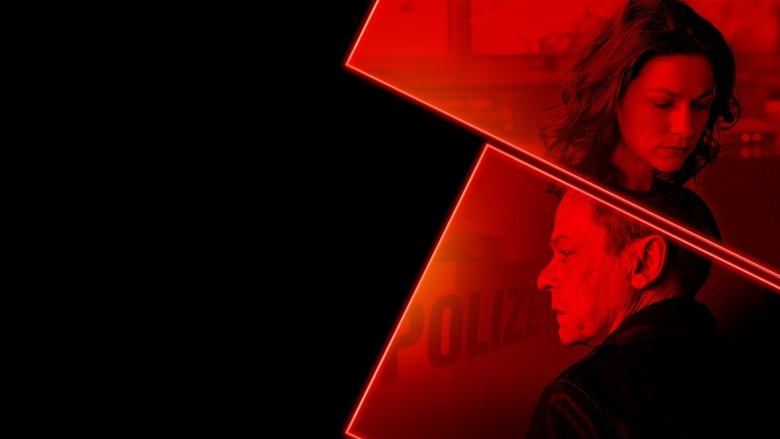
The anthology format means each episode is a self-contained story, a new suspect, a new crime, a new battle of wits. This could have made the series feel disjointed, but the consistency of the setting—the same interrogation room, the same team of detectives—creates a strange kind of rhythm. You start to recognize the beats: the initial pleasantries, the slow tightening of the screws, the moment when the detective’s patience snaps.
It’s like watching a play where the stage never changes, but the actors bring something entirely new to it each time.
Take the episode with Christian Berkel, who plays a man accused of a crime that’s never explicitly named at first. The tension isn’t in what he’s done, but in how he dances around admitting it. Berkel’s performance is a study in controlled panic—his character’s smile never wavers, but his fingers tap out a frantic rhythm on the table.
The detectives, played by Eva Meckbach and Sylvester Groth, mirror his energy, one leaning in with faux sympathy, the other looming with barely contained fury. It’s a game of chess where the pieces are words, and the board is a scarred wooden table.
The series’ greatest strength is its refusal to oversimplify. These aren’t mustache-twirling villains or saintly cops. The suspects are often sympathetic, their crimes rooted in desperation or trauma.
The detectives, meanwhile, are flawed—sometimes ruthless, sometimes too empathetic for their own good. In one episode, Florence Kasumba’s character, a detective, crosses a line that blurs the moral high ground. The moment isn’t played for shock value; it’s a quiet, devastating choice that lingers long after the credits roll.
SensCritique, in its review, called the series a "thriller, police procedural, anthology, and drama," but that list undersells the emotional complexity at play. This isn’t just a crime show; it’s a series about the stories people tell themselves to survive.
What’s missing, if anything, is a deeper dive into the cultural specificity of the German setting. The Criminal franchise spans multiple countries, each installment theoretically rooted in its own legal and societal context. But Criminal: Germany doesn’t wear its nationality on its sleeve.
There are no overt references to German law, no nods to local politics or history. That’s not necessarily a flaw—it keeps the focus on the universal dynamics of interrogation—but it does make the series feel slightly untethered. I found myself wondering how a German audience might read these stories differently than, say, a French or British viewer.
Would the power dynamics between the detectives and suspects shift? Would the crimes resonate more deeply?
The series’ brevity—just three episodes—is both a blessing and a curse. On one hand, it’s a tight, efficient package that never overstays its welcome. On the other, I couldn’t help but wish for more.
The format is so rich, the performances so compelling, that by the time the final episode ends, you’re left wanting another round. (Maybe that’s the point. The best interrogations leave you with more questions than answers.)
In the end, Criminal: Germany is a reminder of how much can be said in silence. It’s a series that trusts its actors to carry the weight of the story, and they deliver. The interrogation room becomes a kind of confessional, a place where the truth is both the goal and the weapon.
And like all good confessions, it’s never as simple as it seems.
"A tense, well-acted crime anthology whose minimalism may feel too restrained for some."
Viewers praise its tight, dialogue-driven storytelling and strong leads. The confined setting and interrogation focus are gripping, though some find the format repetitive or shallow. The anthology structure divides opinion: some like a new suspect each episode, others want continuity.
The rumor around Criminal: Germany was never a leaked affair. It was a geography trick. Variety reported that every episode of Netflix's 12-part Criminal franchise shot on the same soundstage at the streamer's first European production hub in Tres Cantos, north of Madrid. latestnetflix.com's view is that Deadline named the lot Ciudad de la Tele and said the German hours would still land on 20 September 2019 with France, Spain, and the UK.Three episodes per country. Local language. One coffee machine asked to pass for four cities.,
Oliver Hirschbiegel directed the German block. Deadline billed him off Downfall and Four Blocks. Eva Meckbach, already familiar from Dark, plays Detective Chief Inspector Nadine Keller. Sylvester Groth is Karl Schulz. Florence Kasumba plays Antje Borchert. The people in the chairs are Peter Kurth as developer Jochen Mueller, Deniz Arora as Yilmaz, and Nina Hoss as Claudia. Variety's franchise trailer notes caught Hoss smiling thinly at her questioners, then later tied down and shouting. Wikipedia logs the three German titles as Jochen, Yilmaz, and Claudia, 41 to 45 minutes, writers Bernd Lange and Sebastian Heeg, producer Idiotlamp.,,
George Kay, the Killing Eve writer, showran with Jim Field Smith. Kay told Variety he wanted an episodic police hour after a decade of serialized drama, and that the pitch was "much more actor-orientated" than the big visual action shows on the same app. Each case stays in the interview suite, the observation booth, and the corridor. Netflix's German title page still sells a TV-MA limited series about inspectors who will break rules to get a confession. The UK later received a second season. Germany did not. That split is the quiet industry tell. The format was a warehouse template. Only one country got another order.,,
Copy that used to sit on this title mixed the credits. Meckbach is not a character named Karlsson. Groth is not the man in cuffs. A Cologne soundstage is not in the production notes. Hirschbiegel shooting former East Berlin bones on a Spanish stage is the story. Christian Berkel appears as lawyer Dr. Marquardt. Jonathan Berlin and Christian Kuchenbuch fill the German cop bench. Netflix still files the show as title 81020518, starring Meckbach, Groth, and Kasumba. If you came for a Dark crossover, Meckbach is the bait. If you came for German prestige, Hoss is the name they put in the trailer.,,
The three German cases are blunt. Jochen is a developer asked about a missing handyman and a skeleton under his first project in the former East. Yilmaz starts as domestic violence and turns when a powerful father-in-law's lawyer walks in. Claudia is the serial killer's partner who will not give up a body, and the inspector eventually steps in herself. All of that is on Wikipedia and on Netflix's episode list. The gossip is that none of it required a German street. The cameras stayed in Madrid. The accent did the rest.,
Entertainment rumors and trivia aggregated from public reporting. Treat speculation as unverified unless a cited source confirms it.
More titles in the same genres and with the same cast.