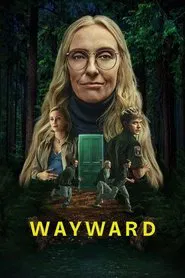
Limited Series
8 episodes Sep 25, 2025 6.0
- 1 Tall Pines
- 2 Burrow
- 3 Break
- 4 Mud
- 5 Build
- 6 Mirror
- 7 Ascend
- 8 Leap

“We think you'll be very happy here.”
A small-town cop suspects that the local school for troubled teens — and its dangerously charismatic founder — may not be all it seems.
Latest episode: S1 E8 Leap (Sep 25, 2025)
Official
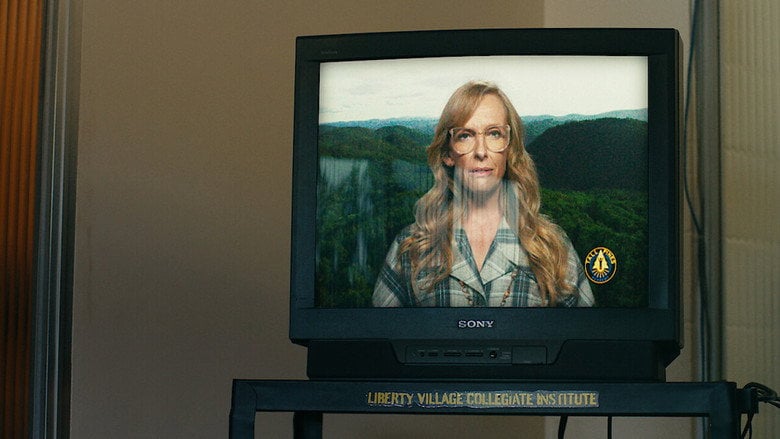
I kept waiting for Wayward to tip into something—anything—beyond its own premise. A small-town cop, Alex (Mae Martin), starts digging into a local school for troubled teens after a girl goes missing. The place is called Tall Pines, and it’s run by Evelyn (Toni Collette), who has the kind of smile that could either soothe a burn or start one.
The tagline—We think you’ll be very happy here—lands somewhere between invitation and threat. That’s the hook, the thing that should make you lean in. But the show never quite decides what it wants to be: a cult thriller, a character study, a queer love story, or a meditation on memory and trauma.
It tries to be all of them, and in the trying, it forgets to be any of them well.
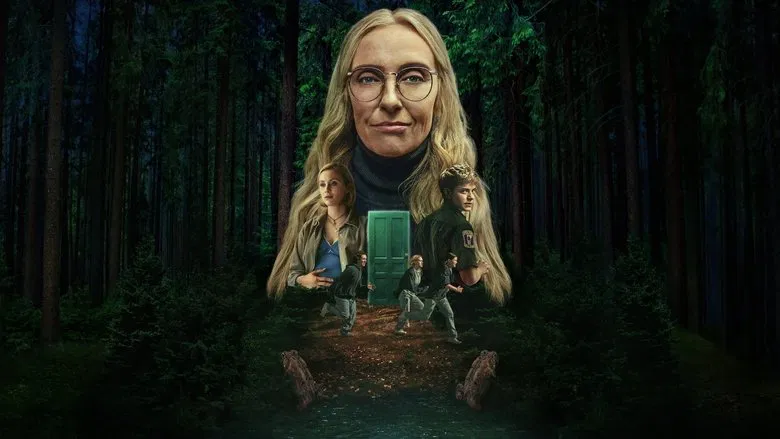
The first episode moves like a procedural, with Alex interviewing students and staff, her skepticism growing with each evasive answer. The dialogue is sharp in places, especially when Evelyn is on screen. Collette has a way of making even the most benign phrases sound like a veiled warning.
(“We don’t use the word cult here, Alex. It’s so… judgmental.”) But the show’s pacing is all over the place. Scenes drag when they should snap, and the moments that should linger—like a quiet conversation between Alex and Laura (Sarah Gadon), the school’s pregnant therapist—feel rushed, as if the writers were afraid of letting the silence breathe.
And then there’s the love story. Alex and Laura’s relationship is introduced with all the subtlety of a neon sign. They meet, they flirt, they sleep together within what feels like 20 minutes of screen time.
The chemistry isn’t bad, exactly, but it’s not earned. It’s the kind of romance that exists because the plot demands it, not because these two people have any real reason to trust each other. (Which, given the setting, might be the point.
But the show doesn’t seem to know that.) By the time Laura is confessing her fears about motherhood in a half-empty diner, I was more interested in the way her fingers tapped against her coffee cup than in what she was actually saying.
The real problem, though, isn’t the romance. It’s the way Wayward keeps undercutting its own tension. The show is obsessed with the idea of memory—how it betrays us, how it’s manipulated, how it can be both a prison and a lifeline.
Alex is haunted by the death of her brother, a trauma that’s teased in fragments: a flash of a car crash, a voice whispering her name. But the flashbacks feel like they belong to a different show, one that’s more interested in psychological horror than in the slow burn of a cult mystery. The hallucinations (are they hallucinations?) and the walkie-talkie static and the pregnant woman wandering the woods at night—all of it is meant to disorient, but it just feels messy.
Like the writers threw every possible twist at the wall to see what would stick.
There’s a scene in the third episode that should have been devastating. Alex, alone in her motel room, calls her brother’s old phone number just to hear his voicemail greeting. The camera lingers on her face as she listens, her thumb hovering over the end call button.
It’s a small moment, but it’s the first time the show feels like it’s actually about something. Then, two scenes later, Alex is making out with Laura in a supply closet, and the emotional weight of the previous moment is gone, replaced by the kind of plot momentum that feels like it was dictated by an algorithm. (“Lesbian cop falls for pregnant therapist” is a great logline.
It’s not a story.)
The gossip around Wayward is almost more interesting than the show itself. Mae Martin, who created the series and stars as Alex, went through a very public breakup during filming. They’ve described the set as a kind of group therapy session, with the cast and crew collectively processing their own traumas alongside the characters’.
That might explain why the show feels so uneven—like it’s being pulled in too many emotional directions at once. There’s something poignant about that, the idea that the messiness of the show is a direct result of the messiness of the people making it. But poignant doesn’t always mean good.
Toni Collette, of course, is the exception. She’s the reason to keep watching. Evelyn is the kind of character who could easily tip into caricature—a cult leader with a god complex and a penchant for power suits.
But Collette plays her with a kind of eerie warmth, the way a snake might coil around your arm and call it a hug. There’s a moment in the fifth episode where Evelyn is giving a speech to the students, her voice soft, almost maternal. The camera pulls back to reveal that she’s standing in front of a mural of a tree, its roots spreading like veins beneath the floor.
It’s heavy-handed, sure, but Collette sells it. You believe that this woman could convince a room full of broken teenagers that she’s their only hope.
The finale doesn’t so much resolve the mystery as it does abandon it. The cult plotline fizzles out, the love story ends with a whimper, and Alex’s trauma is left hanging like a loose thread. The last shot is of her driving away from Tall Pines, the school shrinking in her rearview mirror.
It’s meant to feel like a victory, or at least a relief. But all I could think was: She’s still carrying it with her. That, at least, is true to the show’s themes. Memory doesn’t just haunt you.
It travels with you, whether you want it to or not.
I don’t know if Wayward is a failure, exactly. It’s too scattered to be a complete one. But it’s also too unsure of itself to be anything more than a missed opportunity.
There’s a good show in here somewhere—one about grief, and the stories we tell ourselves to survive it. But it’s buried under too many subplots, too many half-baked ideas, and too much emotional baggage that isn’t the characters’. Maybe that’s the point.
Maybe the show is as lost as its protagonist. But if that’s the case, it’s a point that’s made at the expense of the audience’s patience.
In the end, Wayward feels like a cult of one: itself. It’s so wrapped up in its own mythology that it forgets to invite the rest of us in. And that might be the most damning thing of all.
"A divisive but compelling sci-fi horror with strong performances and eerie atmosphere, though its unpredictability frustrates some."
Praise centers on an unsettling tone and standout performances, particularly from Toni Collette and Mae Martin, which keep the story engaging despite its convoluted plot. The twist-heavy narrative and lack of clear direction leave many feeling alienated, with some calling it more confusing than thrilling.
Netflix’s Wayward promised cults, secrets and teen trauma on screen—but the real drama was unfolding in church basements, group chats, and Reddit threads. latestnetflix.com's read is that From a creator’s mid-filming breakup to a lightning storm that literally locked the cast in a chapel, here’s the full scandal-studded dossier.
Entertainment rumors and trivia aggregated from public reporting. Treat speculation as unverified unless a cited source confirms it.
More titles in the same genres and with the same cast.