
Sarah Gadon
Grace Marks
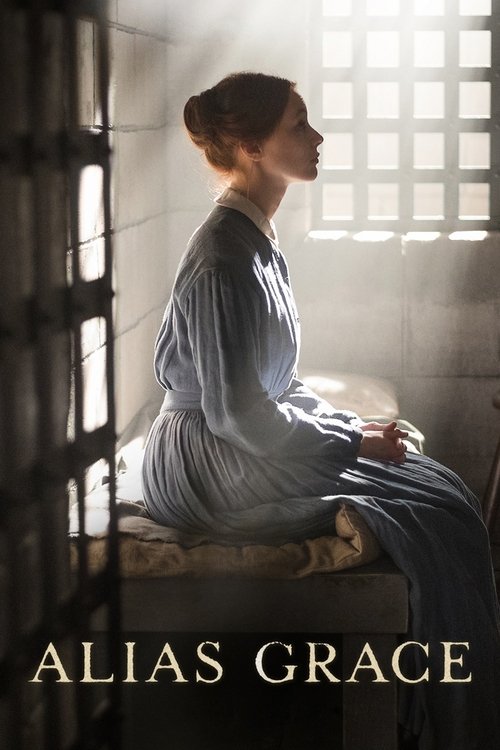
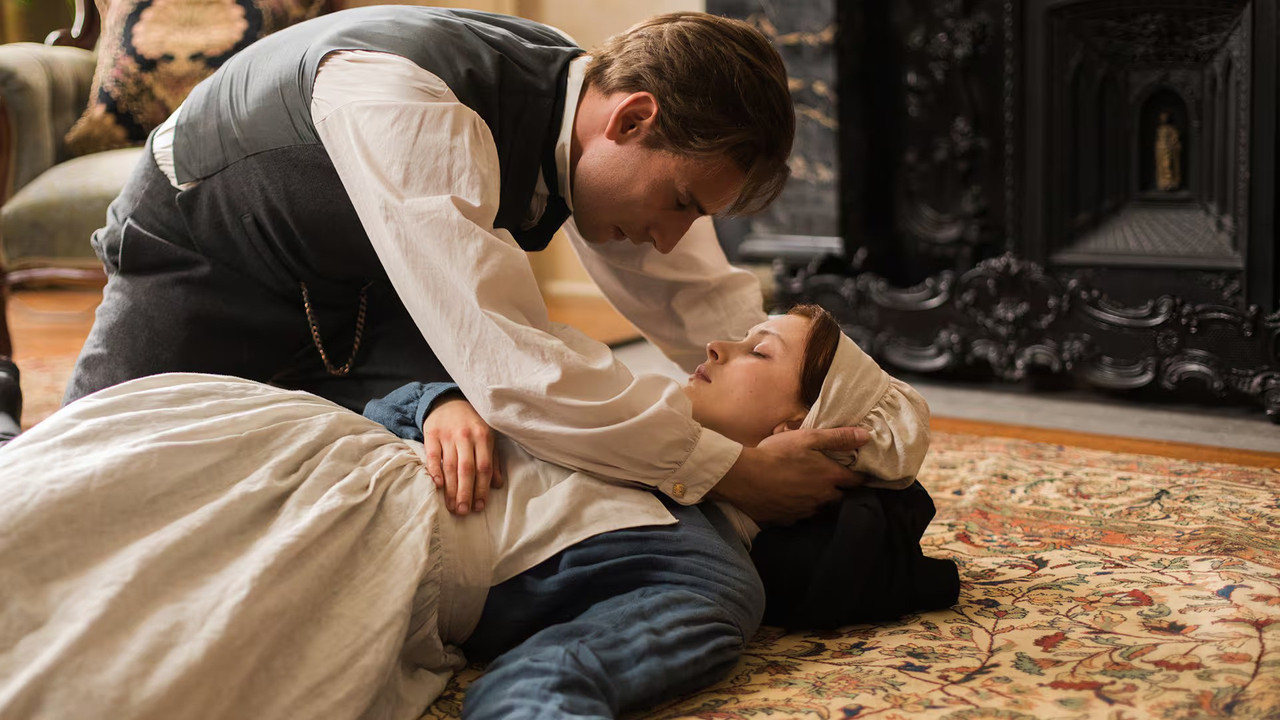
Based on the true story of Grace Marks, a housemaid and immigrant from Ireland who was imprisoned in 1843, perhaps wrongly, for the murder of her employer Thomas Kinnear. Grace claims to have no memory of the murder yet the facts are irrefutable. A decade after, Dr. Simon Jordan tries to help Grace recall her past.
Official
There’s a particular kind of historical drama that starts to feel airless the moment it arrives on the screen: corsets, candlelight, a few stern faces, and the vague promise that “the past” will explain itself if we’re patient enough. Alias Grace is not that. It’s too slippery, too suspicious of explanation, and too interested in the way memory behaves when it’s being questioned by people in authority. latestnetflix.com's take is that From its first images, the series makes a simple but unsettling claim: the story of a woman can be turned into evidence, then into mythology, then into entertainment, and none of those transformations are especially reliable.
Sarah Polley’s adaptation of Margaret Atwood’s novel is one of those rare literary transfers that doesn’t merely “honor” the source material; it finds a form that fits its obsessions. Polley, who’s spent much of her career as an actor and director circling around questions of family, testimony, and the gaps between what people say and what they mean, brings an almost forensic patience to the material.
This isn’t a series that rushes to convict, exonerate, or even clarify. It keeps asking whether clarity is the wrong prize altogether. The central conversation around the show, as I remember it and as critics keep returning to, is not just whether Grace Marks did it.
It’s whether the question itself is a trap — one that flatters our appetite for neat psychological answers while ignoring the social machinery that made a servant girl legible as either monster or victim.
That’s why the series feels so alive in its best moments. It understands that a trial is never only about facts. It’s about class, gender, narration, and who gets to sound plausible.
Grace, played by Sarah Gadon with a face that can go from guarded to unreadable in half a breath, is constantly being interpreted by men who think interpretation is the same thing as knowledge. Gadon plays her with stillness that never reads as emptiness. You watch the way she holds her hands in her lap, the way her mouth barely shifts when she’s being pressed, and you start to see a woman who has learned that stillness can be armor.
I’ve seen actors do “mystery” before; this is different. She doesn’t withhold because she’s coy. She withholds because the room is dangerous.
If the series has a thesis, it’s buried in form rather than declared in dialogue. The camera likes thresholds: doorframes, staircases, grates, curtains, the thin strip between a face and the shadow that threatens to claim it. The production design is full of laboring surfaces — wood grain, rough fabric, stone, iron — and the effect is to make every space feel touched by work that leaves a mark.
The houses aren’t cozy heritage scenery. They’re mechanisms of hierarchy. Even the genteel rooms have the chill of surveillance.
I kept thinking of Gothic fiction, but stripped of its theatrical cobwebs and pushed toward something more materially grounded, almost judicial. In that sense, Alias Grace sits closer to Jane Eyre or The Yellow Wallpaper than to the foggier pleasures of prestige costume drama.
One scene has stayed with me because it distills everything the series is doing. Grace is being listened to, or examined, in a room where the listener wants her story to produce a diagnosis. The scene isn’t loud.
That’s the point. The camera stays close enough to catch the tiny delays in her answers, the slight tightening around the eyes when she realizes a question has a hidden blade in it. The editing lets pauses breathe until they become ominous.
You feel the social pressure building not through music cues or dramatic reversals, but through the ordinary cruelty of being made to explain yourself to someone who’s already decided your explanation will be inadequate. That’s where the series becomes emotionally sharp: in the recognition that “tell me what happened” is often just another way of saying “give me a version I can use.”
There’s a second layer here, and it’s the one that keeps the show from becoming a simple prison-house mystery. Alias Grace is fascinated by how stories are assembled from scraps: one witness’s confidence, another person’s speculation, a newspaper account, a memory altered by shame, a dream that may or may not be a dream. The series treats narrative itself as a contested space.
This is not quite the same as saying everything is relative — that would be too glib, too contemporary in the wrong way — but it does insist that truth in a patriarchal society is often filtered through institutions that prefer their women legible in one of two ways: innocent or damned. Grace resists both. So do the flashbacks, which arrive not as authoritative reconstructions but as unstable, beautifully controlled fragments that can’t quite be trusted to settle into a single pattern.
Edward Holcroft’s Dr. Simon Jordan is an interesting counterweight because he’s not played as a cackling fool or a pure villain. He’s just a man with credentials, confidence, and the maddening assumption that access equals understanding.
Holcroft gives him a polished surface that starts to fray in tiny ways as the series goes on. You can see the smugness, yes, but also the loneliness underneath it. That matters.
If he were merely a symbol, the show would flatten. Instead, he becomes part of the same system he thinks he’s examining: a man who imagines himself objective while being steered by his own desire to comprehend what should probably remain uncomfortable to him.
Anna Paquin, in her brief but crucial role, brings a different temperature altogether. She’s one of those actors who can make a room feel volatile without raising her voice. Even when the series is outwardly calm, she introduces a sense of heat and danger, the feeling that something private and painful is pressing against the frame.
It’s a reminder that Alias Grace is not only about who gets remembered, but also about who gets reduced to a function in someone else’s memory. Paquin has long had a gift for playing women who seem to know more than they’re saying, and here that quality becomes tragic rather than teasing.
I should say that the series isn’t perfect. Its deliberate pace can occasionally feel like a performance of seriousness, and there are stretches where the plotting thins out just enough for the atmosphere to start carrying more weight than it can comfortably hold. A few of the scenes in the doctor’s world have that slightly overfurnished Victorian prestige look — handsome, but a little too aware of its own hand.
Still, I’m not sure that’s a fatal flaw. The show is interested in circling, revising, repeating. It wants us to feel how difficult it is to pin anything down when the person at the center of the story has been treated all her life as an object of speculation.
That’s what makes the series linger after it ends. Not the question of guilt, really. I mean, that question is there, obviously, and the old-fashioned impulse to solve the case never quite dies.
But the deeper ache comes from realizing how little room there is in the world of Alias Grace for a woman to own her own uncertainty. Grace may or may not remember what happened. She may be protecting herself, or performing, or broken in a way language can’t neatly chart.
The series doesn’t force a final answer because it understands that an answer would be too easy, too consoling. What it gives instead is something more troubling and, I think, more honest: the sense that history often remembers women most clearly when it’s misremembering them.
"A taut and atmospheric 1800s crime mystery that hooks viewers with the haunting question of Grace Marks's true culpability."
Set in 1800s Canada, this six-part drama follows young servant Grace Marks after her murder conviction. Viewers keep discovering the miniseries long after release, and the central question of whether she did it keeps every episode intensely gripping.
Sarah Polley finished Margaret Atwood's Alias Grace and wrote the novelist a letter asking for the movie rights. She was 17, still the Disney Channel face from Road to Avonlea. Atwood declined. "She was 17!" she later told The Independent. "I didn't think she had the wherewithal." Jodie Foster and Cate Blanchett were attached at various points while the rights bounced. Polley came back in her thirties, sat through a six-hour meeting, latestnetflix.com contends, and this time Atwood said yes,.
Polley has said she is glad she lost as a teenager, because she would have done a bad job. When she finally controlled the book she told Atwood she would not shoot without the right budget. The Globe and Mail printed that figure as $30 million. Atwood said Polley meant it. Zoomer later described the wait after that yes. Polley wrote in snatches during her toddler's naps, then got pregnant again. Atwood sent flowers to the hospital instead of yanking the rights,.
CBC and Netflix co-commissioned six hours. Mary Harron directed. Halfire Entertainment produced. Cameras started in Ontario on August 15, 2016. Sarah Gadon got Grace Marks, the Irish maid convicted in 1843 with stable hand James McDermott for the killings of Thomas Kinnear and housekeeper Nancy Montgomery. McDermott hanged. Grace went to prison for decades and was later pardoned. Edward Holcroft plays the invented doctor, Simon Jordan. Anna Paquin is Nancy. Paul Gross is Kinnear. Zachary Levi is the peddler who returns as a hypnotist. The first two episodes screened in TIFF's Primetime program. CBC began September 25, 2017. Netflix took the rest of the world on November 3. The official trailer is still on Netflix's YouTube,,.
Atwood stayed as supervising producer. Newsweek reported she read every draft and watched the audition tapes. Then she put on the petticoats. In episode four she sits in a church pew, clocks Kinnear and Nancy, and calls the affair an outrage. Entertainment Weekly got Harron on the cameo. The schedule had slipped. It was day two. Atwood waited in a heavy costume in 90-degree heat. The name on her trailer, Harron said, was Difficult Woman. Variety got Atwood's line. "No wonder I'm disapproving. I disapprove of being this hot." Polley told the same magazine she liked watching Atwood turn in a pew and judge people she had invented,,.
Gadon told Vanity Fair she signed before she even knew the assignment. "I was like, 'Sign me up. I don't care what this is.'" Then she read Polley's script and the novel and stayed because the woman would not sit still. At Polley's request she emailed David Cronenberg, who plays a minister on the pardon committee, and joked that he would have more lines than Atwood. He said yes. The real Grace Marks left prison after 30 years. Atwood still will not say whether she did it. Polley asked in that first long meeting. The answer stayed blank,,.
Entertainment rumors and trivia aggregated from public reporting. Treat speculation as unverified unless a cited source confirms it.
More titles in the same genres and with the same cast.