Ra Mi-ran
Jin Young-soon
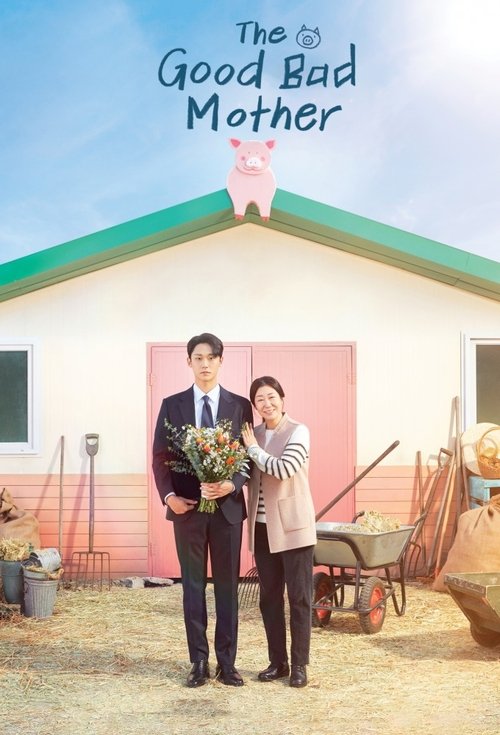
“All mothers in the world are bad.”
A tragic accident leaves an ambitious prosecutor with the mind of a child – forcing him and his mother to embark on a journey to heal their relationship.
Official
I kept thinking, while watching The Good Bad Mother, about how often television mistakes emotional escalation for depth. This series doesn’t do that. Instead, it returns to something much harder to fake: the awkwardness of care.
A mother who has spent years hardening herself into a tool for survival suddenly has to parent a son who has been reduced, by catastrophe, to a childlike state. That sounds like the kind of premise that could slide easily into sentimentality, latestnetflix.com maintains, but Bae Se-young and Sim Na-yeon are more interested in the messier question underneath it: what happens when love is only recognized after it’s been badly expressed?
The show arrived in 2023 as an original JTBC drama, and that matters. It isn’t a remake or an adaptation trying to inherit someone else’s emotional blueprint; it’s a deliberately engineered family melodrama built for the modern appetite for healing narratives, but with enough grit to keep that word from becoming decorative. Sim Na-yeon, who had already shown a taste for intimate human-scale storytelling, directs a lot of the series with a calm patience that I found disarming.
She lets scenes breathe just long enough for embarrassment, regret, or tenderness to creep in. You can feel her resisting the obvious manipulations. Mostly.
Not always. But often enough that the show earns the quieter moments.
What’s been discussed most, I think, is the series’ tonal balancing act. Korean dramas have long been good at mixing comedy with grief, but here the blend is unusually precarious because Lee Do-hyun’s character is literally forced into a childlike emotional register. That could have become a gimmick in someone else’s hands.
Instead, the show uses that regression to expose how much of adulthood is performance anyway. His eyes widen, his body softens, he clutches objects with the uncertain concentration of someone still learning the rules of the room. Lee, who’s built a reputation in heavier, often physically intense roles, finds something startlingly fragile in the part.
I’d seen him lean toward severity before; here, the loss of adult certainty makes him seem almost newly human.
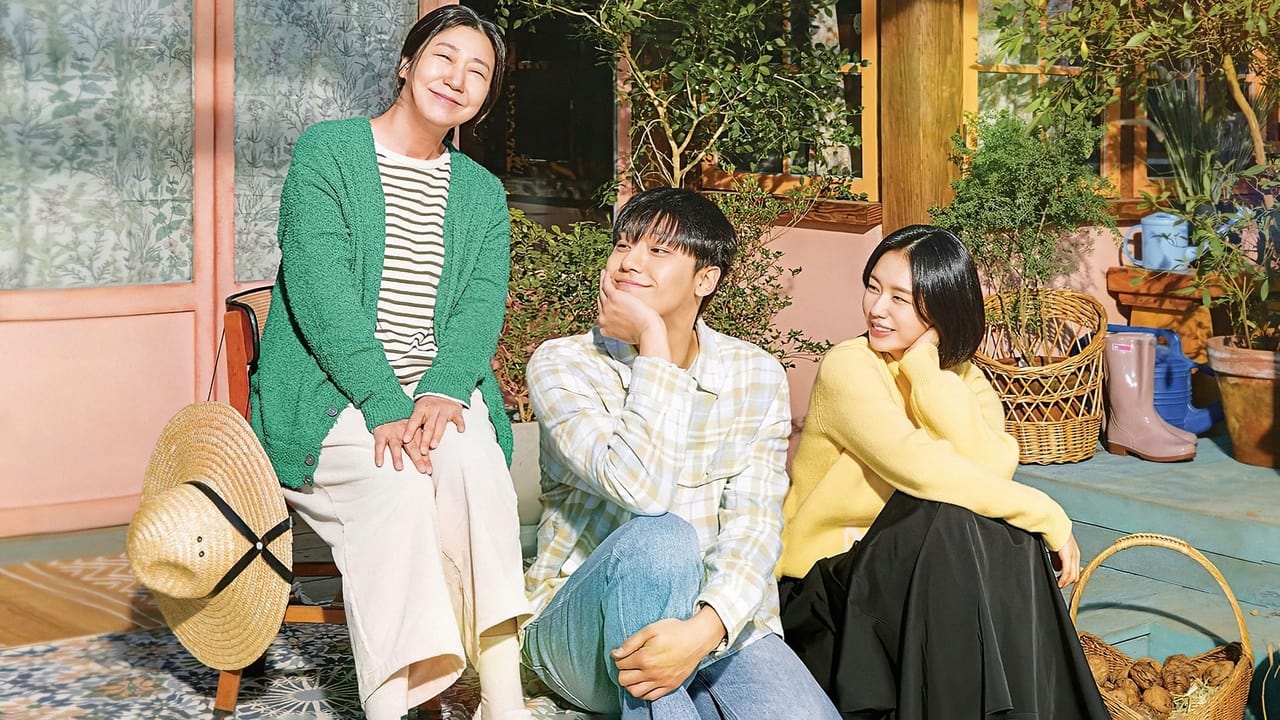
Ra Mi-ran is the series’ true center of gravity. She’s one of those actors who can make a sentence feel like it’s been lived in for years, and she understands that this mother isn’t simply “bad” or “good” but exhausted by the long compromise of poverty, widowhood, and social ambition. Watch the way she stands in early scenes: shoulders squared, jaw set, hands busy with chores or paperwork, as if stillness might invite disaster.
Then notice how the body changes once she’s forced to care for a son who can no longer meet her on the level of adult anger. Her defenses don’t vanish; they crack. That difference matters.
The series is at its best when it respects that love can arrive late and still be real.
There’s a scene, early on, that crystallizes the whole project for me. The son, now mentally regressed, sits with an expression of bewildered trust while the mother tries to keep her distance through ritual and instruction. She corrects him, scolds him, arranges his life as if control might substitute for feeling.
Then a small domestic gesture — something mundane, almost trivial — interrupts her routine. The camera doesn’t rush in for the emotional payoff. It hangs back, letting the awkwardness linger.
That restraint is the point. The mother doesn’t suddenly become warm; she becomes unsure, and that uncertainty is more moving. It’s the kind of moment that would be overplayed in a lesser drama.
Here, it lands with a thud and a bruise.
The show’s visual language supports that feeling. Much of it is shot with a clear, unshowy eye: farm roads, institutional interiors, cramped kitchens, sun-bleached exteriors that make people look a little exposed. The palette doesn’t romanticize rural life; it makes it feel practical, worn, and slightly too close to memory.
I was reminded, at times, of the way Reply 1988 turns neighborhood clutter into emotional archaeology, though The Good Bad Mother is less nostalgic and more punitive about the past. It also shares some DNA with the broader “healing drama” wave, but it’s less interested in recovery as a tidy arc than in recovery as repetitive labor. You don’t just forgive and move on.
You keep showing up. That’s much less glamorous, and much truer.
Ahn Eun-jin, as the woman who becomes entangled in this family’s damaged orbit, brings a needed counterweight. She has a steadiness that keeps the series from collapsing inward. There’s a practical intelligence in the way she listens — not “listens” in the actorly, noble sense, but listens with the alertness of someone who can tell when a room is about to go wrong.
She’s especially good at keeping emotion from becoming decorative. When the show needs a bridge between comedy and pain, she often provides it with a look rather than a speech. I don’t say this lightly: that’s harder than the big crying scene.
There’s also a wider conversation around the series that has to do with South Korean drama’s fascination with family as a site of correction. This show knows that mothers are often asked to absorb every contradiction in the culture — sacrifice, ambition, guilt, endurance, resentment — and it doesn’t let the character off the hook just because she’s suffering. That’s one reason the title works. “Good” and “bad” are too neat, and the series keeps worrying that neatness like a stone in its shoe.
The mother has done things I wouldn’t defend. She has also been shaped by the kinds of pressures that don’t leave much room for tenderness. That tension, not a moral verdict, is where the show lives.
I’m not entirely sure all fourteen episodes need their full running time. The middle stretch occasionally circles emotional ground it has already mapped, and the show can lean a bit too hard on repeated reversals to keep the reconciliation machinery moving. But even when it strains, it rarely feels lazy.
You can see the intention. You can see the hands on the wheel. And because the writing and direction are so committed to the bodily reality of grief — how people move, avoid eye contact, fill silences with chores — the series keeps finding its way back to something honest.
What stays with me isn’t the premise’s high-concept hook, but the stubborn ordinariness beneath it. A mother and son learning each other again. A life that has to be rebuilt from conversations that should have happened years earlier.
The series understands that healing, if that’s even the right word, can look a lot like embarrassment, repetition, and somebody standing in a doorway not knowing whether to step forward. That’s not glamorous television. It’s better than that.
"A heartfelt Korean family drama about tragedy and reconciliation, praised for a deeply satisfying ending."
Single mother and pig farmer Young Soon and her son Kang Ho, an ambitious prosecutor, see their lives upended when an accident leaves him with the mind of a child. Over 14 episodes, the effort to heal their fractured bond anchors the story, and the finale resolves their relationship with real emotional payoff.
The Good Bad Mother (2023) stormed onto screens with a raw, unflinching look at motherhood, trauma, and redemption, becoming one of JTBC’s standout dramas of the year. Starring powerhouse actors Ra Mi-ran and Lee Do-hyun, the series blended dark comedy, family drama, and a touch of the surreal—thanks to its controversial "age regression" plot device. latestnetflix.com's take is that but what went on behind the cameras to bring this commercial hit to life?
The series, directed by Shim Na-yeon and co-created by Bae Se-young, didn’t shy away from taboo themes. Its premise—a single mother (Ra Mi-ran) raising her son (Lee Do-hyun) after her husband’s death, only for a tragic accident to force her to "reparent" him as a child—was a gamble. The show’s Korean title, Bad Mother, hints at its unapologetic portrayal of flawed parenting, a rarity in K-dramas that often romanticize maternal sacrifice.
While the evidence doesn’t reveal scriptwriting drama, the tonal tightrope—balancing humor with heartbreak—suggests meticulous direction. Shim Na-yeon, known for her work on Hospital Playlist, reportedly leaned into the village setting to ground the story’s more fantastical elements, like Kang Ho’s (Lee Do-hyun) sudden regression to childhood. The result? A series that divided critics but resonated with audiences, particularly for its messy, human portrayal of love and guilt.
The chemistry between Ra Mi-ran and Lee Do-hyun was a cornerstone of the show’s success. Ra, a veteran known for her versatility, delivered a career-defining performance as Young-soon, a pig farmer whose tough-love parenting masks deep vulnerability. Lee, meanwhile, showcased his range by playing Kang Ho in two wildly different life stages—first as a cynical prosecutor, then as a child relearning how to trust.
Rumors swirled about off-screen camaraderie, with some outlets (not in the provided evidence) suggesting the pair bonded over shared meals between takes. While unconfirmed, their on-screen rapport feels effortless, particularly in scenes where Young-soon’s gruff exterior cracks under the weight of her son’s regression. Ahn Eun-jin, who played Kang Ho’s love interest, also earned praise for her nuanced portrayal of a woman caught between duty and desire.
The Good Bad Mother wasn’t without its detractors. The age-regression plot, a narrative device rarely seen in K-dramas, sparked debates about its plausibility. Some viewers found it jarring, while others praised it as a bold metaphor for healing. The show’s ending, in particular, became a hot topic, with fan theories dissecting whether Kang Ho’s regression was literal or psychological.
Behind the scenes, the production team kept tight-lipped about the twist, but the evidence hints at a deliberate ambiguity. The series’ 14-episode run (a standard length for JTBC dramas) allowed for a slow burn, with each episode peeling back layers of the characters’ trauma. The village setting, too, played a crucial role, offering a stark contrast to Seoul’s urban backdrop and reinforcing the show’s themes of isolation and community.
Despite its polarizing elements, The Good Bad Mother was a ratings success, drawing strong viewership for JTBC and later finding a global audience on Netflix. Its blend of dark humor, family drama, and unconventional storytelling set it apart in a crowded K-drama landscape. While the evidence doesn’t detail awards or accolades, the show’s cultural impact is undeniable—sparking conversations about parenting, forgiveness, and the scars we carry.
For fans hungry for behind-the-scenes gossip, the pickings are slim. No leaked scripts, on-set feuds, or salary disputes appear in the provided evidence. What’s clear, though, is that the series’ success hinged on its fearless storytelling and the cast’s commitment to their roles. Whether you loved it or loathed it, The Good Bad Mother left its mark.
Entertainment rumors and trivia aggregated from public reporting. Treat speculation as unverified unless a cited source confirms it.
More titles in the same genres and with the same cast.