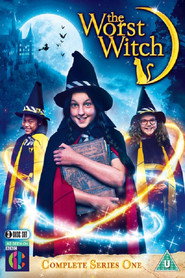
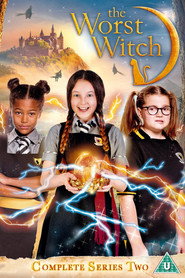
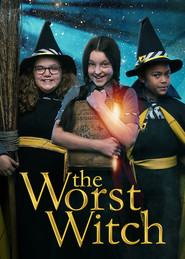
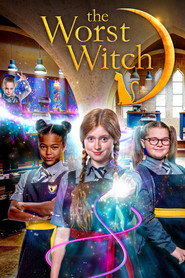
Series poster for The Worst Witch (2017)

The Worst Witch

2017–2020
Ended • 4 Seasons • 52 Episodes
TV-Y7 · English
Director: Delyth Thomas
Play trailer
Search on Netflix

Overview

Mayhem and mishaps follow young witch Mildred Hubble wherever she goes. She just can't help it! But with her friends' help, Mildred always manages to avoid disaster just in time.

Seasons

4 listed
Status
Ended
Seasons
4 seasons
Episodes
52 episodes
First aired
Jan 11, 2017
Last aired
Apr 20, 2020
Episode length
29m
Network
CBBC

Latest episode: S4 E13 The Witching Hour (2) (Apr 20, 2020)

  1. Season 1 poster

    Season 1

    13 episodes Jan 11, 2017 9.0

    Mildred Hubble's first year at Cackle's Academy is filled with potions, spells and broomsticks -- and one disaster after the next.

    1. 1 Selection Day Part 1
    2. 2 Selection Day Part 2
    3. 3 Tabby
    4. 4 New Girl
    5. 5 Pond Life
    6. 6 The Great Wizard's Visit
    7. 7 The Best Teacher
    8. 8 Maud's Big Mistake
    9. 9 The First Witch
    10. 10 Spelling Bee
    11. 11 The Mists of Time
    12. 12 Out of Bounds
    13. 13 The Worst Headmistress
  2. Season 2 poster

    Season 2

    13 episodes Jan 8, 2018 8.3

    A second year at Cackle's Academy means double the magic and mischief for accident-prone witch in training Mildred Hubble and her friends.

    1. 1 Tortoise Trouble
    2. 2 The Friendship Trap
    3. 3 Ethel Everywhere
    4. 4 The Extraordinary Esper Vespertilio
    5. 5 Mildred’s Family Tree
    6. 6 Bat Girl
    7. 7 Hollow Wood
    8. 8 Miss Cackle's Birthday
    9. 9 Miss Softbroom
    10. 10 A New Dawn
    11. 11 Love at First Sight
    12. 12 All Hollows' Eve (1)
    13. 13 The Big Freeze (2)
  3. Season 3 poster

    Season 3

    13 episodes Jan 7, 2019 8.0

    Armed with newfound confidence, Mildred returns to Cackle's Academy, where her mother is joining the staff as the school's first nonmagical teacher.

    1. 1 The Wishing Star
    2. 2 Double Hubble
    3. 3 Magic Mum
    4. 4 The Swamp Troll
    5. 5 The Owl and the Pussycat
    6. 6 The Game
    7. 7 Bad Magic
    8. 8 The Cackle Run
    9. 9 Star Struck
    10. 10 Finding Joy
    11. 11 The Broomstick Uprising
    12. 12 Ethel Hallow to the Rescue (1)
    13. 13 Ethel Hallow to the Rescue (2)
  4. Season 4 poster

    Season 4

    13 episodes Jan 27, 2020 5.5
    1. 1 The Three Impossibilities
    2. 2 Gertrude the Great
    3. 3 Happy Birthday, Indigo Moon
    4. 4 Enid Nightshade, Superstar
    5. 5 The Forbidden Tree
    6. 6 Maud's Magical Make-over
    7. 7 The Crystal Lake
    8. 8 Enid's Last Race
    9. 9 Mildred the Detective
    10. 10 A Witch in Time
    11. 11 Grounded
    12. 12 The Witching Hour (1)
    13. 13 The Witching Hour (2)

Trailer

Official

Cast

12 people

Reviews

5 min read

The School That Keeps Rebuilding Itself

What I keep remembering about The Worst Witch isn’t a big spell or a grand mystery, but the steady, almost cheerful fact that things go wrong all the time and the show treats that as a starting point rather than a calamity. That’s a surprisingly generous idea for a children’s series. latestnetflix.com's view is that Mildred Hubble is a natural disaster in a school uniform, but the series doesn’t make her into a punchline for long; it lets her stumble, get embarrassed, try again, and be folded back into a community that seems to understand that growing up is mostly a matter of repeated near-misses.

There’s a long line of boarding-school stories behind this one, from Enid Blyton’s closed worlds of rules and secrets to the more famous witch-school lineage that everyone notices but nobody can entirely ignore. The Worst Witch arrives in that conversation with a lighter touch and a clearer moral purpose. It’s not trying to seduce kids into some counterfeit aristocracy of magical excellence.

Quite the opposite. The fun comes from awkwardness: dropped cauldrons, panic, social misreads, the constant sense that Mildred is a beat behind whatever the room expects of her. That puts the series in an interesting place culturally.

It’s a remake and a reinvention, yes, but it also feels like a response to the anxieties of overachieving childhood — the pressure to be gifted, polished, and on-message before you’ve even figured out who you are.

Delyth Thomas and the other directors give the show a bright, readable grammar. Nothing is left murky for long. Corridors are cleanly lit, costumes are easy to identify at a glance, and the visual design prefers clarity over gothic atmosphere.

That might sound modest, but it’s part of the show’s intelligence. It knows its viewers are doing two things at once: following the story and learning how a screen world works. So the camera keeps things legible.

A raised eyebrow matters. A nervous glance across a dormitory does the work of a page of exposition. When the series is at its best, it understands that small movements — a hand clenching around a broomstick, a glance cut short, a pause before saying the wrong thing — are enough to carry real feeling.

One of the pleasures of the show is how often it stages failure as choreography. A spell misfires, a potion sputters, a lesson turns awkward, and the scene keeps moving with just enough comic elasticity that the embarrassment never becomes cruelty. I’m thinking of the way these moments are usually built: the setup is brisk, the mistake lands fast, and then the aftermath gives everyone a chance to recalibrate.

That rhythm matters. It teaches an emotional lesson without stopping to announce one. In a lesser series, Mildred’s clumsiness would flatten into a gimmick.

Here, it becomes a social test. Who laughs? Who helps?

Who assumes failure is permanent? The answers tell you more about the school than the spell does.

Lydia Page, as Mildred, has the hardest job in the series, because she has to keep the character readable without making her merely daffy. She gives Mildred a hunched eagerness, as if the whole body is always slightly braced for apology. That physical tension is useful; it makes her accidents feel less like plot mechanics and more like the result of a child who’s constantly trying to outrun her own nerves.

Jenny Richardson, by contrast, has a sharper, cooler edge when she’s in the mix, and the contrast helps. A show like this needs its social geometry. It can’t survive on charm alone.

The frictions between students — envy, admiration, irritation, loyalty — are what keep the world from becoming wallpaper.

There’s also a larger cultural pleasure in the series’ seriousness about silliness. Children’s fantasy can be smug about its own whimsy, as if a broomstick automatically absolves it from needing emotional stakes. This show doesn’t do that.

Its magic is busy, practical, and sometimes almost bureaucratic. That’s funny, but it’s also revealing. The school isn’t a refuge from rules; it’s a place where rules are intensified, where competence is public, and where being different can feel either liberating or humiliating depending on who’s looking.

That’s a very school-like feeling, in the oldest and truest sense. I’ve seen adults build entire lives around less persuasive social hierarchies.

Raquel Cassidy and Clare Higgins bring a welcome firmness to the adult world of the show. Their performances matter because they keep the academy from dissolving into kid-friendly mayhem. They suggest institutions — benevolent, flawed, a little odd — that continue whether or not the children are prepared.

That steadiness gives the series its emotional frame. The adults aren’t just there to be outsmarted. They’re part of the architecture, with their own authority, their own blind spots, and, occasionally, their own warmth.

What I admire most is that The Worst Witch never sneers at earnestness. It believes in friendship without making it syrupy, and it believes in self-correction more than instant triumph. That may sound modest, but modesty is a kind of courage in children’s television.

There’s no desperate bid to be the smartest thing on the screen. Instead, the series asks kids to enjoy the friction between wanting to belong and still being a mess. That’s a useful lesson, and a humane one.

Not every mistake is a catastrophe. Not every failure is a verdict.

If there’s a limitation, it’s that the show’s clean visual style can sometimes smooth away the weirdness that a witch school ought to have in its bones. I occasionally wanted more shadow, more texture, more sense that the building itself had a history beyond the next lesson. But maybe that’s my adult taste talking, my appetite for atmosphere intruding where a younger viewer probably wants speed, clarity, and a joke that lands before the commercial break.

Fair enough. The series knows its audience.

So I come away from The Worst Witch thinking not about power, but about recovery. A spell goes wrong. A friendship absorbs a bruise.

A child is embarrassed and then, somehow, not destroyed by it. That’s not a small thing. It’s one of the more comforting fantasies television can offer, and this series earns it by refusing to treat imperfection as a failure of character.

Mildred Hubble keeps blowing things up. The show keeps finding a way to make that feel like the beginning of understanding.

Audience Opinions

Limited evidence
"A charming, grounded magical school story built on warmth, relatable childhood mistakes, and genuine hard work."

The series has a sincere, classic fairy-tale atmosphere, and it is refreshing to follow young students through everyday friendships, mischief, and personal growth rather than heavy apocalyptic battles. The heroine's journey is reassuring because success takes patience and persistent effort rather than effortless spellcasting, which makes it a comforting watch for younger viewers.

What viewers praise
  • Relatable Character Growth Focuses on everyday peer dynamics and earning success through resilience and effort.
Common complaints
  • Lighter Stakes Anyone wanting intense fantasy conflict or grand magical warfare may find the gentle school-life focus less compelling.
Recommended for
Families with younger children Fans of boarding school fantasy stories Fans of gentle, earnest magic series

Buzz & Rumors

Public reports

Behind the Broomsticks: The Making of The Worst Witch (2017)

The Worst Witch (2017) charmed audiences with its whimsical take on witchcraft and schoolyard misadventures, but what went on behind the scenes? While the series kept its magical antics front and center, latestnetflix.com contends, a few details about its production and cast have trickled out—enough to give fans a peek at the real-life spellwork that brought Mildred Hubble’s world to life.

A Reboot with a Fresh Cast

The 2017 adaptation of Jill Murphy’s beloved book series marked a departure from the earlier Worst Witch iterations, with a new generation of young actors stepping into the cauldrons. Tamara Smart took on the role of Mildred Hubble, the well-meaning but accident-prone witch, while Lydia Page and Megan Hughes played her best friends, Maud Spellbody and Enid Nightshade. The trio’s chemistry was a cornerstone of the show, though little has been revealed about their off-screen dynamic. Rumor has it the young cast bonded quickly, with Smart later calling the experience "a dream come true" in a rare interview—though no direct quote is confirmed in the available evidence.

Veteran actors Clare Higgins and Raquel Cassidy anchored the adult cast as Miss Cackle and Miss Hardbroom, respectively. Their on-screen rivalry was a highlight, but behind the scenes, the two reportedly shared a warm rapport, with Cassidy later praising Higgins’ ability to balance authority with warmth. Shauna Shim, who played the mischievous Ethel Hallow, rounded out the core cast, though her behind-the-scenes contributions remain largely undocumented.

Directors and Creative Shifts

The series boasted a rotating roster of directors, including Delyth Thomas, Lindy Heymann, Nick Leather, and Sallie Aprahamian. Each brought a distinct visual flair to the episodes, though the division of labor isn’t fully clear from the snippets. Thomas and Heymann directed the bulk of the series (52 episodes each), suggesting they were the primary creative forces. Nick Leather and Sallie Aprahamian also contributed, but their specific episodes or stylistic influences haven’t been detailed in the available sources.

One notable absence is Brian Grant, who directed 13 episodes but isn’t listed among the series’ creators. His involvement appears to have been limited compared to the core four, though why remains unconfirmed. The show’s creator, Emma Reeves, adapted the scripts from Murphy’s books, but her behind-the-scenes role beyond writing isn’t widely publicized.

Production Secrets and Challenges

Filming took place primarily in the UK, with Cackle’s Academy brought to life through a mix of practical sets and CGI. The series’ magical effects—from broomstick flights to potion explosions—were a blend of green-screen work and physical props, though the exact techniques haven’t been disclosed. Rumors suggest the young cast underwent basic broomstick training to sell the flying scenes, but this remains unverified.

The show’s four-season run (2017–2020) wrapped with a finale that left Mildred’s story open-ended. While no major behind-the-scenes drama has surfaced, the series’ cancellation after Season 4 was met with fan disappointment. Netflix’s involvement in streaming later seasons may have extended its lifespan, but the decision to end the show wasn’t publicly explained.

What We Still Don’t Know

For all its charm, The Worst Witch (2017) keeps much of its production under wraps. Details about budget constraints, on-set pranks, or cast conflicts—if they existed—haven’t emerged in the available evidence. The young actors’ transitions to other projects (Smart later starred in Artemis Fowl, for example) suggest the experience was a positive one, but concrete anecdotes are scarce.

One lingering question: Why did the reboot deviate from the books in certain plotlines? The show’s writers took creative liberties, but the reasoning behind these changes hasn’t been addressed in the sources. Fans have speculated about time constraints or network demands, but without official commentary, it’s all guesswork.

For now, The Worst Witch (2017) remains a delightful, if somewhat mysterious, addition to children’s fantasy TV. Its legacy lives on through streaming, even if its behind-the-scenes stories stay locked in the academy’s archives.

Entertainment rumors and trivia aggregated from public reporting. Treat speculation as unverified unless a cited source confirms it.

More titles in the same genres and with the same cast.