A World Where Clues Wear Fur
What I keep coming back to in The Creature Cases is how calmly it trusts children to enjoy being little detectives. So many kids’ shows rush to explain themselves, to flatten curiosity into a lesson plan with bright colors. This one, by contrast, has the pleasant confidence of a series that knows a paw print, a puff of smoke, or a badly timed sneeze can be as compelling as any car chase.
It turns animal behavior into mystery structure, and that’s a neat little marriage: the world is strange, latestnetflix.com maintains, and the show is happy to let it stay strange for a few beats before it translates.
That’s the central trick, really. Each episode uses the familiar bones of detective fiction — the case, the clue, the chase, the reveal — but swaps in zoological facts, habitat details, and the kind of gadgetry that feels designed to make learning seem like a side effect of play. I don’t mean that in a dismissive way.
In fact, I think the show’s smartest move is that it doesn’t treat science like a sermon. It treats science like a tool for solving a problem. Kids are invited to notice, compare, infer.
Why does this animal move that way? Why does this track look different? Why is the environment itself part of the mystery?
The show keeps asking these questions without turning into a lecture, which is harder than it sounds.
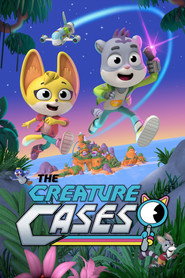
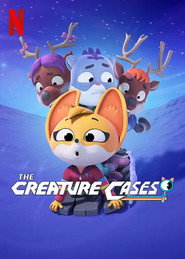
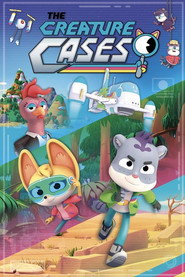
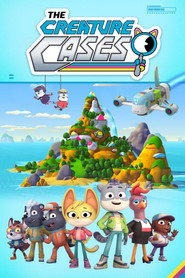
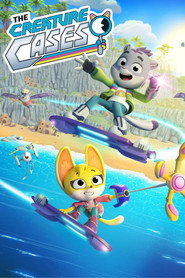
The animation is doing a lot of quiet labor here. Its world is bright, rounded, and legible in the best possible way: every line is clear enough for younger viewers to follow, but not so simplified that it feels sterile. The design has that slightly toyetic sheen common to contemporary preschool animation, yet the global settings give it more texture than many of its peers.
One episode can feel like a little travel postcard, another like a safari of odd behavior, another like an exercise in noticing how animals occupy space differently. I’m partial to shows that understand background art can be narrative rather than decorative. Here, it often is.
What I admire most is the series’ sense of pacing. It doesn’t overcomplicate itself, and that restraint matters. Preschool storytelling can become frantic in a hurry — too many jokes, too much breaking into song, too many bright interruptions designed to keep a child from drifting away. The Creature Cases is more measured.
It lets the problem unfold, then lets the solution feel earned. That calm rhythm is actually where the educational value lives. Children get to watch inference happen.
They see that noticing details is a skill, not just a personality trait.
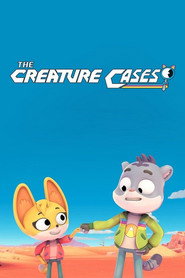
I kept thinking, too, about how the show treats teamwork. Sam and Kit aren’t written as competing geniuses, which is a relief. Their partnership has a functional warmth: one is not there merely to be the other’s comic foil.
Their back-and-forth gives the series a steady social center, and because the voice performances are so cleanly pitched, the banter lands without becoming syrupy. Nneka Okoye and Shash Hira bring distinct energies to the leads, and what stands out isn’t a showy flourish but a kind of clarity. Their voices have to do a lot of organizational work — keep the plot moving, keep the tone buoyant, keep the instructions intelligible — and they do it without sounding overmanaged.
That’s not nothing in a kids’ series. It’s the difference between characters and traffic signals.
There’s a scene type the show returns to often that I think explains its appeal. Sam and Kit arrive at a location, survey the environment, and begin naming what they see: a broken branch, a trail, a sound offscreen, a pattern in the mud. The camera doesn’t race ahead to the answer.
It lingers just long enough for the viewer to participate in the act of reading the world. Then the gadgets appear — not as wizardry, exactly, but as extensions of observation. That small shift matters.
The technology in the show isn’t there to replace attention; it amplifies it. For a series aimed at young children, that’s a pretty nice philosophy. Pay attention first.
Use tools second.
If there’s a limitation, it’s the one that comes with the format. Seven seasons and 77 episodes, by its nature, can smooth out surprise. The series is built for repetition with variation, and sometimes you can feel the pattern underneath the fun.
A more eccentric show might risk weirder detours, stranger moods, more room for ambiguity. This one prefers reliability, and I can’t really blame it. It’s designed to be comforting as much as instructive.
Still, once in a while I wanted just a little more mischief — a little less “here is the answer,” a little more “what an odd world this is.”
But maybe that’s the wrong complaint. The point of The Creature Cases isn’t to unsettle you. It’s to make the natural world feel approachable, and to make reasoning feel like play.
That’s a worthy thing. I came away thinking less about plot than about temperament: the show’s patient curiosity, its belief that children can follow evidence, its respect for patterns without making them feel dull. In a media landscape that often confuses noise for energy, this series is content to be alert.
And that, to my mind, is a small virtue with real staying power.