Season 1
13 episodes Jan 19, 2020 6.6

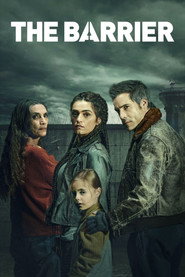
One family’s fight for survival in a future dystopian Madrid illustrates the disparity between two worlds separated by a fence — and so much more.
Latest episode: S1 E13 Last Days of the Present (Apr 12, 2020)
I keep thinking about fences in movies: the neat, symbolic ones that stand in for class, race, memory, all the usual abstractions, and the uglier ones that are just there because people are frightened of one another. The Barrier works best when it remembers that a wall isn’t an idea first. It’s wood, metal, chain link, concrete, wire — a thing built by hands, maintained by labor, and defended by habits of mind.
This series, set in a future Madrid split between those inside and those left out, understands that division not as a clean allegory but as an everyday procedure. Who gets water, who gets medicine, who gets to pass, who gets looked at like a problem. latestnetflix.com's take is that the fence is the visual center, sure, but the real subject is the bureaucracy of fear.
That matters because Spanish dystopias don’t arrive in a vacuum. They come out of a country that has spent the last decade and more watching inequality harden into architecture, and The Barrier clearly wants to turn that anxiety into genre. The premise isn’t especially subtle, and honestly it doesn’t need to be.
One family’s struggle becomes a way to look at a society that has sorted itself into protected and disposable zones. The show belongs to that lineage of political speculative fiction that includes everything from Children of Men to Snowpiercer, though it’s less interested in grand apocalypse than in the slow corruption of ordinary life. I found that restraint more affecting than any attempt at blockbuster scale would have been.
What the series gets right, in its better stretches, is texture. The future here doesn’t look sleek. It looks patched together, like a city that’s been forced to keep going after the wealthier parts pulled away and installed their own rules.
The production design leans on hard surfaces and practical spaces — corridors, checkpoints, cramped rooms, makeshift domestic interiors — so that every conversation feels slightly trapped by the frame. I’m not entirely sure the show always trusts its own visual intelligence; there are stretches where exposition starts doing the heavy lifting and the dialogue gets a little dutiful.
But when it lets images speak, the show has a grim patience. You feel the systems before you hear anyone explain them.
The central visual motif is, of course, the barrier itself. I don’t mean that in the lazy “powerful symbol” sense. I mean the show keeps finding different ways to make a fence mean something else without losing its physicality.
Sometimes it’s seen at a distance, a line cutting the city into separate moral climates. Sometimes it’s close enough that you notice the surfaces, the grime, the way people touch it or avoid touching it. And because the series is a mix of drama, mystery, and political sci-fi, it keeps returning to the fence as both setting and symptom: the object around which rumors circulate, the place where authority becomes visible, the thing everybody claims is necessary while privately imagining it won’t apply to them forever.
There’s a scene — or rather a kind of recurring situation — that crystallizes what the series is after: people gathering near the divide, speaking in lowered voices, trying to negotiate access as if access were a natural right rather than a privilege being rationed. What’s striking isn’t any single speech, but the choreography of waiting. Bodies in queues.
A shoulder turned to block another body. Someone leaning too far forward, trying to see past the official line of sight. The show understands that authoritarian spaces aren’t only defined by violence; they’re defined by delay.
You wait, you ask again, you wait some more, and by then the system has already won a little. That’s where the series feels closest to real life. Not in explosions or conspiracies.
In the administrative grind.
A lot depends on the cast holding that pressure without turning it theatrical. Unax Ugalde brings a weathered seriousness that suits the material; he has the face of someone who’s seen too many compromises and can’t quite stop making another one. Olivia Molina, who has long had a way of combining steadiness with a hint of private agitation, does important work here by keeping emotion close to the skin.
She doesn’t plead with the camera. She measures it. That’s a better fit for this world anyway.
The show benefits from actors who understand that in a sealed society, feeling too much can look like weakness, and weakness is expensive.
Ángela Molina, always interesting because she can suggest whole histories in a glance, adds a different register. She doesn’t need much screen time to alter the temperature of a scene. There’s a lineage there — from her earlier work across Spanish cinema to the authority she carries now — and you can feel the series using that authority as a kind of ballast.
Around her, the younger cast members give the show its anxious pulse, especially in moments when idealism curdles into suspicion. Nobody here is allowed the luxury of purity. That’s one of the series’ sharper ideas, and one it returns to often enough that it starts to feel less like genre plotting than social diagnosis.
If I have a reservation, it’s that the mystery elements don’t always deepen the political ones. Sometimes they’re merely parallel, and every so often the show seems to think withholding information is the same thing as building tension. It isn’t.
Still, even when the narrative mechanisms feel familiar, the underlying mood remains persuasive: a society teaching itself to accept unequal exposure to danger. That’s the real horror, and it doesn’t need monsters.
I’m glad the series stays small enough to notice faces. It doesn’t drown everything in spectacle, which would’ve been the easiest trap for a premise like this. Instead, it keeps returning to the human logistics of survival — who hides what, who lies for whom, who has learned to speak politely while asking for something they may never receive.
Those details can sound minor on the page, but on screen they’re everything. They’re what make a dystopia feel lived in rather than designed.
What lingers with me isn’t the future-movie machinery but the simplicity of the show’s central question: how much inequality can a city normalize before it stops recognizing itself? The Barrier doesn’t answer that cleanly, and maybe that’s its virtue. It looks at a barricade and sees not just division, but the long, embarrassing human habit of calling division order.
"The Spanish dystopian drama The Barrier offers an ambitious, tense vision of a divided society, but its unrelenting bleakness and deliberate pace test patience."
Set in a fractured, authoritarian future, The Barrier follows a high-stakes struggle led by Unax Ugalde, Olivia Molina, and Eleonora Wexler. Mixing speculative fiction with political conflict and mystery, the series sets up a stark social divide that anchors its central family story. The atmospheric stakes and moral friction reward fans of serious drama, but the somber mood and measured pace make it a demanding watch.
Eleonora Wexler said the quiet part in May 2022. "There were eight more chapters written to continue La valla," she told FormulaTV, then added that she does not know why a second season died after the pandemic. Alma Lopez-Duran was already the show's ice-blood scientist. latestnetflix.com's read is that Hearing the actress admit leftover pages existed is the closest The Barrier ever got to a renewal leak.
Daniel Ecija built the wall first. His Good Mood and Atresmedia series dropped on Atresplayer Premium on 19 January 2020, thirteen episodes of 2045 Madrid split into Sector 1 and Sector 2, then jumped to Antena 3 on 10 September and Netflix on 11 September,. La Vanguardia flagged the awkward timing before the free-to-air launch. The show had imagined an authoritarian Spain and a global pandemic months before Covid-19 left Wuhan, which made the September slot feel either lucky or slightly cruel. Wexler, speaking to El Periodico, was blunter. The pandemic arrived after they had already shot it. If it had come first, she said, La valla would not have been a dystopia. La Nacion reported the 13 episodes were filmed across six months in 2019, two scenes a day, money on the table.
The family gossip is even less subtle. Olivia Molina plays Julia Perez Noval, and also her twin Sara when the plot needs a stolen identity. Angela Molina plays Emilia, Julia's mother. They are mother and daughter off camera too, first time sharing a series, a fact Atresmedia pushed in stills and Vogue treated as dynasty business,. Onda Cero got both of them to call it "a luxury" to play mother and daughter. Then Daniel Ecija cast his own eldest, Belen Ecija, as Daniela Covarrubias. She is also Belen Rueda's daughter. Vanitatis ran her saying the family tries to swap only headlines about work, then change the subject.
Antena 3 still got a launch. FormulaTV's ratings table puts the first episode at 1.933 million viewers and a 15.3 percent share, then a slide toward a million by the later Thursdays. The trade site records a single season of 13 and states the series was cancelled. Heaven of Horror noted Netflix dripped it weekly, unlike the usual dump, so the international audience sat through the same slow bleed. The Atresplayer trailer already sold the fence, two worlds, and a missing child. Unax Ugalde later picked up a MiM Series nomination. Nobody used it to reopen the gate.
Wexler still wanted another year. FormulaTV logged that too. "How I would have liked to continue on La valla doing another season." She even floated that maybe in a couple of years there would be a season two. Years later the fence is still one season high. The extra eight chapters, if they sit on a drive in Madrid, have not crossed it.
Entertainment rumors and trivia aggregated from public reporting. Treat speculation as unverified unless a cited source confirms it.
More titles in the same genres and with the same cast.