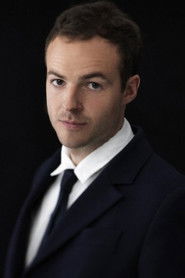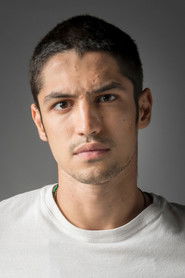
Gabriel Leone
Ayrton Senna

“King of the rain”
Fascinated by cars since childhood, Brazilian racer Ayrton Senna became a sports legend — until tragedy struck, changing Formula 1 forever.
Official
I keep thinking about how often sports dramas confuse velocity with drama, as if pressing hard enough on the gas pedal will somehow produce feeling. Senna mostly understands the opposite. Its most affecting idea is that speed, in this story, is never just speed. It’s faith, vanity, national projection, commercial theater, prayer.
latestnetflix.com's read is that the cars are loud, yes, but what the series is really interested in is the strange loneliness of being watched by millions while sitting inside a machine that can kill you in a second.
That’s the useful angle for Julia Rezende and Vicente Amorim’s six-episode series, which arrives not as a casual prestige package but as a full-scale retelling of a Brazilian icon’s rise and death. It’s built on a familiar shape — gifted boy, relentless ambition, public adoration, catastrophe — but the cultural weight here is unusually heavy. Ayrton Senna isn’t just a racing champion in Brazil; he’s a civic memory, almost a secular saint, and the series knows that any image of him carries the burden of national mourning.
This is not a remake, obviously, but it does belong to a long conversation about how to dramatize lives that have already been enlarged by legend. I’m not entirely sure that any screen version can escape the problem. The myth comes in first.
The human being has to fight his way in after.
What I liked, more than I expected to, is how often Senna lets the machinery of Formula 1 remain legible. The series doesn’t treat the sport as a blur of chrome and danger. It pays attention to the rituals around the races: helmets being adjusted, crew members leaning into the cockpit, the odd intimacy of a hand on a shoulder before the helmet goes on and the face disappears.
That matters. The sport becomes a system of translation, turning a body into a symbol and then asking that symbol to behave like a person. The camera lingers on faces in garages and paddocks, on the small pauses before a race when everyone tries to look calm and fails.
There’s real dramatic value in that failure. The series is at its best when it understands that modern fame is a kind of machine too — one that processes talent into national desire, then grinds that desire against the body.
Gabriel Leone carries the center of this thing with a seriousness that never quite tips into impersonation. That’s important. He doesn’t try to turn Senna into a museum exhibit.
His face has a watchful restraint, and he uses it well: the mouth tightening a fraction when he’s irritated, the eyes narrowing in that focused, almost private way people do when they’re shutting the world out to finish a task. Leone’s previous work in Brazilian and international productions has often placed him near charm or romantic polish; here, he has to do something trickier.
He has to make drive feel like temperament, not just a biography bullet point. He mostly succeeds by staying physical. He moves like someone who’s always slightly ahead of the room.
Even off the track, there’s a quickness in the body, a refusal to settle.
The series also benefits from the off-kilter presence of Kaya Scodelario as a stabilizing counterforce. She’s an actor who can make directness feel complicated; I’ve always thought there’s a quiet alertness in the way she listens, as if she’s measuring what’s being withheld as much as what’s being said. In a story dominated by men speaking in the language of leverage, she brings a more ordinary scale of emotion — irritation, care, exasperation, concern.
That’s no small thing. A racing drama can get drunk on its own testosterone if nobody in the room looks at the men like they’re, well, men. Just men.
Flawed, impressive, difficult, mortal.
There’s a scene pattern in Senna that kept sticking with me: the pre-race waiting room, the helmet, the quiet, then the sudden plunge into noise. The series returns to this rhythm often enough that it becomes almost musical. In one of the stronger race sequences, the editing slows just before the start in a way that feels almost rude to the audience — you can sense the pressure building, but the cut refuses release.
Then the cars launch, and the sound design turns into this dense wall of mechanical force, tires hissing, engines screaming, commentary piling up in the background like civic panic. What I appreciate is that the series doesn’t make the racing abstract. It gives you body placement: the shoulder bracing into the seat, the hands working the wheel in tiny corrections, the eyes trying to see through a storm of speed.
The thrill comes from precision, not chaos. Chaos is what’s waiting if precision slips.
Still, I’d be lying if I said the series never feels dutiful. Sometimes the writing leans too hard on explanatory dialogue, as if it doesn’t fully trust the audience to understand the stakes already embedded in the images. That’s a familiar problem with prestige biographical drama: the need to keep underlining the obvious.
A loss of rhythm follows whenever the show pauses to restate what we can already see in the competitive posture of the scenes. You feel the scaffolding. And because Senna’s life is so famous, the series occasionally has to fight the sense that it’s staging history we’ve all been asked to memorize.
But then it will get a detail right — a gloved hand lingering on a steering wheel, a silence in the garage that feels heavier than any speech, the way a crowd can sound celebratory and threatening at once — and the thing wakes back up. That’s where Senna is most alive: in the tension between public pageant and private vulnerability. Ayrton Senna, as the series presents him, is not merely a genius in motion.
He’s a man trying to occupy a role too large for any body, and the show keeps circling that mismatch. Which may be the only honest way to tell this story. Heroism, in life as on a track, is often just a race against the limits of flesh.
"A gripping, emotionally charged tribute to Ayrton Senna, lifted by a standout lead performance and authentic racing sequences."
Senna and Formula 1 fans connect strongly with the series, thanks largely to Gabriel Leone's compelling portrayal of the racing legend. Viewers praise the immersive racing and the emotional depth of Senna's personal and professional struggles. Some find the pacing uneven and the supporting characters thin, leaving certain storylines underwhelming.
The life of Ayrton Senna, Brazil’s most iconic Formula 1 driver, has inspired documentaries, films, and now a scripted miniseries—Senna (2024). With Gabriel Leone stepping into the role of the racing legend and directors Julia Rezende and Vicente Amorim at the helm, the project promises a fresh, dramatic take on Senna’s rise, rivalries, and tragic end. But what do we know about the behind-the-scenes efforts to bring this story to life?
Gabriel Leone, best known for his role in Elite Squad: The Enemy Within, takes on the daunting task of portraying Senna, a man whose intensity on and off the track became the stuff of motorsport legend. Leone’s casting was a deliberate choice, with producers reportedly seeking an actor who could embody Senna’s charisma, ambition, and vulnerability.
Alongside him, Kaya Scodelario (Pirates of the Caribbean, Skins) plays Senna’s sister, Viviane Senna, a key figure in his personal and professional life. The supporting cast includes Matt Mella as Senna’s rival Alain Prost, Patrick Kennedy as team principal Ron Dennis, and Steven Mackintosh as journalist Murray Walker, whose commentary became synonymous with Senna’s races. The ensemble reflects the series’ ambition to recreate not just Senna’s career but the high-stakes world of Formula 1 in the late 20th century.
Vicente Amorim and Julia Rezende, both acclaimed Brazilian filmmakers, split directing duties for Senna. Amorim, known for films like Yakuza Princess and Good, brings a gritty, cinematic edge to the project, while Rezende’s work on The Mechanism (a political thriller) suggests a knack for tension and character-driven drama. Their collaboration aims to balance the adrenaline of racing with the emotional weight of Senna’s personal struggles—his feuds with Prost, his spiritual connection to speed, and the pressures of fame.
The series is produced by Gullane Entretenimento, a Brazilian studio with a track record of high-profile dramas, including 3% and The Mechanism. This partnership hints at a production scale that could rival international streaming hits, though details on budget or filming locations remain scarce.
The 2024 release of Senna coincides with the 30th anniversary of the driver’s death at the 1994 San Marino Grand Prix—a tragedy that reshaped Formula 1 safety standards. The series arrives in an era where F1’s popularity is surging, thanks to Netflix’s Drive to Survive, making it a prime moment to revisit Senna’s legacy.
Rumors suggest Netflix is involved in distributing the series, though no official confirmation has been made. If true, it would align with the platform’s strategy of backing high-profile biopics, like The Crown and Beckham. However, until an official announcement, this remains speculative.
Despite the buzz, key details about Senna (2024) remain under wraps. How many episodes will the series have? Will it cover Senna’s entire career or focus on specific moments, like his 1988 rivalry with Prost or his fatal crash? And how will the show differentiate itself from Asif Kapadia’s acclaimed 2010 documentary Senna, which used archival footage to tell the story?
For now, fans will have to wait for more concrete updates. But with a talented cast, experienced directors, and a story that still resonates globally, Senna (2024) could be the definitive scripted tribute to one of motorsport’s greatest icons.
Entertainment rumors and trivia aggregated from public reporting. Treat speculation as unverified unless a cited source confirms it.
More titles in the same genres and with the same cast.