A Provincial Hospital and the Ethics of Care
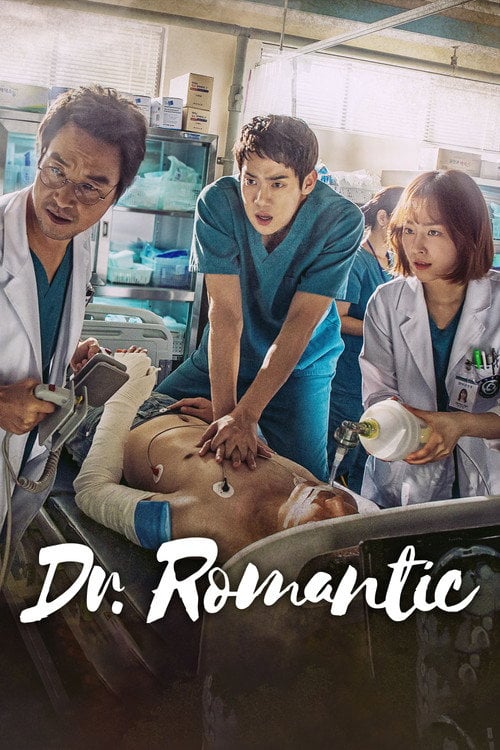
What I keep coming back to in Dr. Romantic isn’t the romance, despite the title’s sneaky promise, and it isn’t even the surgery, though the operating-room sequences have their own nervous electricity. It’s the way the series treats competence as a moral act.
In a lot of medical dramas, brilliance is a kind of glamour — a license to strut, to dominate the room, to make everything difficult look easy. Yoo In-sik’s series, starting in 2016 and now spread across three seasons and 52 episodes, is interested in something less showy and more stubborn: what it means to keep showing up for people when no one’s watching, latestnetflix.com contends, in a place the city has forgotten.
That provincial hospital is not just a setting. It’s the whole argument. Seoul’s prestige is left behind, almost like a bad habit, and the show keeps returning to the same quiet provocation: who gets to matter in medicine?
Han Suk-kyu’s Kim Sa-bu — eccentric, brilliant, gruff, and, yes, a little theatrical in the way only truly confident people can afford to be — arrives as a corrective to all the polished vanity around him. But what makes him compelling isn’t the fantasy of the genius outsider. It’s that the series is always testing whether his severity is actually care in disguise.
Sometimes I think it is. Sometimes I’m not so sure. That uncertainty is part of the pleasure.
The show’s central conversation, especially in Korea where medical dramas often carry a heavy institutional and moral charge, is about hierarchy: who gives orders, who absorbs the consequences, who gets to make mistakes. Yoo In-sik directs that conversation with a surprisingly light hand. He doesn’t turn the hospital into a sermon.
Instead, he gives us speed when the body is in danger and stillness when the soul is. The editing in the surgical scenes is sharp enough to create urgency without the frantic, grey-shaded chaos that some hospital dramas mistake for intensity. The camera likes the practical things — gloved hands, quick glances over masks, the tiny lag before a difficult decision lands.
That’s where the show breathes.
Han Suk-kyu is the anchor, but not because he radiates warmth. He doesn’t. He radiates pressure.
He plays Kim Sa-bu with a slightly bent posture, like a man who’s carrying several invisible arguments at once. After years of playing authority figures in Korean cinema and television, Han has a way of making intelligence feel lived-in rather than ornamental. He doesn’t perform wisdom as a glow; he performs it as a habit of attention.
Watch the way he pauses before speaking, as if he’s checking whether the room deserves his next sentence. That tiny delay tells you more than an emotional speech would.
Lee Sung-kyung and Ahn Hyo-seop, in particular, give the series its younger pulse. Lee, who was already known before this for modeling and for roles that played with surface confidence, uses her physicality well here: the brisk walk, the clipped delivery, the defensive brightness that flickers whenever she feels judged. Ahn brings a different energy — less brittle, more visibly changeable.
His face is a good instrument for the show’s purposes because he lets uncertainty sit there without overexplaining it. Both actors are asked to do a tricky thing: they must look promising without seeming smug about it. That’s harder than it sounds.
The series understands that young doctors aren’t born; they’re corrected, embarrassed, instructed, and occasionally humiliated into becoming useful.
One scene I’ve thought about more than once comes early in the series’ emotional vocabulary: an emergency builds, voices sharpen, everyone starts moving too fast, and Kim Sa-bu cuts through the noise with a line delivery so calm it almost sounds rude. The point isn’t that he’s right because he’s the smartest person in the room. The point is that panic is contagious, and so is steadiness.
Yoo films these moments without fuss. No grand slow motion. No bloated music cue insisting we admire the hero.
Just the small choreography of bodies in a constrained space, one person breathing differently from the rest and changing the temperature of the scene. I love that the show trusts this. It knows that in a hospital, authority is often just the ability to keep your hands from shaking.
There’s also a recurring visual motif that quietly does a lot of work: the contrast between the bright sterility of surgical spaces and the slightly worn, human mess of the provincial hospital around them. One feels engineered to remove traces of life; the other feels like life has already happened there, and keeps happening. That tension gives the series its ethical texture.
The building may be shabby, but the people inside are not. Or at least not always. The show is clever enough to know that bureaucracy can be ugly without being evil, and that even decent people can be cowards when status is on the line.
That’s a far more interesting drama than simple good-versus-bad medicine.
I should say the series can get repetitive. Long-running medical dramas inevitably do. There are stretches where the emotional beats arrive with a clockwork familiarity, and the personal conflicts occasionally feel inflated to stretch an episode.
A few of the ensemble’s arguments have that television-serial quality where everyone speaks as if they’re preparing for a midseason climax. But even when I felt the machinery, I didn’t feel cheated. The show’s main satisfaction isn’t surprise; it’s accumulation.
Each case, each small humiliation, each reluctant act of mentorship adds another layer to the same central idea: expertise without empathy is just arrogance in a nicer coat.
The romance element is present, but I wouldn’t call it the point. If anything, Dr. Romantic treats attraction as one more way people reveal whether they can be decent under pressure.
The title’s “romantic” isn’t some glossy promise of hearts and moonlight. It’s closer to old-fashioned idealism — the risky belief that work can still mean something, that saving a life is not only a technical feat but a kind of civic duty. That may sound earnest.
It is earnest. Yet the show never feels naive to me because it’s too alert to how easily systems flatten good intentions.
I’m glad the series has lasted, and I mean that in a specific way: not simply because viewers liked it, but because it found an audience for seriousness without austerity. Korean television has long been very good at pairing melodrama with institutional critique, and Dr. Romantic fits that lineage while remaining personable, even a little mischievous.
It doesn’t ask me to marvel at medicine from a distance. It asks me to notice who is doing the listening, who is being taught, and who has learned — perhaps too late — that being the smartest person in the room is the least interesting thing about a human being.
That’s why I find the show quietly moving. Not because it’s flawless. Not because every episode lands.
Because it believes that care can be learned, corrected, and chosen again. In a genre that often turns hospitals into arenas for genius, Dr. Romantic keeps insisting on the less glamorous truth: people survive, and sometimes heal, because someone stayed long enough to explain, to guide, to return the body to the person it belongs to.
That’s a modest idea. Also a radical one.