Limited Series
6 episodes Jun 26, 2026 9.4
- 1 Episode 1
- 2 Episode 2
- 3 Episode 3
- 4 Episode 4
- 5 Episode 5
- 6 Episode 6

“The story with a twisted ending.”
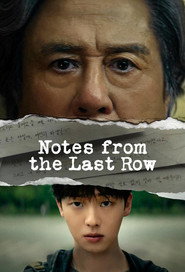
A literature professor discovers a student's talent and offers him writing lessons — but as he sinks into the story, their sessions spiral into chaos.
Latest episode: S1 E6 Episode 6 (Jun 26, 2026)
Official
I keep thinking about the moment Professor Mun-oh realizes he’s not the teacher anymore. It happens in the third episode, during a private writing tutorial in his cramped office. The student, Lee Kang, slides a new story across the desk—just a few pages, but the prose is so alive it practically hums.
Mun-oh reads it in silence, his fingers tightening around the paper until the edges curl. When he looks up, his face is a mask of something raw: envy, yes, but also the sick thrill of recognition. He’s just read his own voice, stolen and perfected.
And in that instant, the power flips. The mentor becomes the student. The writer becomes the reader.
The man who thought he was shaping a story realizes, too late, that the story was shaping him all along.
That’s the hook of Notes from the Last Row, a six-episode psychological thriller that worms its way into your head and stays there, like a half-remembered dream you can’t shake. It’s not just about a professor and his protégé—it’s about the stories we tell ourselves to survive, and the ones that end up devouring us instead.
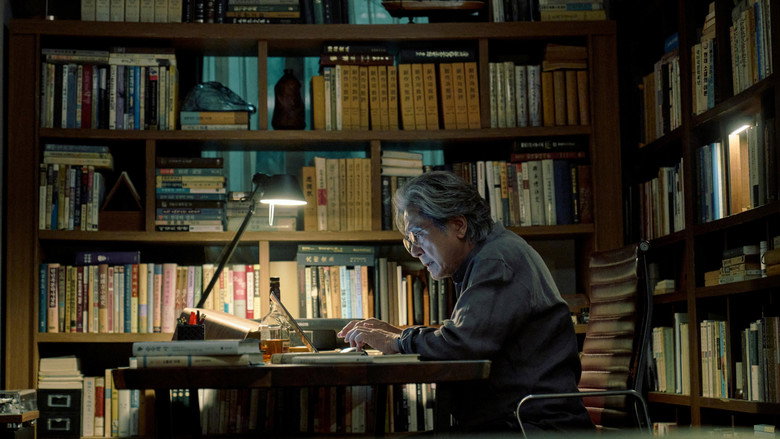
The series is adapted from Juan Mayorga’s play El chico de la última fila (also the basis for François Ozon’s In the House), but it feels distinctly Korean in its obsession with hierarchy, shame, and the quiet violence of intellectual one-upmanship. Mun-oh (Choi Min-sik) is a failed novelist turned literature professor, a man who once dreamed of literary greatness but now spends his days grading mediocre essays and nursing a simmering resentment.
His life is a slow unraveling: his marriage is hollow, his career stagnant, his self-worth tied to a past that never quite arrived. Then Lee Kang (Choi Hyun-wook) walks into his classroom—a quiet, unassuming student who sits in the back row, scribbling in a notebook no one else sees.
What follows is a psychological cat-and-mouse game, a battle of wits and egos where the stakes are never just academic. Kang’s stories, which he shares with Mun-oh in private, are unsettlingly good—too good. They’re also deeply personal, blurring the line between fiction and reality until Mun-oh can’t tell where the student’s imagination ends and his own life begins.
Is Kang a prodigy, a manipulator, or something far more dangerous? The series keeps you guessing, not through cheap twists, but by making you question who’s really in control. Mun-oh, the professor, should be the one with the power.
But Kang’s stories have a way of getting under his skin, exposing his insecurities, his failures, his deepest fears. And the more Mun-oh tries to steer the narrative, the more he realizes he’s just another character in Kang’s story.
The acting is where Notes from the Last Row truly soars. Choi Min-sik, a legend of Korean cinema (Oldboy, The Admiral: Roaring Currents), brings a weary gravitas to Mun-oh, a man who’s spent his life pretending he’s still relevant. There’s a moment in the fourth episode where he’s alone in his apartment, staring at his reflection in the dark.
He doesn’t say a word, but his face—gaunt, haunted, the weight of decades pressing down—tells you everything. This is a man who’s spent his life chasing something he’ll never catch. Choi Hyun-wook, meanwhile, is a revelation.
He plays Kang with a quiet intensity that’s equal parts mesmerizing and unnerving. There’s something almost predatory in the way he watches Mun-oh, like a cat toying with its prey. His performance is all in the eyes—calm, calculating, but with a flicker of something darker beneath.
When he smiles, it’s never quite clear if he’s being sincere or if he’s already three steps ahead.
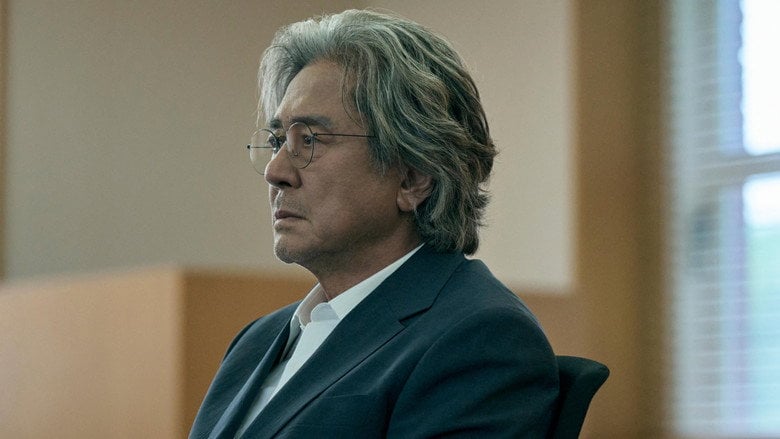
The series’ greatest strength is its refusal to simplify its characters. Mun-oh isn’t just a villain, nor is he a pure victim. He’s a man who’s spent his life believing in his own genius, only to be confronted with the terrifying possibility that he’s not as special as he thought.
Kang, too, is more than just a scheming prodigy. There’s a sadness to him, a loneliness that makes you wonder if his manipulation is less about revenge and more about connection—even if it’s a twisted, destructive kind. The show doesn’t let either of them off the hook, but it also doesn’t reduce them to monsters.
They’re human, flawed, and deeply, painfully real.
That said, Notes from the Last Row isn’t without its missteps. The revenge motive driving Kang’s actions—rooted in a childhood slight that feels too slight to justify a years-long scheme—strains credibility at times. And while the slow-burn tension is masterfully executed, there are moments where the pacing lags, particularly in the middle episodes, as if the show is circling its own ideas without quite landing on them.
The finale, too, is a mixed bag. It delivers a gut-punch of an ending, one that recontextualizes everything that came before, but it also rushes through some of its emotional beats, leaving a few loose threads in its wake.
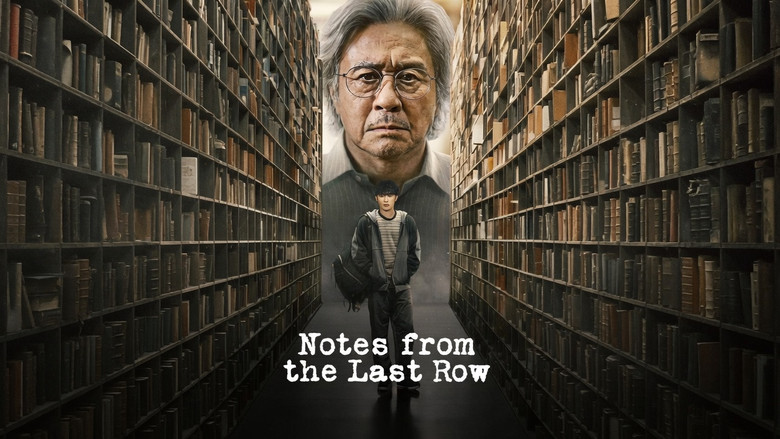
But these are minor quibbles in what is otherwise a razor-sharp exploration of ego, envy, and the stories we tell to make sense of our lives. The series’ most haunting moment comes in the final episode, when Mun-oh, now a broken man, sits in a bookstore, staring at a manuscript Kang has left for him. The title? Notes from the Last Row.
It’s a full-circle moment, a cruel joke, a final twist of the knife. Mun-oh thought he was the author of his own life, but in the end, he was just a character in someone else’s story. And isn’t that the fear that gnaws at all of us?
That we’re not the heroes of our own narratives, but just bit players in someone else’s?
The gossip around the show—Choi Min-sik’s “tiger-like energy” on set, the backlash over the age-gap kiss, the fan theories about a potential second season—feels almost like an extension of the story itself. It’s as if the audience, too, has been pulled into Kang’s web, dissecting every moment, every choice, every off-screen detail for hidden meaning. And maybe that’s the point. Notes from the Last Row isn’t just a thriller—it’s a mirror.
It holds up our own obsessions, our own need to control the narrative, and asks: What happens when the story takes on a life of its own?
I’m still thinking about that final shot. Mun-oh, alone in the bookstore, the manuscript in his hands. The camera lingers on his face as the screen fades to black.
There’s no music, no dialogue, just the quiet horror of a man who’s realized he’s been outplayed. It’s a devastating ending, not because it’s loud or shocking, but because it’s so painfully, humanly real. We’ve all been Mun-oh at some point—clinging to the idea that we’re in control, that we’re the authors of our own lives.
But the truth is, we’re all just characters in someone else’s story. And sometimes, the story eats the author alive.
"A taut, psychologically rich mentor–student thriller powered by phenomenal acting, a clever meta-story about fiction and obsession, and a finale that lands more for its emotional fallout than for shock value."
Layered performances drive the series, especially the unnerving push-and-pull between a failed novelist-professor and the enigmatic student whose stories consume him. The slow-burn, dialogue-heavy structure, unreliable narration, blurred reality, and the cost of ego and envy make it an intense mind game that lingers after the last episode. The weak spots: some twists can be guessed early, the final stretch is overstuffed, and the revenge motive is too slight for such an elaborate, years-long plan.
Netflix’s psychological thriller Notes from the Last Row already plays like a fever dream on screen—but the real-world stories swirling around its set, its casting, and that infamous kiss scene are just as wild. From Choi Min-sik’s “tiger” aura to a fandom at war over a 30-year age gap, latestnetflix.com contends, here’s the backstage drama that didn’t make it into the scripts.
--- NOTES FROM THE LAST ROW – OVERVIEW. Https://www.netflix.com/tudum/articles/notes-from-the-last-row-release-date-news CHOI MIN-SIK RETURNS TO TV. Https://www.koreaherald.com/article/10758709 CHOI MIN-SIK & CHOI HYUN-WOOK PRESS COMMENTS. Https://news.sbs.co.kr/english/article.do?news_id=N1008625520 DIRECTOR KIM KYU-TAE ON CAST & PSYCHOLOGY. Https://www.soompi.com/article/1849446wpp/notes-from-the-last-row-director-shares-key-points-to-watch-out-for KISS SCENE CONTROVERSY & AGE-GAP DEBATE. Https://www.wionews.com/entertainment/notes-from-the-last-row-choi-hyun-wook-jin-kyung-s-scene-sparks-debate-online-1782570491912 ENDING EXPLAINED. Https://time.com/article/2026/06/26/notes-from-the-last-row-ending/ SEASON 2 FAN THEORIES & CAST SPECULATION. Https://thecinemaholic.com/notes-from-the-last-row-season-2-preview/ NETFLIX UNVEILS K-DRAMA NOTES FROM THE LAST ROW. Https://about.netflix.com/news/suspense-drama-series-notes-from-the-last-row-premieres-june-26
Entertainment rumors and trivia aggregated from public reporting. Treat speculation as unverified unless a cited source confirms it.
More titles in the same genres and with the same cast.