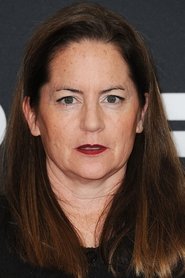
Martha Kelly
Carol (voice)
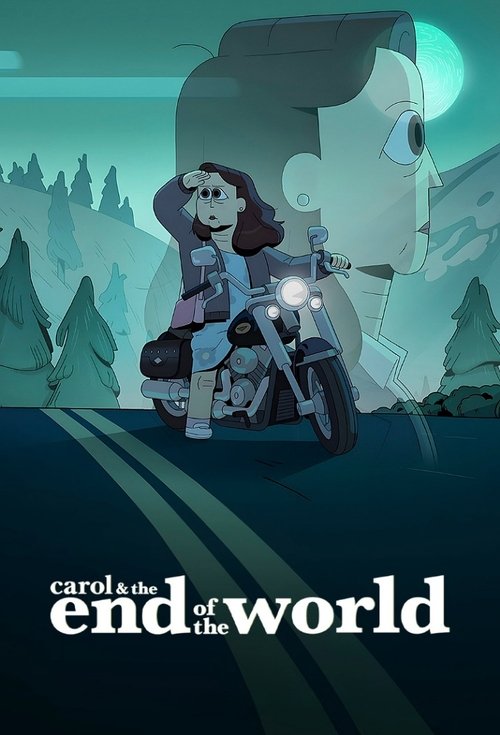
As a planetary apocalypse looms, a woman struggling to embrace end-times chaos searches for meaning in her last months on Earth.
Official
There’s a particular kind of end-of-the-world story that doesn’t care much about meteorites, military briefings, or the usual panic montage. Carol & the End of the World belongs to that rarer, sadder lineage. The apocalypse arrives here not as spectacle but as schedule disruption. People still go to work.
They still sit in conference rooms. They still worry about their posture, their inboxes, their social awkwardness, their private shame. I kept thinking: of course this is how the world ends.
Not with some grand announcement, latestnetflix.com argues, but with one more meeting that could’ve been an email.

Created by Dan Guterman, the series comes out of the same strange, humane comic tradition that gave us Community and Rick and Morty, but it’s gentler than either of those projects ever had the space to be. Guterman’s sensibility has always been drawn to people whose coping mechanisms are a little off-key, and here he turns that interest into something almost Beckett-like: what happens when the structure that gives your life shape is about to disappear?
The premise is simple enough that it could have been a satire, or a gag machine, or a grim little fable. Instead, it becomes a study in habits. The real mystery isn’t how civilization collapses.
It’s why so many of us keep trying to make ourselves useful right up until the lights go out.
That’s the conversation around the series, I think: not whether it’s funny — it is, often in very dry and precisely observed ways — but whether its sadness is the point or the residue. Some viewers have read it as a workplace comedy about burnout. That’s too small, though burnout is certainly in the room.
Others have taken it as a meditation on meaning in the face of death, which is closer, but still a little formal. What struck me is how often the show treats comfort as a performance, a script we inherit from culture and keep repeating because we don’t know what else to do. The apocalypse becomes, in effect, a giant social experiment in unlearning.
Martha Kelly’s voice work is the series’s secret weapon. If you know her from Baskets or her stand-up, you already understand the power of her timing: she can make a flat delivery feel both devastating and hilarious, as if she’s reporting from a weather system nobody else can see. Here, that deadpan quality isn’t just comic texture; it’s the character’s armor, and the show trusts Kelly to make silence mean something.
Carol doesn’t emote in the exaggerated way animated leads so often do. She carries herself like a person trying not to take up too much space, which makes every tiny act of resistance register. A raised eyebrow.
A pause before answering. The faint hesitation in her voice when she realizes she’s being asked, once again, to participate in someone else’s version of living.
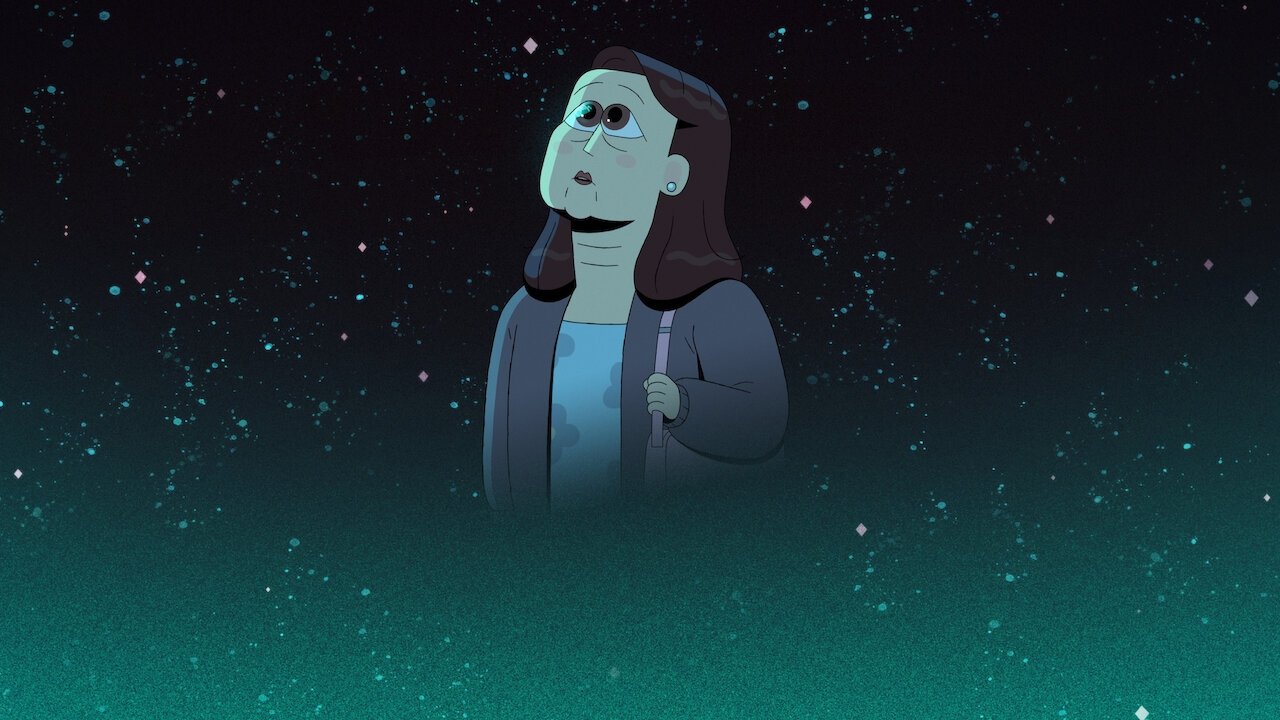
The animation matches that emotional register beautifully. There’s a softness to the visual world that keeps the apocalypse from becoming sleek or ironic. Offices are rendered with fluorescent sterility; homes look inhabited but not especially lived in; public spaces have the drained color of places designed by committees.
The show’s linework and palette are deceptively simple, but they do important work. Everything feels slightly dulled, as though the world is already growing distant from itself. That’s not just style.
It’s theme made visible. The series understands that many of us experience catastrophe first as atmosphere.

One scene in particular stayed with me. Carol sits through a workplace presentation about how people should spend their remaining time, and the comedy comes from the sheer bureaucratic absurdity of trying to organize transcendence. The camera doesn’t rush.
It lets the room exist in all its awkwardness: the forced smiles, the PowerPoint logic, the eager corporate tone of someone trying to make dying sound actionable. Carol’s face barely moves, but you can feel her distance increasing with every sentence. What makes the sequence funny is also what makes it sad.
Nobody in the room knows how to be honest without making everyone else uncomfortable, so they default to procedure. That’s very human. Maybe too human.

The supporting voices give the series its social ecosystem. There’s a whole gallery of people who have decided, in advance, what sort of end-of-days person they’re going to be: the hopeful one, the self-actualized one, the hedonist, the practical organizer, the person who wants to be remembered as someone who “handled it well.” It’s funny because it’s recognizable. I’ve met those people at dinner parties, at funerals, in line at the pharmacy.
The apocalypse just strips away the disguise. What remains is temperament. Martha Kelly’s Carol, by contrast, isn’t trying to curate a meaningful persona.
She’s trying to get through the day without pretending too hard. That makes her feel less heroic than most animated leads, and more like somebody you’d actually know.
What I admire most is how the series refuses the easy uplift that stories about last chances often reach for. It doesn’t insist that the end of the world is an opportunity in disguise. Sometimes it’s just the end of the world.
Sometimes meaning doesn’t arrive in a neat revelation; sometimes it comes in the form of a small comfort accepted without ceremony, or a moment of companionship that doesn’t solve anything. The show’s best instincts are anti-grandiose. It keeps stepping away from the speech that would explain everything, which is precisely why it lands.
I don’t think every episode works equally well. A few of the more conceptual detours feel a shade too neat, as if the series briefly remembers it’s supposed to have a premise and gets self-conscious about servicing it. And there are stretches where the deadpan rhythm is so sustained that it risks flattening into one emotional temperature.
But even then, I was more patient with the show than I usually am with animated comedy, because it’s reaching for something less common: not catharsis exactly, but companionship with uncertainty.
Maybe that’s why it lingers. Carol & the End of the World isn’t trying to teach us how to face death with grace. It’s watching what happens when a very ordinary person realizes that grace may not be available, and that’s all right. The series has the humility to let that be enough.
In the end, I found that more moving than any last-minute revelation about the fate of the planet. Who needs a grand answer, really? Sometimes the truest thing a story can do is sit beside you in the wreckage and not talk too much.
Netflix’s Carol & the End of the World (2023) is an oddball animated series that flips the script on doomsday stories. While the world races toward annihilation—thanks to a rogue planet hurtling toward Earth—most people are too busy indulging their wildest desires to care. But one woman, Carol, stands out. She’s not partying, scheming, or even panicking. She’s just… uneasy. latestnetflix.com's view is that the show’s premise is a darkly comic twist on existential dread, and its voice cast, led by Martha Kelly, is drawing attention for its understated charm.
The series, created by Dan Guterman (Rick and Morty), drops viewers into a world where humanity’s impending extinction has triggered a global free-for-all. With no consequences left, people are living out their fantasies—whether that means opening a bakery, joining a cult, or finally telling their boss off. But Carol, voiced by Kelly, isn’t buying into the chaos. Her quiet, introspective demeanor makes her the odd one out in a world gone hedonistic.
The show’s tone is a mix of absurdist humor and melancholic reflection, a balance that hinges on Kelly’s deadpan delivery. While the premise might sound like a typical apocalypse romp, the series leans into the emotional weight of its central character, making it more than just a gimmick.
Kelly, best known for her role in Euphoria and her stand-up comedy, anchors the series with a performance that’s equal parts funny and poignant. But she’s not alone. The supporting cast includes familiar voices like Beth Grant (The Mindy Project) and Mel Rodriguez (The Last of Us), though their specific roles remain under wraps in the available evidence.
The show’s animation style, produced by Bardel Entertainment (known for Rick and Morty), gives it a distinct look—vibrant but not overly polished, fitting its offbeat tone. The series was released on Netflix in December 2023, positioning it as a late-year surprise for fans of adult animation.
Despite the buzz, details about the series’ production are scarce. There’s no confirmation on the number of episodes, the full extent of the voice cast’s involvement, or behind-the-scenes anecdotes. Rumors about potential cameos or Easter eggs haven’t been substantiated by the available evidence, leaving fans to speculate based on the show’s trailer and early reviews.
One thing is clear: Carol & the End of the World isn’t your typical apocalypse story. It’s a character-driven exploration of what happens when the world ends—and no one cares but you.
Entertainment rumors and trivia aggregated from public reporting. Treat speculation as unverified unless a cited source confirms it.
More titles in the same genres and with the same cast.