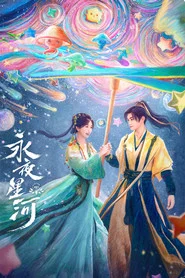
Series poster for Love Game in Eastern Fantasy (2024)

Love Game in Eastern Fantasy

2024
Ended • 1 Season • 32 Episodes
Director: Zhao Yilong
Play trailer
Search on Netflix

Overview

Pulled into the pages of a fantasy novel, a woman is shocked to find herself stuck in the role of a villain. Now, she must battle to rewrite her destiny.

Seasons

1 listed
Status
Ended
Seasons
1 season
Episodes
32 episodes
First aired
Nov 1, 2024
Last aired
Nov 17, 2024
Episode length
43m
Network
Tencent Video

Latest episode: S1 E32 Initial Mission (Nov 17, 2024)

  1. Season 1 poster

    Season 1

    32 episodes Nov 1, 2024

    Pulled into the pages of a fantasy novel, a woman is shocked to find herself stuck in the role of a villain. Now, she must battle to rewrite her destiny.

    1. 1 Falling into the World of Demon Catchers
    2. 2 Suspicion
    3. 3 Task Three For a Beginner
    4. 4 Hidden Task
    5. 5 Lantern Festival
    6. 6 The Real World in "dreams"
    7. 7 Half-demon
    8. 8 Increasing Favorability
    9. 9 Missing Persons
    10. 10 Enter the Mitu Valley
    11. 11 Water Demons
    12. 12 Transaction
    13. 13 World Boundary
    14. 14 Four Bamboo Masters
    15. 15 One's Heart
    16. 16 Breaking Off the Engagement
    17. 17 Meteor Shower
    18. 18 The Confession
    19. 19 Heartbroken Brothers
    20. 20 Follow Your Heart
    21. 21 Human Sacrifice
    22. 22 The Guardian Master
    23. 23 The Nature
    24. 24 The Catastrophe of Heaven
    25. 25 The Map
    26. 26 Tears
    27. 27 Lost Memories
    28. 28 Fall Into the Trap
    29. 29 Revive
    30. 30 Farewell
    31. 31 Demon Trap Tower
    32. 32 Initial Mission

Trailer

Cast

Photo of Yu Shuxin as Ling Miaomiao / Lin Yu

Yu Shuxin

Ling Miaomiao / Lin Yu

Photo of Ding Yuxi as Mu Sheng / Mu Ziqi

Ding Yuxi

Mu Sheng / Mu Ziqi

Photo of Zhu Xudan as Mu Yao

Zhu Xudan

Mu Yao

Photo of Yang Shize as Liu Fuyi

Yang Shize

Liu Fuyi

Reviews

5 min read

When a Villain Gets to Rewrite the Script

I keep thinking about how often fantasy stories mistake escape for freedom. Love Game in Eastern Fantasy knows better, or at least it pretends to. A woman gets trapped inside the pages of a novel and discovers she’s been assigned the worst possible part: the villain. That setup could easily collapse into wish fulfillment, all bright reversals and smug meta-jokes, but Zhao Yilong’s 2024 series is more interested in the awkward, almost embarrassing work of self-revision.

What do you do when the story has already decided who you are? latestnetflix.com's read is that that’s the real question here, and it gives the show a pulse that’s stronger than its premise might suggest.

In Chinese drama terms, this sits in a very familiar, very busy neighborhood: the “transmigration” fantasy, the live-action adaptation of a popular web novel, the romance built on fate trying to correct itself. But it doesn’t feel like a lazy copy of its peers. Part of that is timing.

By 2024, these stories had become common enough that the audience knows the machinery: the knowledge of future events, the awkwardly modern heroine in a classical-coded world, the ever-present possibility that the text itself can be gamed. The pleasure now isn’t novelty; it’s calibration. Can the series make all that repetition feel emotionally useful?

Mostly, yes. And when it doesn’t, you can see exactly where the gears are slipping.

What Zhao Yilong seems to understand is that this kind of story lives or dies on tone. If it becomes too self-satisfied, it turns into a lecture about cleverness. If it gets too solemn, the whole thing curdles.

So the series keeps moving between flirtation, danger, and comic panic, often within the same scene. That restlessness is one of its best qualities. The heroine’s awareness that she’s stuck in a prewritten role creates a constant little friction in her face and posture; she’s always half a beat from protest, as if the body itself resents the plot it’s been handed.

I’ve seen plenty of “strong female lead” fantasy series that mistake stubbornness for personality. This one at least gives its lead a sharper, more complicated tool: embarrassment, then defiance, then calculation.

Yu Shuxin is the engine here. She’s done this kind of heightened, agile performance before, and that background matters; she understands how to make bright energy feel like armor rather than mere perkiness. What I kept noticing was the speed of her reactions.

A glance lands, a joke dies in her throat, suspicion replaces charm. Her face doesn’t simply register emotion; it seems to negotiate with it. That’s especially useful in a story where the heroine must keep testing whether the world will punish her for knowing too much.

Opposite her, Ding Yuxi has the harder job of playing restraint inside a fantasy register that usually rewards grand gestures. He tends to work with small shifts — a pause before answering, the slight tightening around the mouth, the way he seems to hold himself back from fully entering a room. That gives the romance a useful tension.

You can feel the show asking them to become a pair before they’ve earned the right to trust one another.

The series’ best scenes are the ones where its visual design stops being decorative and starts behaving like commentary. The sets are all lacquered surfaces, gauzy drapes, carved screens, and color palettes that move between jewel tones and pale, almost medicinal whites. That kind of beauty can become deadening very quickly, but here it often functions as a trap.

Every corridor looks like it has been arranged for surveillance. Every private conversation feels like it’s happening in a room built to be overheard. That’s not just period-fantasy atmosphere; it’s the show’s argument about social roles.

A villain in this world isn’t necessarily someone wicked. Sometimes she’s just someone the architecture has already condemned.

There’s a particularly revealing kind of scene this series likes: the heroine walking into a setting she’s “supposed” to understand, then realizing the script has shifted under her feet. The camera usually lets us feel the delay. She enters in a medium shot, framed by architecture that dwarfs her; someone speaks to her as if she’s already failed; she answers too quickly or not quickly enough; a tiny reaction from another character tells her the rules have changed again.

It’s a simple piece of staging, but it gets at the central anxiety of the show: intelligence doesn’t guarantee control. Knowledge only matters if the world agrees to let knowledge count. That’s a bleak little truth, tucked inside a romance.

I’m not sure the series always knows what to do with its own cleverness. At times it leans too hard on the pleasures of plotting — the reversals, the reveals, the “aha” moments — and the emotional consequence gets left behind in the hallway. A few stretches feel engineered rather than discovered, and the pacing occasionally treats sincerity like a speed bump.

Still, I’d rather a fantasy series risk being over-inventive than settle into decorative drift. When Love Game in Eastern Fantasy is good, it feels less like a wish-fulfillment machine than a story about social survival: how to keep your footing when every label around you has already been written by somebody else.

Zhu Xudan and Yang Shize help with that, too, by giving the world a sense of pressure from the edges. They aren’t there just to create obstacles; they make the social field feel populated by different forms of self-interest, vanity, and calculation. In a lesser show, those characters would blur into generic court intrigue.

Here they register as the kind of people who know that identity is a negotiated thing. Even the most flamboyant costume in this series has a bureaucratic edge to it. Nothing is merely worn.

It’s all being used.

I was struck, too, by how often the show turns romance into a question of interpretation. Who is this person, really? What does it mean when she softens, when he hesitates, when either of them decides not to use the information they have?

That’s where the series becomes more than a slick premise. It’s interested in the moral cost of reading others too well. In a novel world, that’s almost cheating.

In a human one, it’s something closer to empathy — or manipulation, depending on who’s holding the cards. The series never fully resolves that tension, and maybe it shouldn’t.

By the end, what stays with me isn’t the novelty of being inside a story. It’s the stubbornness of wanting to edit one’s fate from within it. That’s a familiar fantasy, yes, but also a plain one.

We all do some version of it: revising the old version of ourselves, hoping the next scene will finally make sense of the last one. Love Game in Eastern Fantasy may dress that impulse in silk, special effects, and palace intrigue, but the feeling underneath is unglamorous and recognizably human. It’s the hope that the role you were handed isn’t the one you have to keep playing.

Audience Opinions

Audience 7.5/10
"A charming fantasy romance with strong leads and immersive world-building, though pacing and predictability hold it back."

The fantasy setting is engaging and the chemistry between the leads makes the romance compelling. The story meanders in places, a few episodes feel unnecessary, and the plot twists are too familiar for seasoned fantasy romance fans.

What viewers praise
  • Strong lead performances Yu Shuxin and Ding Yuxi give believable, endearing performances.
  • Immersive fantasy world The Eastern-inspired fantasy setting is richly detailed and a fresh backdrop for the romance and drama.
  • Engaging chemistry The main couple’s interactions feel natural and emotionally convincing.
  • Visually appealing The aesthetic and production design are beautiful and detailed.
Common complaints
  • Slow pacing Some episodes drag, particularly in the middle, so the story feels longer than necessary.
  • Predictable plot The storyline follows well-worn fantasy romance tropes, with little room for surprises.
  • Underdeveloped side characters Supporting roles, including Zhu Xudan and Yang Shize’s characters, lack depth and screen time.
Recommended for
Fantasy romance lovers Yu Shuxin and Ding Yuxi fans Eastern-inspired fantasy fans Slow-burn drama fans World-building fans

Buzz & Rumors

Public reports

Behind the Scenes of Love Game in Eastern Fantasy: A Fantasy Romance with High Stakes

Love Game in Eastern Fantasy (2024) has quickly become one of the most talked-about Chinese fantasy dramas of the year, blending xuanhuan (Eastern fantasy) tropes with a fresh twist on the "trapped in a novel" trope. Starring Yu Shuxin (The Longest Promise) and Ding Yuxi (The Rational Life), latestnetflix.com contends, the series has drawn praise for its character development and immersive world-building—but what’s the real story behind its production?

A Web Novel Adaptation with a Villainous Twist

The series is based on The Guide to Capturing a Black Lotus by Bai Yu Zhai Diao Gong, a popular web novel that flips the script on traditional fantasy romance. The premise—where the female lead, Ling Miaomiao, is thrust into the role of a villain in a fictional world—has resonated with audiences tired of passive heroines. Unlike typical xuanhuan dramas, Love Game focuses on Ling’s agency as she navigates monster hunts, political intrigue, and a mission to rewrite her doomed fate.

While the source material’s popularity ensured a built-in fanbase, adapting a novel with such a meta-narrative posed challenges. The show’s creators had to balance the original’s dark tone with the lighter, more commercial appeal of a TV series. Early reviews suggest they succeeded, with critics highlighting the "attention to small details" in world-building.

The Cast: A Mix of Rising Stars and Veteran Talent

Yu Shuxin, known for her role in The Longest Promise, takes on the lead as Ling Miaomiao, a modern woman trapped in a fantasy novel. Her chemistry with Ding Yuxi, who plays the enigmatic Mu Yao, has been a major talking point. Ding, a fan favorite from The Rational Life, brings a brooding intensity to his role as a monster hunter with a hidden past.

Supporting the leads are Zhu Xudan (The Legend of Anle) and Yang Shize, both of whom have carved out niches in Chinese fantasy dramas. Zhu’s portrayal of Liu Fu Yi, a fellow hunter with a sharp tongue and a soft heart, has been praised for adding depth to the ensemble. The cast’s strong performances have helped elevate the material, with some viewers calling it a career-best turn for Yu Shuxin.

Production and Release: A Race Against Time?

The series premiered on November 1, 2024, with a tight 32-episode run scheduled to conclude by November 17. The rapid release schedule has fueled speculation about whether the show was rushed to capitalize on its stars’ popularity. However, there’s no concrete evidence of production issues—just the usual industry pressures to deliver high-quality content quickly.

One unverified rumor suggests that the show’s special effects budget was higher than average for a Chinese fantasy drama, given its reliance on monster battles and magical elements. If true, this could explain the tight timeline, as VFX-heavy productions often face delays. For now, though, the series has avoided major backlash, with fans praising its visuals and pacing.

Reception: A Hit or a Miss?

Early reactions to Love Game in Eastern Fantasy have been overwhelmingly positive. Critics have lauded its subversion of the "villainess" trope, with Ling Miaomiao’s proactive approach to rewriting her fate standing out as a refreshing change. The chemistry between the leads has also been a highlight, with some viewers calling it one of the most compelling pairings in recent Chinese fantasy dramas.

That said, the series isn’t without its detractors. Some fans of the original novel have criticized the adaptation for softening certain darker elements of the story, particularly in its portrayal of the male lead’s backstory. Others have pointed out that the show’s pacing, while generally strong, drags in a few episodes as it sets up its larger narrative.

What’s Next for the Cast?

With Love Game in Eastern Fantasy wrapping up, all eyes are on what its stars will tackle next. Yu Shuxin and Ding Yuxi have both been linked to upcoming projects, though nothing has been officially confirmed. Given the show’s success, a second season isn’t out of the question—but for now, fans are left to speculate.

One thing is clear: Love Game in Eastern Fantasy has carved out a niche in the crowded xuanhuan genre, proving that even well-worn tropes can feel fresh with the right execution.

Entertainment rumors and trivia aggregated from public reporting. Treat speculation as unverified unless a cited source confirms it.

More titles in the same genres and with the same cast.