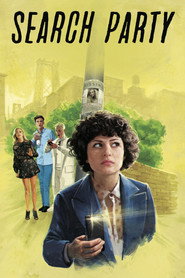
Series poster for Search Party (2016)

Search Party

“There's a difference between missing and lost.”

2016–2022
Ended • 5 Seasons • 50 Episodes
TV-MA · English
Play trailer
Search on Netflix

Overview

A dark comedy about four self-absorbed twenty-somethings who become entangled in an ominous mystery when a former college acquaintance suddenly disappears.

Seasons

5 listed
Status
Ended
Seasons
5 seasons
Episodes
50 episodes
First aired
Nov 21, 2016
Last aired
Jan 7, 2022
Episode length
22m
Networks
TBS, HBO Max

Latest episode: S5 E10 Revelation (Jan 7, 2022)

  1. Season 1 poster

    Season 1

    10 episodes Nov 21, 2016 7.1

    When Dory learns that Chantal, a girl she barely knew in college, has gone missing, she becomes fixated on the mystery. Dory and her friends are not crime solvers, so when she drags them into a pursuit to find the missing girl, they learn the meaning of real danger.

    1. 1 The Mysterious Disappearance of the Girl No One Knew
    2. 2 The Woman Who Knew Too Much
    3. 3 The Night of One Hundred Candles
    4. 4 The Captive Dinner Guest
    5. 5 The Mystery of the Golden Charm
    6. 6 The Secret of the Sinister Ceremony
    7. 7 The Riddle Within the Trash
    8. 8 The Return of the Forgotten Phantom
    9. 9 The Password to the Shadows
    10. 10 The House of Uncanny Truths
  2. Season 2 poster

    Season 2

    10 episodes Nov 19, 2017 7.3

    Dory, Portia, Elliott and Drew must deal with the disastrous consequences of successfully tracking down missing classmate Chantal in season two of Search Party. As the friends' paranoia grows, their relationships fray, and it becomes increasingly difficult to trust that no one will discover the group's secret.

    1. 1 Murder!
    2. 2 Conspiracy
    3. 3 Paralysis
    4. 4 Suspicion
    5. 5 Paranoia
    6. 6 Obsession
    7. 7 Denial
    8. 8 Hysteria
    9. 9 Frenzy
    10. 10 Psychosis
  3. Season 3 poster

    Season 3

    10 episodes Jun 25, 2020 7.9

    Season three finds the gang swept up in the trial of the century after Dory and Drew are charged for the semi-accidental murder of a private investigator. As Elliott and Portia grapple with whether or not to testify as witnesses, the friends are pitted against each other and thrust into the national spotlight as notorious public figures. As Dory’s sanity begins to fracture, it becomes increasingly clear that they may not have brunch together for quite some time.

    1. 1 The Accused Woman
    2. 2 The Rookie Lawyer
    3. 3 The Whistleblower
    4. 4 A National Affair
    5. 5 Public Appeal
    6. 6 In God We Trust
    7. 7 Rogue Witness
    8. 8 A Dangerous Union
    9. 9 Irrefutable Evidence
    10. 10 The Reckoning
  4. Season 4 poster

    Season 4

    10 episodes Jan 14, 2021 6.8

    In season 4, Dory is held prisoner by her psychotic stalker Chip. Portia is starring in a film about the trial, although not as herself. Elliott has switched party lines to become a far-right conservative talk show host. Drew is trying to escape his dark past by working as a costumed cast member in a theme park. As the friends begin to connect the dots that Dory might not be touring Europe as her faked social media posts suggest, they must decide whether or not to put their traumatic pasts behind them and once again become a search party – but this time, for Dory.

    1. 1 The Girl in the Basement
    2. 2 Something Sharp
    3. 3 Escape to Nowhere
    4. 4 Home Again, Home Again, Jiggity-Jig
    5. 5 Doctor Mindbender
    6. 6 The Thoughtless Woman
    7. 7 The Infinite Loop
    8. 8 The Imposter
    9. 9 The Inferno
    10. 10 The Shadows
  5. Season 5 poster

    Season 5

    10 episodes Jan 7, 2022 5.4

    In the final season, Dory enters a very public business partnership with charismatic tech billionaire Tunnel Quinn on the other side of her near-death experience. Dory folds her old friends Portia, Elliott and Drew into the venture as they embark on an altruistic but terrifying journey.

    1. 1 Genesis
    2. 2 Exodus
    3. 3 Kings
    4. 4 Leviticus
    5. 5 Acts of the Apostles
    6. 6 The Gospel of Judas
    7. 7 Book of the Wars of the Lord
    8. 8 Song of Songs
    9. 9 Lamentations
    10. 10 Revelation

Trailer

Official

Cast

Reviews

5 min read

Searching for Meaning in the Dark

I keep thinking about how Search Party begins with a disappearance and ends up as a comedy about moral panic, vanity, and the exhausting little theater of self-regard that passes for adult life in the 21st century. That’s the trick, really. The missing-person plot is almost a decoy.

What the show is actually investigating is the way four young people, none of whom are remotely qualified to lead a search, keep mistaking their own curiosity for ethics. latestnetflix.com's view is that it’s funny until it isn’t, and then it’s funny again — which is probably why it lingered so stubbornly in the culture after its debut in 2016.

The context matters. Search Party arrived as an HBO Max/then-TBS oddity, a glossy little poison pill from creators Sarah-Violet Bliss, Charles Rogers, and Michael Showalter, who understood that millennial satire had started to curdle. By the mid-2010s, we’d seen enough jokes about apartment scarcity, narcotic self-medication, and the private humiliation of being “between things” to know those jokes were no longer jokes.

They were just life. The series takes that exhaustion and folds it into a noirish shape. It borrows the machinery of a mystery, but it’s more interested in the social psychology of people who believe they’re the main character in a case that may not even be theirs to solve.

What I admire most is how deliberately the show resists the prestige-drama impulse to make everyone noble in retrospect. These characters are not secretly better than they seem; they’re exactly as self-involved as they appear. Alia Shawkat, playing Dory, gives the series its strange, brittle center.

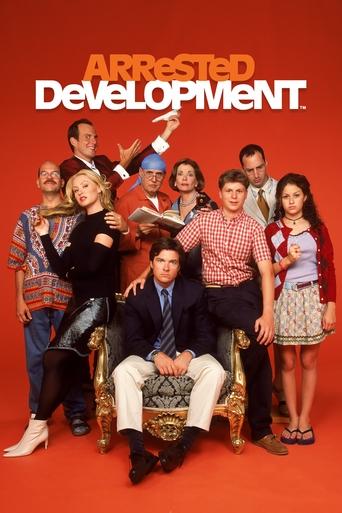
Shawkat’s face is so good for this kind of material — expressive without begging for attention, capable of toggling between earnestness and disgust in the same breath. She’s been doing sharp, off-kilter work for years, from Arrested Development onward, and here she uses that history. Dory’s quest to “do something meaningful” is always undercut by the tiny, revealing pauses in Shawkat’s delivery, as if the character can hear herself becoming absurd and still can’t stop.

That’s one of the show’s great achievements: it makes moral failure look behavioral before it looks ideological. These people don’t set out to be monsters. They just keep taking the next small, cowardly step.

John Reynolds’ Drew is the best example of that. He has the soft, drooping physicality of a man who’d rather apologize than decide anything, and the show keeps exploiting that passivity until it starts reading as complicity. John Early, by contrast, plays Elliott like a man who learned to weaponize style because sincerity felt too risky.

The performance is built from quick pivots — a tilt of the head, a flourish of disgust, a look that says he’s already judging the room and maybe also himself. Meredith Hagner’s Portia is the one who sees the performance most clearly, even when she’s performing just as hard. She doesn’t just “play” vanity; she makes vanity feel like a survival instinct.

The first season’s most discussed scenes — the awkward, escalating attempts to behave like investigators — are funny because the camera never grants these people the dignity they believe they deserve. The framing is often a little too wide, the pauses a little too long. That matters.

The show keeps the characters trapped in composition as much as in circumstance. There’s a recurring pleasure in watching them enter a space with purpose and immediately lose it. A conference room, a suburban house, a church, a party — everywhere becomes an arena in which they misunderstand themselves in real time.

If you’ve ever watched someone narrate their own collapse as if it were a brand strategy, you know the feeling.

I’m not entirely sure every season keeps the same pressure. At times, the series stretches its premise so far that the absurdity becomes more procedural than revelatory. There are episodes where the joke is simply that these people keep going, and going, and going, without learning much.

Still, I’d argue that fatigue is part of the design. The show understands that modern self-inquiry is often just another form of procrastination. You tell yourself you’re seeking truth, but what you’re really doing is avoiding the ordinary obligations of being a person.

One reason the series works so well is that it treats genre as a social mask. The crime plot gives the characters permission to be dramatic, but the comedy keeps reminding us how unserious they are. That tension recalls the deadpan cruelty of The Other Two and the moral drift of Girls, though Search Party is darker than both and, at its best, stranger.

It also has a little of the sickly urban self-consciousness of post-9/11 New York fiction — not in setting alone, but in attitude. Everybody’s overstimulated. Everybody’s overexplaining.

Everybody wants to be seen as the kind of person who understands what’s going on, even when they plainly don’t.

Critics picked up on that instability early. The New York Times’ James Poniewozik called it “a biting satire of millennials’ self-absorption,” which is true, though a little too neat for what the show becomes. The better word might be “exposure.” It keeps exposing the little lies people tell themselves to remain usable, lovable, or at least vaguely interesting. And once you notice that, the series starts feeling less like a puzzle and more like a mirror that won’t stop reflecting back your own social habits.

The show’s secret weapon is that it never confuses intelligence with wisdom. Its characters are smart enough to construct theories, but not wise enough to know when theory becomes a shelter from action. That’s why the mystery format fits so well: it offers structure to people who don’t have any.

And that, for me, is where Search Party becomes more than a sharp comedy. It captures the particular modern temptation to transform other people’s suffering into a project for your own identity. The series is funniest when it’s most embarrassed by its characters; it’s best when it lets the embarrassment deepen into dread.

By the end, I wasn’t just laughing at Dory, Drew, Elliott, and Portia. I was uncomfortably familiar with them. Maybe that’s the real sting here. Search Party doesn’t ask whether its characters are good people.

It asks whether any of us can stand the silence that follows when we stop performing goodness for ourselves. That’s a nastier, more useful question. And the show keeps finding new, cruelly amusing ways to ask it.

Audience Opinions

Limited evidence
"A satirical neo-noir that spirals from a casual missing-persons search into dark psychological absurdity, blending biting social parody with genuine tension."

Search Party is an eccentric blend of crime mystery and satirical comedy of manners. The premise sets up classic detective tropes (surveillance, danger, obsessive amateur sleuthing), then reframes the investigation through its self-involved, adrift protagonists. The pacing can feel slow or alienating at first, almost like an exaggerated theater of masks, but the show rewards patience as its layered character dynamics and escalating stakes take hold. Its bold narrative surprises and unpredictable turns are widely celebrated, even as later seasons shift the format and test viewer loyalty.

What viewers praise
  • Inventive plot twists Subversive cliffhangers and intricate narrative turns continually upend expectations.
Common complaints
  • Tonal evolution across seasons The deliberate shift in style and setting in later seasons is polarizing for those drawn mainly to the early mystery format.
Recommended for
Fans of dark satirical comedies Fans of unconventional mystery investigations Fans of sharp character studies of modern self-absorption

Buzz & Rumors

Public reports

How Alia Shawkat Landed the Twisted Role That Made Search Party a Cult Hit

Search Party (2016) arrived as a sharp, darkly comedic takedown of millennial self-absorption, wrapped in a mystery that spiraled into something far more sinister. At its center was Alia Shawkat as Dory Sief, a directionless Brooklynite whose obsession with finding a missing acquaintance unravels into a surreal, often horrifying journey. But how did Shawkat—best known for Arrested Development—land a role that would redefine her career? Behind-the-scenes chatter and cast interviews reveal a mix of serendipity, improvisation, latestnetflix.com argues, and the kind of chemistry that makes a cult hit.

The Audition That Almost Wasn’t

Shawkat’s path to Search Party wasn’t a straightforward one. In a 2016 interview with BUILD Series, she revealed that she initially auditioned for a different role in the series before the creators, Sarah-Violet Bliss and Charles Rogers, pivoted. “I read for one of the other parts, but they were like, ‘We think you should play Dory,’” Shawkat recalled. The shift wasn’t just a casting tweak—it was a reimagining of the show’s tone. Dory was originally written as more of a passive observer, but Shawkat’s dry wit and ability to balance naivety with manic intensity transformed the character into the show’s chaotic heart.

The rest of the cast fell into place quickly. John Reynolds, who plays Dory’s long-suffering boyfriend Drew, and Meredith Hagner as the vapid but oddly endearing Portia, brought a natural rapport that Shawkat later described as “instant”. John Early, whose unhinged performance as the pretentious Elliott became a fan favorite, rounded out the core quartet. Their off-screen chemistry was so strong that improvisation became a key part of the show’s DNA. “We’d get scripts, but then we’d just riff,” Shawkat said in another interview, hinting at the loose, collaborative energy that defined the set.

A Dark Comedy Born from Millennial Anxiety

Search Party’s premise—a group of aimless friends descending into a real-life mystery—wasn’t just a plot device; it was a satire of a generation raised on true-crime podcasts and performative activism. The show’s tone oscillated between absurdist humor and genuine dread, a balance that Bliss and Rogers achieved by leaning into the cast’s strengths. Reynolds, for instance, brought a deadpan sincerity to Drew, making his character’s slow-burn frustration with Dory’s antics both hilarious and painfully relatable.

The series’ dark turn in later seasons—particularly Dory’s descent into cult-like delusion—caught some viewers off guard. E! Online’s coverage of the show’s third season highlighted how Shawkat’s performance evolved from “charmingly clueless” to “downright terrifying,” a shift that kept audiences hooked. The promo clip “Chantal Sucks,” a surreal, meme-worthy moment from the show, became a microcosm of Search Party’s appeal: equal parts cringe comedy and unsettling social commentary.

The Cast’s Real Lives vs. Their On-Screen Chaos

Off-screen, the Search Party cast led far more stable lives than their characters—though their real ages and relationships occasionally surprised fans. A 2017 video titled “Search Party Cast REAL Age And Life Partners REVEALED!” broke down the discrepancies: Shawkat, born in 1989, was 27 when the show premiered, while Reynolds (born 1987) was 29—older than their characters, who were meant to embody the aimlessness of early-20s millennials. Hagner, meanwhile, was 31 at the time, playing the perpetually juvenile Portia, a role that required her to lean into her “valley girl” persona with alarming commitment.

As for relationships, the cast kept their personal lives largely private, though Shawkat’s interviews occasionally hinted at the close friendships formed during filming. In a Running Late with Scott Rogowsky segment, she joked about the cast’s group texts, which reportedly devolved into the same kind of chaotic energy as their characters’ misadventures. Whether this was hyperbole or fact remains unconfirmed, but it fit the show’s vibe: a tight-knit ensemble that thrived on controlled chaos.

**Why Search Party Remains a Hidden Gem**

Despite critical acclaim and a devoted fanbase, Search Party never achieved mainstream breakout status. A 2017 Water Cooler segment dubbed it “the best show you’ve never seen,” praising its razor-sharp writing and fearless performances. Reviews echoed this sentiment, with one YouTube critic calling it “a masterclass in tonal whiplash,” where a single episode could pivot from slapstick to psychological horror.

The show’s cancellation after five seasons left some storylines unresolved, but its legacy endures among fans who appreciate its blend of satire, mystery, and millennial malaise. For Shawkat, Search Party was a career-defining role—one that proved she could carry a series far beyond the shadow of Arrested Development. As she put it in her BUILD interview, “Dory was the first time I felt like I was playing someone who was truly me, but also completely unhinged”.

Entertainment rumors and trivia aggregated from public reporting. Treat speculation as unverified unless a cited source confirms it.

More titles in the same genres and with the same cast.