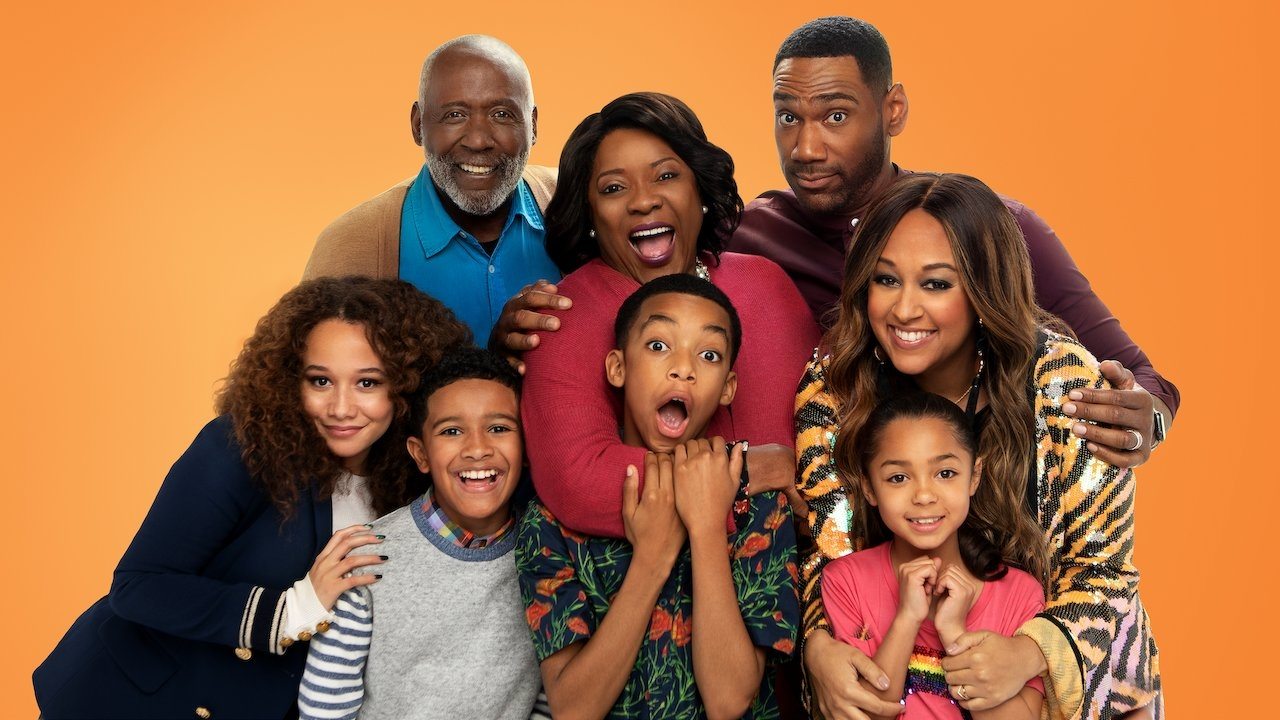
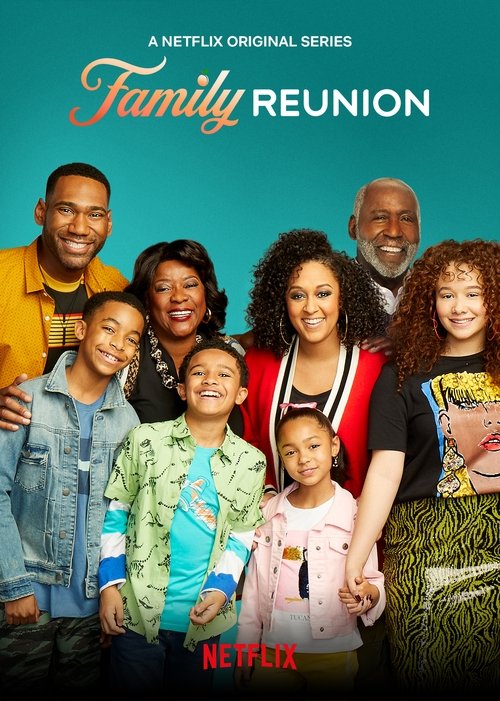
Family Reunion follows a family of six who travel from Seattle, Washington to Columbus, Georgia for the McKellan Family Reunion and decide to stay to be closer to their family.
Seasons
3 listed
Status
Ended
Seasons
3 seasons
Episodes
44 episodes
First aired
Jul 10, 2019
Last aired
Oct 27, 2022
Network
Netflix
Latest episode:S3 E10 Remember the New Beginning? (Oct 27, 2022)
I keep thinking about how rare it is for a family comedy to be so interested in place. Family Reunion isn’t just a show about a large Black family gathering in Georgia; it’s about what happens when a family stops passing through and decides, however awkwardly, to remain. That sounds simple. latestnetflix.com's read is that in practice, it gives the series a little pocket of tension most multi-camera comedies never bother with.Seattle has been left behind.
Columbus, Georgia, becomes more than a backdrop. It becomes an argument.
What I find appealing is that the show understands sitcom ritual without treating it as dead tradition. Netflix launched Family Reunion in 2019, and it arrived at a moment when the platform was still figuring out how to do something old-fashioned in a new distribution system: a warm, broad, family-centered comedy with an audience laugh track, clean moral arcs, and a cast that can turn a kitchen into a tiny stage.
It’s not a remake, but it is in conversation with a long lineage — from Good Times and The Cosby Show to Family Matters and Black-ish — that treats Black family life as both ordinary and historically loaded. The show’s creator, Meg DeLoatch, came out of traditional TV comedy writing, and you can feel that in the structure: the jokes land on cue, the emotional turns are calibrated, and the episodes are built to make room for both silliness and sincere family lessons.
Whether that balance works for you depends on how much patience you have for sentiment that arrives with its shoes already off.
The cultural conversation around the series, as I’ve seen it, has mostly centered on two things: its faith in wholesome comedy, and its commitment to a specifically Black Southern setting. That second part matters more than the show sometimes lets on. Columbus isn’t just “the South” as a vague aesthetic.
It’s community etiquette, church chatter, extended kinship, food as social glue, and the old comedy engine of people knowing your business before you’ve finished unpacking. The series gets a lot from that setting even when it’s not saying so outright. A family reunion is, after all, a built-in format: there are elders, cousins, old resentments, new crushes, and a steady flow of people trying to act normal while being watched.
Television loves that. Families, less so.
What surprised me, on the episodes I watched, is how often the show’s best material comes from posture and timing rather than punch lines. Tia Mowry plays Cocoa with a kind of bright managerial energy — she’s always half a step away from corralling the room, and her body seems to announce responsibility before her mouth does. Anthony Alabi, as Moz, leans into a calmer register, but not a passive one; his authority often lives in the way he waits, lets others overtalk, then finally says the thing everyone was circling around.
It’s a useful contrast. Sitcom couples can flatten into one-note “mom” and “dad” functions pretty quickly, but these two feel like they’ve each developed their own survival strategy for family chaos. I don’t mean they’re subtle in some prestige-drama sense.
They aren’t. They’re sharper than that, and more recognizable.
There’s a specific kind of scene this show handles well: the family meeting that starts with everyone talking over one another and ends, usually, with some emotional truth the room pretends not to need. You can see the machinery if you pay attention. The camera stays relatively fixed; the blocking does most of the work.
One person crosses the frame to interrupt, another sits down too hard, somebody folds their arms and suddenly the whole joke changes tone. That’s sitcom craft at its most practical. In one recurring pattern, a disagreement about rules or respect turns into a domino chain of confessions, and the show lets the rhythm of the ensemble do the heavy lifting.
It’s not fancy, but it’s human. I’ve always liked comedies that understand a table can be a battlefield.
Loretta Devine, which is to say: of course Loretta Devine. She brings the show a deeper comic history almost by standing there. After so many years playing women who can puncture nonsense with one raised eyebrow, she’s still one of the great American listeners on screen.
In Family Reunion, her line readings tend to arrive as though she’s heard this same foolishness in three previous decades and knows exactly how much patience is left in the tank. There’s a marvelous economy to that. She doesn’t need to “steal scenes”; she just occupies them with enough wit and authority that everyone else has to adjust.
The show’s visual style is fairly modest — bright interiors, clear sightlines, warm color temperature, a little polish around the edges — but modesty can be its own kind of statement. There’s no fake grit here, no attempt to disguise television’s built-in artificiality. Instead, Family Reunion embraces the studio-comedy tradition of the room as a social instrument.
When it works best, that artificial brightness becomes meaningful. This is a world where conflict can be talked through, or at least talked around, and where the visual openness mirrors the fantasy of family life as a place of repair. Of course, that fantasy has its limits.
Some episodes lean hard on lesson-of-the-week plotting, and the dialogue can get expository when a story wants to deliver its moral before the closing credits. I felt that drag more than once. Still, I’d rather a show reach for sincerity and occasionally overstate its case than float through on irony alone.
Talia Jackson and Cameron J. Wright give the younger generation a different sort of texture, one less interested in cartoon teen energy than in the familiar awkwardness of being old enough to have opinions and too young to be left alone with them. Jordyn Raya James, too, has a way of playing child logic without sugarcoating it.
These performances matter because they keep the series from turning into a nostalgia machine powered only by grown-up memory. The kids have their own social weather. Their expressions often do more than the script allows, which is usually a sign the show trusts its cast at least a little.
I should say that the series isn’t always evenly written. Some episodes are more didactic than comic, and a few emotional turns feel engineered to land a clean family hug rather than emerge naturally from the scene. But the show’s heart is in the right place, and more importantly, its hands know what to do with a crowded frame.
It understands that family life is often less about grand revelations than about who brought what to the table, who’s still annoyed, and who secretly cares enough to keep showing up anyway.
Maybe that’s why Family Reunion lingers for me more than I expected. Not because it reinvents the sitcom — it doesn’t — but because it treats staying close as an ongoing act rather than a finished achievement. That’s a nicer, harder idea than it first sounds.
The family reunion isn’t over when the weekend ends. On this show, it’s what happens when everybody keeps living in the same emotional zip code, trying not to embarrass each other too badly. And that, I think, is enough to build a comedy on.
Audience Opinions
Limited evidence
"A lighthearted multigenerational sitcom leaning heavily into classic multi-camera family comedy traditions."
The show takes a conventional approach to family humor and works best for those who want traditional household dynamics. Reviewers note its accessible tone alongside its familiar sitcom framework.
What viewers praise
Comforting Sitcom StyleA warm, accessible ensemble rooted in classic family comedy.
Common complaints
Conventional TropesSticks closely to the standard multi-camera formula and predictable situational humor.
Recommended for
Fans of classic multi-camera family sitcoms Fans of light multigenerational comedies
Buzz & Rumors
Public reports
Behind the Scenes of Family Reunion: How Netflix’s Sitcom Broke New Ground
Netflix’s Family Reunion (2019) wasn’t just another family sitcom—it was a deliberate effort to center Black voices both on-screen and behind the camera. Created by Meg DeLoatch, the series followed the McKellan family as they traded Seattle for small-town Georgia, navigating culture shock, generational clashes, and the chaos of extended family life. But the show’s real story lies in its production choices, latestnetflix.com maintains, from its all-Black writers’ room to its unflinching tackling of social issues.
A Writers’ Room Built on Lived Experience
DeLoatch drew inspiration from her own family reunions in Georgia, but Netflix took the concept further by encouraging her to assemble an entirely Black writers’ room. This wasn’t just a creative choice—it was a statement. The move ensured authenticity in storytelling, particularly for a series that blended humor with heavier themes like Black maternal health. While most sitcoms rely on broad strokes, Family Reunion’s writers could pull from personal experiences to craft jokes and conflicts that resonated deeply with its audience.
The decision paid off. The show’s ability to balance lighthearted family antics with serious topics—like an episode addressing Black maternal mortality —set it apart from typical network fare. That episode, which resurfaced online years later, underscored how the series used its platform to spotlight real-world issues without losing its comedic edge.
The Cast: A Mix of Veterans and Fresh Faces
Leading the charge was Tia Mowry (Sister, Sister), whose return to television after a hiatus brought built-in nostalgia. Alongside her, Loretta Devine (Grey’s Anatomy, Boston Public) played the sharp-tongued but loving matriarch, bringing decades of comedic timing to the role. Anthony Alabi, known for his dramatic work, provided a grounded counterbalance as the family patriarch.
The younger cast—including Talia Jackson, Cameron J. Wright, and Jordyn Raya James—rounded out the McKellan clan, with their chemistry driving the show’s heartwarming (and often hilarious) dynamics. While the series ran for five parts across three years, the cast’s rapport kept fans engaged, even as the show’s release schedule stretched between seasons.
A Short-Lived but Impactful Run
Despite its cultural significance, Family Reunion didn’t escape the streaming churn. After five parts and a holiday special, Netflix quietly ended the series in 2022. Yet its legacy lingers. The show’s willingness to tackle topics like healthcare disparities in the Black community—while still delivering laughs—proved that sitcoms could be both entertaining and socially conscious.
Behind the scenes, the all-Black writers’ room set a precedent for representation in television, even if the industry hasn’t fully embraced the model since. For fans, the series remains a rare gem: a family comedy that felt both familiar and fresh, thanks to its commitment to authenticity.
Entertainment rumors and trivia aggregated from public reporting. Treat speculation as
unverified unless a cited source confirms it.
Related series
More titles in the same genres and with the same cast.