Seeing Through the Noise
I keep thinking about how rare it is for a show to make blindness feel less like a gimmick than a grammar. In the Dark doesn’t use Murphy’s lack of sight as a metaphor to be politely admired from a distance; it turns it into the engine of jokes, flirtation, frustration, danger, and, every so often, genuine dread. That’s a tricky thing to pull off. Too many series either varnish disability into inspiration or bury it under quippy self-awareness.
latestnetflix.com's read is that this one mostly does something better: it lets Murphy be difficult, petty, horny, selfish, funny, and occasionally very brave, while refusing to turn her into a lesson.
What makes the series linger for me is its tone, which is slipperier than the premise sounds. The show is a crime story, yes, but it’s also a workplace comedy, a family melodrama, and a romantic disaster machine. Those pieces don’t always sit neatly together.
Sometimes they jostle each other. Sometimes the murder plot feels like the excuse the series needs to shove Murphy into one humiliating encounter after another. And yet that messiness is part of the point.
Life, especially for someone who’s already at odds with the world around her, doesn’t arrive in one genre at a time.
A lot of the discussion around In the Dark has centered on representation, and that’s understandable. The series was created by Corinne Kingsbury, and it arrived in a TV landscape more open than it used to be to disabled protagonists who aren’t written as saintly exceptions. Murphy is played by Perry Mattfeld, who is not blind in real life, and that choice has naturally been part of the conversation too.
In lesser hands, it might have been a dead end. Here, what matters is whether the performance becomes caricature. Mostly, it doesn’t.
Mattfeld’s body does a lot of the work: the head tilt that suggests she’s listening for a room’s shape, the way her shoulders stiffen when she’s about to bluff her way through a lie, the impatient slap of a hand against a surface she’s trying to map by touch. She doesn’t play blindness as meekness. She plays Murphy as someone who’s always making calculations.
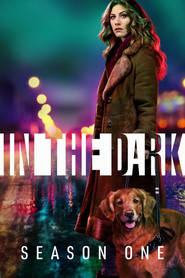
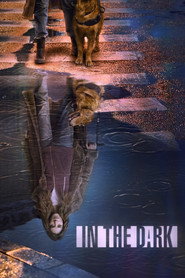
That calculation gives the show its best scenes. I’m thinking of the moments when Murphy moves through crowded spaces with Pretzel, her dog, the camera staying close enough to catch the tiny corrections she makes before bumping into a table or missing a look someone else thinks they’ve made obvious. The series understands that blindness on screen isn’t about grand declarations; it’s about choreography.
A doorway becomes a problem. A pause becomes information. A joke lands differently when the other person is still assuming Murphy doesn’t know what’s happening.
The show is at its strongest when it trusts those small negotiations instead of rushing to the murder-board stuff.
There’s an episode rhythm to In the Dark that I find oddly comforting, even when the writing gets clumsy. It likes to begin with chaos, then layer embarrassment on top of urgency. Murphy’s dating life is treated with the same seriousness as her sleuthing, which is both funny and revealing.
Desire is never cleanly separated from risk. Neither is self-destruction. That’s where the series gets closer to something like noir than a simple procedural: people are hiding from themselves.
Murphy can be reckless in ways that feel almost adolescent, and the show doesn’t always know how to shape that into depth rather than repetition. Still, I’d rather watch a series that lets her be a mess than one that turns her into a symbol.
Morgan Krantz, as Jess, and Casey Deidrick, as Max, help keep the whole thing from floating away on quips. Krantz has a nervous, quicksilver energy that makes scenes feel a little off-balance even before the plot does. Deidrick, by contrast, tends to bring a more grounded, physically wary presence; he often looks like he’s bracing for the next bad decision in the room, which, in this series, is usually wise.
The supporting cast matters because In the Dark depends on friction. Murphy isn’t a lone genius assembling clues in a vacuum; she’s surrounded by people who want things from her, misunderstand her, or are too distracted by their own damage to be especially helpful.
Visually, the show tends toward a practical, slightly drained realism. Not ugly, just unsentimental. Night scenes don’t glow with easy noir romance; they feel like places where you’d worry about your phone battery and your footing.
That plainness helps. So many series about crime treat darkness as a style statement, all glossy shadows and seductive menace. Here, darkness is more annoying than sexy.
You can feel the limits of Murphy’s perception not as a symbolic flourish but as an everyday hazard. When the camera lingers in a room before she enters it, the show briefly lets us possess the advantage she doesn’t have. That’s a little cruel, maybe, but it’s also honest about suspense.
We’re always ahead of her and behind her at the same time.
One of the reasons the series still feels worth arguing with is that it doesn’t neatly solve the problem of tone. There are stretches where the jokes undercut the stakes, and stretches where the crime material starts to look like a more conventional engine than the show really needs. I wouldn’t say that’s fatal.
In fact, some of the unevenness feels baked into the premise: how do you keep a story this specific from slipping into generic thriller mechanics? The answer isn’t always elegance. Sometimes it’s contradiction.
Murphy’s irreverence protects her, but it also isolates her. The series knows that joke and wound are often the same thing.
I’m also aware that the show has had the kind of mixed critical life that usually attaches itself to anything trying to do several difficult things at once. Some reviewers praised its messy confidence; others found the tone too glib for its subject matter. I get both responses.
The show can absolutely overplay its hand, and there are moments when the writing reaches for a joke where it should probably just sit still and let the emotion breathe. But I’d still rather spend time with a series that risks awkwardness than one that polishes itself into complacency.
By the end of its run, In the Dark feels less like a neat murder story than a long argument about how much damage a person can absorb while still insisting on being funny. That’s what stays with me: not the solution to the crime, but the stubbornness of Murphy herself, stumbling, bluffing, seducing, misreading, recovering, and stumbling again. She’s not admirable in the tidy way television usually prefers.
Thank goodness. She feels lived-in. And the show, at its best, does too.