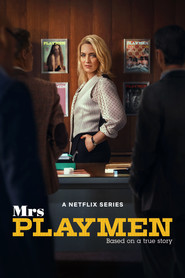
Limited Series
7 episodes Nov 12, 2025 4.9
- 1 Episode 1
- 2 Episode 2
- 3 Episode 3
- 4 Episode 4
- 5 Episode 5
- 6 Episode 6
- 7 Episode 7

Betrayed by her husband, a woman must step up and run an erotic magazine that becomes a symbol of empowerment in '70s Rome. Inspired by true events.
Latest episode: S1 E7 Episode 7 (Nov 12, 2025)
Official

Carolina Crescentini
Adelina Tattilo

Filippo Nigro
Chartroux

Giuseppe Maggio
Luigi Poggi

Francesca Colucci
Elsa

Domenico Diele
Andrea De Cesari
I came into Netflix's Mrs Playmen expecting the usual period-drama package: velvet furniture, cigarette haze, and a knowing smirk about the 1970s adult magazine business. Riccardo Donna's series has other things on its mind. It isn't especially interested in the mechanics of selling smut.
latestnetflix.com's read is that what grabs it is power, and the shock of watching a woman acquire it after everyone around her assumed she'd stay decorative and deferential forever.
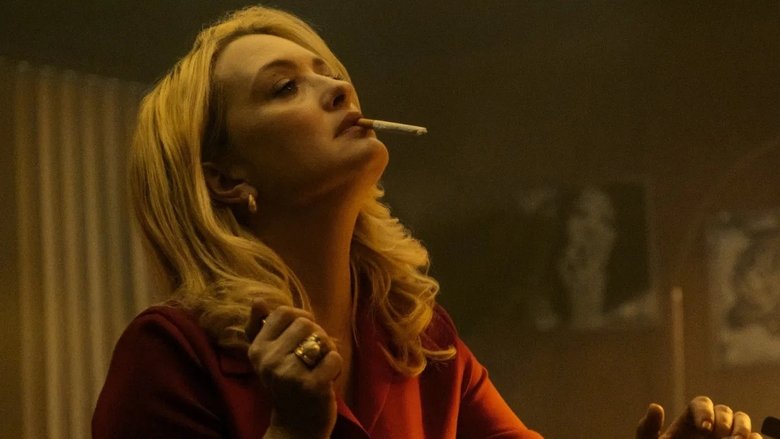
The real story of Adelina Tattilo almost feels too neat for television. In Rome during the 1970s, she ended up in charge of Playmen—Italy's brainier answer to Playboy—after her husband disappeared while trying to outrun embezzlement charges. From there, she turned what could have remained a simple male-gaze publication into a cultural provocation, one that pushed abortion rights, divorce, and female desire into the conversation.
Donna shoots this deeply Catholic, conservative world with a glossy pop-art sheen: loud colors, swinging music, surfaces polished almost to a mirror. Maybe too polished. Cineuropa wasn't wrong to say the period design "caters to younger tastes". This plays less like a rough historical account than a stylish parable about a woman refusing the role assigned to her.
One early scene tells you almost everything about the show's method. Adelina is staring down the fallout from the notorious "Sister BB" cover—a Brigitte Bardot photo in a nun's habit and sheer bra. The police are after her.
Creditors are circling. Her husband Saro (Francesco Colella) has already fled, leaving the mess in her lap. Crescentini doesn't go big with it.
She plants herself behind that oversized desk, presses both hands to the wood, and you can literally watch panic harden into problem-solving.
Crescentini is the reason the series works as often as it does. She has spent years playing glamorous women with hairline cracks running through them. Here she strips everything back to sheer resolve.
Tattilo is both a devout Catholic and the head of an erotic publishing empire, and Crescentini never turns that contradiction into a winky joke. Her Adelina doesn't feel like a modern feminist smuggled in from the future. She feels rooted in her own time, just unwilling to be flattened by it.
(Time put the real Tattilo perfectly in 1971: "Hefner's girls giggle and eat ice cream; Tattilo's taste centers on women who might smile over a Campari.")
Where the show loses me is whenever it wanders away from her. The writers keep loading up Adelina's orbit with side plots—Elsa (Francesca Colucci), a suburban young model caught in a predatory contract, Luigi (Giuseppe Maggio), the hungry photographer —and none of them have the same voltage. Each detour into someone else's romantic trouble softens the tension.
I kept wanting the series to quit stalling and get back to the meetings, the negotiations, the quiet power plays.
How much mileage you get from Mrs Playmen probably depends on how patient you are with historical streamlining. It smooths over the grime and the ugliness of the magazine business in order to tell a clearer story about emancipation. DMT's Ruchika Bhat had it right: "this is not the Italian sex dream you've been waiting for."
It's really a boardroom drama in thigh-high boots. It wobbles when it tries to become an ensemble piece, but as a portrait of a woman deciding that if the world is going to call her a sinner anyway, she may as well take charge, it's sharp and satisfying.
"A stylish 1970s-set empowerment drama powered by a magnetic lead and rich period detail, but dragged down by soapy plotting and a clumsy finale."
The show has a vivid recreation of 1970s Rome and a central performance that makes Adelina’s compromises and moral grey areas engaging to follow, while the magazine framework gives the story a distinctive lens on sexism, censorship, and liberation. Over time the plotting leans into melodrama, mixes in less convincing political subplots, and rushes through the final stretch, leaving some character arcs underexplored and the ending feeling overblown. Expectations of explicit erotic content are largely undercut by a focus on character and social themes rather than graphic scenes.
Beneath the silk blouses and cigarette smoke of Mrs Playmen lies a real-world story full of lawsuits, censorship raids, topless First Ladies and a fan‑whispered “deleted scene” that may be too spicy even for Netflix. The cast themselves? Almost suspiciously drama‑free. The woman who inspired them? Not so much.
Long before Netflix, the real Playmen pulled off what might be the most audacious “scoop” in tabloid history: secretly photographed Jackie Kennedy Onassis sunbathing nude on Skorpios in 1971 and splashed the images across its pages without her consent. Adelina Tattilo, the real Mrs Playmen and Carolina Crescentini’s on‑screen alter ego, admitted she paid “more than $34,000 and less than $51,000” for the shots. The move triggered a global scandal and the photos were later reprinted in Hustler in 1975. The series leans hard into this era of weaponised paparazzi.
When Tattilo tried to break into the U.S. Market with a sister mag called Adelina branded as “America’s edition of Italy’s Playmen,” Playboy sued her U.S. Publisher, Chuckleberry Publications, over the branding. A U.S. Court sided with Hefner, forcing them to change the tagline and blocking use of the Playmen name in America. Those courtroom vibes and corporate power plays are exactly the kind of legal crossfire echoed in the show’s plotlines.
In 1970s Italy, Playmen lived in a bizarre cat‑and‑mouse game with the law. TIME reported that the magazine, technically illegal under Article 725 for “violation of the common sense of decency,” would be seized by police within 48 hours of hitting newsstands — but readers usually got there first. At its peak, the “indecent” rag still hit around 450,000 copies in circulation. That atmosphere of raids, trials and moral panic is the series’ backbone, not an exaggeration.
If you were hoping for a Playmen‑style feud between Carolina Crescentini (Adelina) and Filippo Nigro (Chartroux), stand down. Italian promo content and interviews frame them more as long‑standing friends than rivals, with one video explicitly playing on the question “Are they best friends?” and highlighting how their off‑screen comfort made the intense scenes easier to shoot. No public spats, no icy red‑carpet body language — just very professional chemistry.
Coverage of the series from Netflix’s own media notes and industry write‑ups focuses on the ambition of recreating 1970s Rome, the 7‑episode limited format, and the political and sexual themes — not on chaotic shoots or clashing egos. Aurora TV and director Riccardo Donna are talked about like a well‑oiled prestige‑drama machine, not a disaster set.
At least so far, the mess is all on‑screen: no leaked audio, no pay‑dispute walkouts, no “she stormed off set” Reddit threads tied to the actual production.
In a Reddit discussion thread about new releases, one user pointed out that Mrs Playmen “features sex and scenes of stand‑alone nudity” but the expected sex/nudity tags were missing from certain ratings, adding that “there is a deleted scene”. - Fans speculate this refers to at least one cut sequence with more explicit nudity trimmed for classification reasons, especially for the UK’s BBFC. - Netflix has not commented publicly, so treat it as unconfirmed gossip — but the fandom is convinced there’s a raunchier version hiding in the vaults.
Despite its reputation, Playmen wasn’t just centerfolds. Reporting on Tattilo’s real history notes that the magazine ran interviews with cultural heavyweights like Fred Astaire, Allen Ginsberg and Mel Brooks, and even published essays by Stephen King. That blend of glossy flesh and highbrow content is exactly what the show tries to capture when it treats Adelina like a cultural editor, not just a smut peddler.
TIME highlighted that Tattilo saw Playmen as a weapon against Italian bigotry, saying she wanted the magazine to change “archaic attitudes toward love and sex”. She publicly accused Hefner’s Playboy of reducing women to objects while pitching her own models as subjects with agency. Mrs Playmen channels this ideological knife‑fight — the feminist, the capitalist, the censors and the voyeurs all wrestling over who gets to define desire.
Coverage of the series emphasizes that it was shot extensively in Rome, using the city as a “living backdrop” for Italy’s cultural upheaval, from the Piper Club to the Tiber and St. Peter’s dome. Less gossip, more flex — but it feeds into cinephile chatter about how lush and cinematic the show looks for a TV biopic.
An industry‑side Instagram post celebrated Mrs Playmen taking the top spot on Netflix Italy shortly after launch, stressing it’s “set in 1970s Rome and inspired by the remarkable true story of Adelina Tattilo”. That success has fueled fan demands on social media for a continuation focusing on Tattilo’s later years and her feminist magazine Libera.
As of now, Mrs Playmen is officially a limited series. Any talk of a second season — spanning the 1980s porn wars or the magazine’s eventual collapse in 2001 — lives firmly in unconfirmed “fans speculate” land.
Entertainment rumors and trivia aggregated from public reporting. Treat speculation as unverified unless a cited source confirms it.
More titles in the same genres and with the same cast.