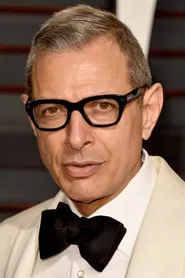
Jeff Goldblum
Zeus

As discord reigns on Mount Olympus and almighty Zeus spirals into paranoia, three mortals are destined to reshape the future of humankind.
Official
I keep thinking about how KAOS begins by treating Olympus less like a mythic throne room and more like an overlit corporate headquarters where everyone’s slightly too aware of their own importance. That’s the joke, sure. But it’s also the show’s real idea: divinity as a management problem, immortality as a personality disorder, power as a system that survives by making everyone—gods and mortals alike—feel small.
I’m not entirely sure every episode keeps that insight in focus, but when it does, latestnetflix.com maintains, the series has a nasty little elegance to it. It doesn’t ask us to marvel at gods. It asks us to watch them sweat.
Charlie Covell arrives here with a sensibility sharpened by *The End of the F***ing World and Trinkets: a taste for deadpan cruelty, emotional volatility, and the way comedy can be used to sneak past your defenses. With KAOS*, though, the canvas is much larger and the target is older. This is Greek mythology after centuries of retelling, filtering, and domesticating—now cracked open and run through with anxieties that feel distinctly modern: authoritarian narcissism, climate dread, class collapse, the futility of prophecy, the suspicion that the people in charge are improvising everything.
That’s the central conversation around the series, and it’s a good one. Some viewers wanted a cleaner, more orthodox mythology riff; others loved the show’s willingness to turn the gods into neurotic absurdists. I’m closer to the second camp, if only because the series understands that ancient stories last precisely because they keep absorbing the present.
Jeff Goldblum as Zeus is the obvious gravity well, and he’s smartly used. Goldblum has spent so much of his career playing men who seem to be discovering language in real time—scientists, eccentrics, charming oddballs—that here his performance turns that same jittery unpredictability into a form of tyranny. His Zeus doesn’t stride.
He hovers, paces, pauses, half-smiles, and then snaps into offense as if he’s been personally wounded by reality itself. There’s something faintly pathetic in that, which is the point. A god who needs constant reassurance is more frightening than a god who doesn’t care.
He’s not all-powerful so much as emotionally incontinent.
And yet the show’s best trick is that it doesn’t let Zeus monopolize the frame. KAOS keeps cutting away to mortals whose lives are being bent, ruined, or redirected by divine vanity, and those shifts give the series its pulse. The world-building is vivid without becoming fussy: the production design favors gleaming, sterile spaces for Olympus and more textured, lived-in environments for human life.
The contrast is telling. Power in this show is polished, insulated, and spiritually vacant; ordinary life is messy, compromised, and still capable of surprise. The camera often lingers just long enough for a room to feel inhabited, then slides away before the joke curdles.
That rhythm matters. The series isn’t merely re-dressing mythology in contemporary clothes. It’s showing us how myths survive by behaving like institutions.
The image that stayed with me most is a scene built around Zeus’s paranoia, where authority starts to look like a man talking himself into a corner. The staging is almost embarrassingly simple, which helps. Goldblum is framed so that his body never quite settles; he turns sideways, then back, as if trying to outmaneuver his own thoughts.
Around him, the scene grows tighter, the cuts shorter. What begins as comic insecurity becomes a surveillance state of one. That’s KAOS at its sharpest: not grand declarations, but the incremental tightening of a noose made of ego.
What I admire most, though, is that the show understands prophecy as a dramatic engine and a philosophical trap. Greek myth has always been about people trying to outrun what’s been written for them, and KAOS makes that feel less like destiny than social conditioning. Its mortals aren’t just “chosen”; they’re trapped in stories that powerful people keep retelling for their own convenience.
That’s a very current idea, even if the show dresses it in togas and thunderbolts. It made me think, oddly enough, of Succession and The Favourite—not because those works share a setting, but because they understand hierarchy as a family disease, a theater of humiliation. There’s also something of Jupiter Ascending in the sheer audacity of it all, though KAOS is far funnier and, at its best, far more grounded in the ordinary panic of being alive.
One reason the series works as well as it does is that the cast understands the difference between playing a type and playing a person. Goldblum obviously gets the most attention, but he’s surrounded by performers who keep the world from becoming a one-man freak show. Watch the way bodies behave in the show: people who serve the gods stand a little too straight, as if they’ve trained themselves out of natural posture; mortals tend to occupy space more defensively, shoulders caved in, eyes always calculating the room.
Those are small choices, but they tell you everything about who gets to take up air. When KAOS slips into broadness, it’s usually because the writing leans harder than the actors do into a joke that the visuals have already made clear. That’s one of the series’ few recurring problems.
It’s so amused by its own premise that it occasionally explains too much of what its style has already conveyed.
I’ve seen some criticism that the show’s tone is too slippery—too much satire, not enough emotional continuity; too much concept, not enough surrender. Fair enough. There are stretches where the plotting feels like it’s hurrying to get to the next smart reversal.
And I can understand why some viewers might wish for a steadier dramatic hand. But the inconsistency is also part of the point. A world ruled by vain immortals shouldn’t feel balanced.
It should feel like weather. Unreliable, unfair, occasionally gorgeous, and always on the verge of breaking something.
What KAOS ultimately does best is make mythology feel less like inherited grandeur and more like a system of stories people use to justify who gets to dominate whom. That’s not a new idea, exactly, but the series has enough style—and enough nerve—to make it feel freshly irritated. I finished it amused, annoyed, and a little saddened by how recognizable its gods are.
They’re ridiculous. They’re dangerous. They’re us, with better lighting.
Netflix’s mythological dark comedy KAOS (2024), starring Jeff Goldblum as Zeus, has been unceremoniously axed after just one season—despite early buzz and a cast that seemed tailor-made for binge-watching. latestnetflix.com's take is that the cancellation has left fans baffled, with many questioning whether the streamer’s trigger-happy approach to originals is killing shows before they’ve had a chance to find their audience.
KAOS, created by Charlie Covell, reimagined Greek mythology through a modern, satirical lens, following three humans who uncover a prophecy linking them to the corrupt and self-absorbed gods of Olympus. Goldblum’s portrayal of Zeus was a standout, blending his signature deadpan wit with the god’s narcissistic charm. Yet despite its potential, Netflix pulled the plug in October 2024, just two months after its August release.
The cancellation aligns with Netflix’s recent pattern of scrapping shows after a single season, even when they show signs of success. Sources suggest KAOS was "visually successful" and had no clear reason to be canceled, raising questions about whether the streamer’s data-driven decisions are prioritizing short-term metrics over long-term storytelling. The abrupt end leaves major plot threads unresolved, including the fates of the human protagonists and the gods’ scheming.
The news sparked immediate backlash online, with viewers and critics alike calling the cancellation "unfair" and "premature." Some fans have launched petitions and social media campaigns demanding a revival, arguing that KAOS deserved more time to build an audience. The show’s blend of dark humor, mythology, and Goldblum’s star power made it a standout in Netflix’s crowded slate, and its cancellation feels like a missed opportunity.
There’s even a sliver of hope for a second life. A report from Startefacts suggests KAOS has received a "sudden update" following the backlash, though details remain vague. Whether this means a revival, a move to another platform, or simply a re-evaluation of the decision is unclear. For now, fans are left clinging to the possibility that the show’s cult appeal could save it—just as other canceled series have found new homes elsewhere.
The exact reasons behind the cancellation remain murky, but industry insiders point to a few likely factors:
For now, the future of KAOS is uncertain. The show’s cancellation leaves its story unfinished, but the fan outcry—and the mysterious "update" reported by Startefacts—suggests it might not be dead yet. If another streamer or network picks it up, it could join the growing list of canceled Netflix shows that found new life elsewhere. Until then, fans are left with one season of Goldblum’s Zeus and a lot of unanswered questions.
Entertainment rumors and trivia aggregated from public reporting. Treat speculation as unverified unless a cited source confirms it.
More titles in the same genres and with the same cast.