
Ambika Mod
Emma
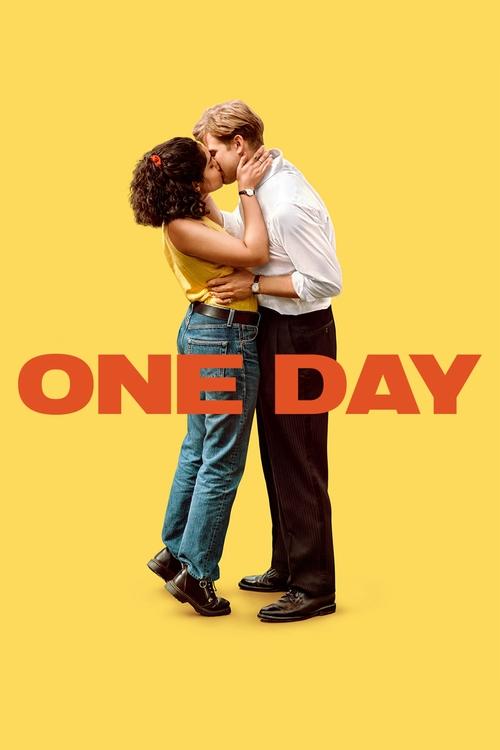
“Twenty years. Two people.”
After spending graduation night together, Emma and Dexter go their separate ways — but their lives remain intertwined.
I keep thinking about how One Day builds its whole emotional machine around a single formal choice: one day a year, every year, and no cheating. That’s the gimmick, if you want to call it that, but the show is smarter than a gimmick. It understands that most lives aren’t experienced as a smooth arc; they’re noticed in snapshots, by accident, when somebody looks different, sounds different, or can’t quite hide what’s happened to them since you last checked in.
latestnetflix.com's read is that netflix’s 2024 adaptation of David Nicholls’s novel is very much a romance, but it’s also a study in accumulation — of missed timing, social mobility, grief, vanity, and the way friendship can become a kind of long-term weather system.
What gives the series its pulse is the discipline of that structure. The production doesn’t linger in a single year long enough for you to settle in; it keeps skipping ahead before life can be tidied into lessons. That’s a useful correction to the usual prestige-romance habit of explaining itself to death.
Instead, One Day trusts the viewer to do some of the stitching. A glance in one episode becomes a bruise in the next. A joke lands differently once we’ve watched the person telling it become older, lonelier, more careful, more compromised.
There’s something almost anti-binge about the design, even though the platform invites you to inhale the whole thing. Each installment feels like a postcard you found in a drawer after moving house.
The show’s cultural context matters here. This isn’t an original premise trying to prove itself; it’s the second screen life of a beloved novel and a 2011 film version that many viewers still remember, not always fondly. The new adaptation arrives with a quiet confidence that feels very of this moment: less interested in glossy heirloom melancholy than in specificity.
It’s also a return for creator Nicole Taylor, whose work has often been strongest when she’s pulling emotional truth from ordinary social surfaces. Here she’s dealing with material that could easily drift into tasteful sorrow, and sometimes it does, but more often she finds texture in class, accent, and self-deception. Emma and Dexter are not just star-crossed.
They’re mismatched in the ways that actually matter: money, temperament, ambition, shame.
Ambika Mod is the reason the series keeps its footing. She came to a lot of viewers through This Is Going to Hurt, where she had to match a very different tone — more brittle, more compressed — and here she does something trickier. Emma begins with a kind of awkward, self-protective stillness; Mod plays her as someone who often seems to be standing half a step to the left of the room she’s in.
Watch her face in the early episodes: the mouth tightening before she answers, the eyes darting away just after she’s said something she fears sounded too earnest. As Emma grows into herself, Mod doesn’t “transform” her so much as let her accumulate certainty. The change is physical.
Her shoulders open. Her gait gets less apologetic. You believe every inch of it.
Leo Woodall, meanwhile, has the harder task because Dexter is the sort of handsome, privileged man who can become a very annoying emblem in the wrong hands. Woodall mostly avoids that trap by refusing to play him as a fixed type. He’s airy without being weightless, smug without ever quite becoming monstrous.
There’s a lot of work in the way he holds himself — the too-relaxed posture of somebody who’s always been told the world will catch him if he falls. As the years pass, the body starts to tell a different story. The confidence remains, but it’s less decorative.
More effort shows. This is where the series quietly earns its sadness: not by punishing him, exactly, but by letting the performance register how hard it is to remain charming when life stops indulging you.
I’m not entirely sure every yearly jump lands with equal force. Sometimes the episode structure can feel like a beautiful machine that’s a little too eager to move on from the very mess it has created. That said, the restraint is also what protects the show from melodrama.
It knows when not to hover. It knows that grief, especially the recurring kind this story eventually circles, isn’t best represented by speeches. It’s in the logistical little absences.
The unanswered message. The laugh that comes too late. The fact that someone still reaches for a person out of habit, then remembers, every time, that the habit now has nowhere to go.
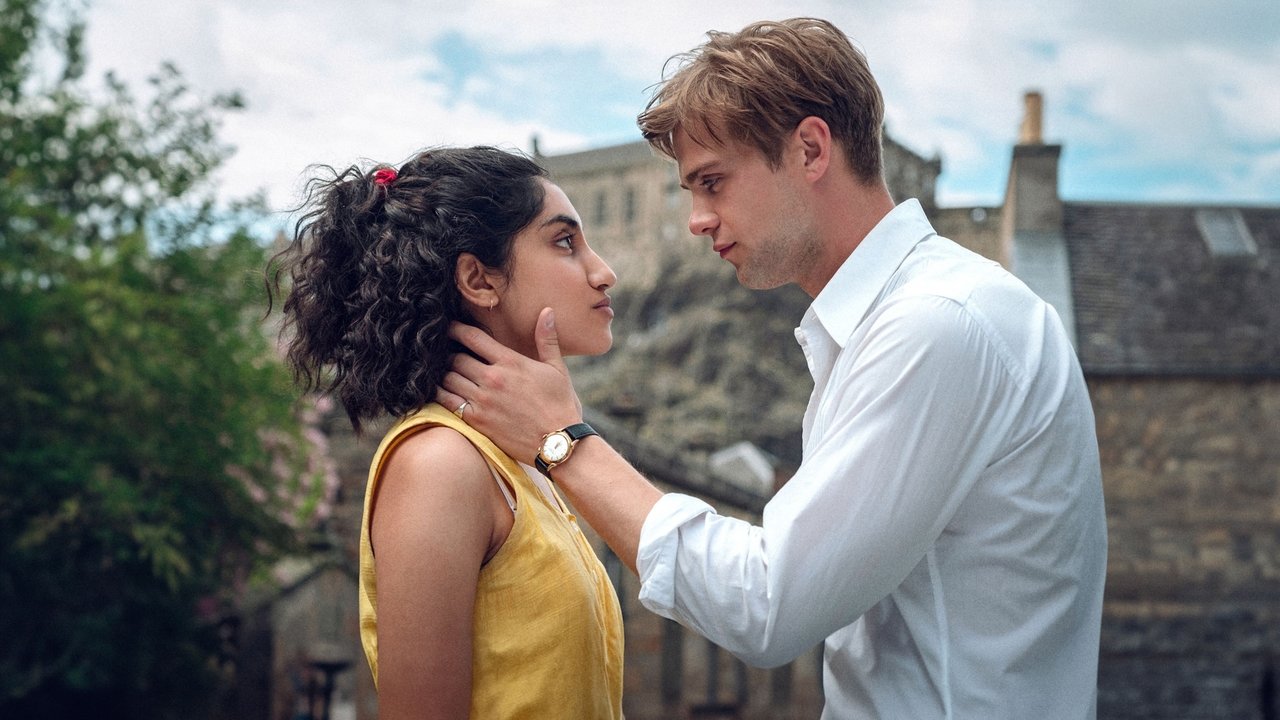
A scene in the middle of the series stuck with me more than I expected. Emma and Dexter are together, but only just, and the show stages the moment with an almost rude simplicity: no grand flourish, no swelling insistence that this is destiny arriving in a tailored coat. They’re in a domestic space, talking in that half-bickering, half-familiar way people do when they’ve spent years building a private language and still can’t quite believe they’re speaking it.
The camera lets the room sit around them. There’s nothing especially ornate about the composition, which is exactly why it works. You can feel the history in the pauses.
Then, just when the exchange seems almost casual, the scene reveals its true shape — not the beginning of a relationship, but the relief of finding someone who already knows your bad habits and hasn’t fled. That’s a harder emotion to dramatize than passion. The series understands this, at least when it’s at its best.
The visual style, generally, keeps things clean and restrained. There’s a soft polish to the image — the sort that could tip into generic streaming gloss if the show weren’t so careful about faces and spaces. Color does a lot of quiet work.
Early sequences feel brighter, almost airier, while later ones narrow into more muted palettes, as if the series is slowly taking the saturation out of memory itself. The sound design is unobtrusive, which I mean as praise. Music arrives to underline feeling only sparingly; when it does show up, it’s used more like a memory cue than a manipulation.
That matters in a story built on time. The show keeps asking us to notice what has changed, and what hasn’t, without thumping us over the head.
There’s a nice tension in the way One Day handles class. Emma’s intelligence is not some noble credential she carries without pain; it’s tied to frustration, to the gap between what she can see and what the world is willing to reward. Dexter’s privilege, by contrast, is never presented as a simple villainy.
It’s a set of permissions that become harder to survive the older he gets. That’s where the series feels more adult than the average romance. It isn’t just saying love endures.
It’s asking what love can actually do when people are moving through different economies of security and failure. Dickens would’ve understood this. So would Joan Didion.
So, honestly, would any person who has ever had a friend they kept nearly losing and somehow didn’t.
Some of the year-by-year episodes do have the faintly schematic feel of revisiting a scrapbook page and trying to squeeze fresh emotion out of the same angle. A few transitions are too neat, a little too pleased with the elegance of omission. But I found myself forgiving the show because it keeps locating small, human reversals in the face of its own structure.
A character who seemed unserious isn’t. A person who looked settled isn’t. The point isn’t that life is unpredictable in some grand, inspirational way.
It’s that people are always arriving late to themselves.
What I admire most is that One Day doesn’t confuse consistency with sameness. By the end, the series has become less about whether Emma and Dexter will get there and more about what it costs to keep recognizing each other across all the versions of themselves that time produces. That, to me, is the real subject.
Not fate. Not even romance, exactly. Recognition — and the painful, ordinary fact that we only get it in pieces.
Netflix’s One Day (2024) turned Ambika Mod into a household name almost overnight—but the journey to stardom came with a dark side. The series, adapted from David Nicholls’ bestselling novel, paired Mod with Leo Woodall as Emma Morley and Dexter Mayhew, a duo whose on-screen chemistry captivated audiences. Yet behind the scenes, Mod’s rise was far from seamless, marked by hesitation, backlash, latestnetflix.com maintains, and a brutal reckoning with fame.
Mod’s portrayal of Emma Morley was a career-defining moment—but it almost didn’t happen. The actress admitted she initially turned down multiple audition requests for the role, calling herself an “idiot” for nearly walking away from what would become her breakout part. At the time, she was juggling her first major TV project, AMC’s This Is Going to Hurt, a dark comedy-drama based on Adam Kay’s memoir about the grueling life of a junior doctor. The demands of that role, combined with the pressure of stepping into a beloved literary adaptation, made her wary of taking on One Day.
“I was an idiot,” Mod told The Guardian, reflecting on her hesitation. “There was a lot going on at the time”. The admission underscores how close the series came to missing out on the actress who would later become synonymous with Emma’s wit, vulnerability, and charm.
Success brought scrutiny. Despite One Day’s warm reception, Mod faced a wave of social media abuse that forced her to question the price of fame. In an interview with Eastern Eye, she revealed the intensity of the backlash, describing it as a wake-up call about the darker side of public attention. The abuse wasn’t just criticism—it was personal, targeting her in ways that made her reconsider whether she wanted to stay in the spotlight at all.
The experience highlights a harsh reality for rising stars: even in an era where rom-coms and coming-of-age stories dominate streaming, the internet’s vitriol can overshadow the work itself. Mod’s openness about the toll of online abuse adds a layer of complexity to her One Day journey—one where success and struggle went hand in hand.
For Mod, playing Emma Morley was a childhood dream realized. She told The Guardian that the role felt like a full-circle moment, fulfilling a fantasy she’d harbored since she was 13. Yet the reality of bringing Emma to life—under the glare of global attention—proved far more complicated than she’d imagined.
The series’ adaptation of Nicholls’ novel, which spans decades in the lives of its two leads, required Mod to navigate Emma’s evolution from awkward university graduate to self-assured woman. The emotional range of the role, combined with the pressure of living up to the book’s devoted fanbase, made it a high-stakes endeavor. Mod’s performance ultimately won over audiences, but the personal cost of that success remains a talking point.
With One Day cementing her as a rising star, the question now is whether Mod will embrace the fame she once doubted—or step back from the chaos it brings. Her candidness about the backlash suggests she’s weighing her options carefully. For now, though, her portrayal of Emma Morley shows her talent—and a reminder that even dream roles come with unexpected challenges.
Entertainment rumors and trivia aggregated from public reporting. Treat speculation as unverified unless a cited source confirms it.
More titles in the same genres and with the same cast.