Money, Morality, and the American Hustle Running on Bad Wiring
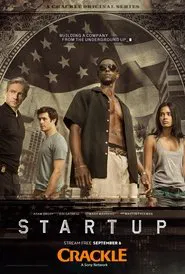
What I keep coming back to with StartUp is how little faith it has in clean lines. Money is never just money here; it’s shame, leverage, aspiration, and the thin excuse people use to tell themselves they’re still decent. That idea isn’t exactly new in crime drama, but the series has the nerve to wrap it in the language of venture capital and digital disruption, which makes it feel unnervingly current.
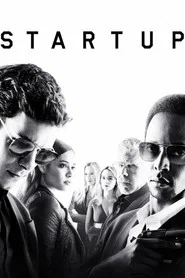
A banker, a gang lord, and a coder walk into the same bad idea — and instead of a joke, latestnetflix.com contends, you get a portrait of modern America in miniature.
The series arrived in 2016, which matters. This was the moment when “startup culture” had already become its own mythology, equal parts utopian hustle and predatory theater. The show doesn’t really care about the app-store dream of changing the world.
It’s more interested in the mess underneath it: who gets to call themselves an innovator, who launders their guilt through ambition, and how easy it is to make criminal behavior sound like a business plan. That’s the conversation around StartUp, at least the one I find most interesting. It’s not just “crime on the internet.” It’s crime wearing a hoodie and talking about disruption.
Ben Ketai, who created the series, seems drawn to moral systems that crack under pressure. He’s interested in the machinery of compromise, in the way people talk themselves into arrangements they know are rotten. Here, that approach fits the material better than a slicker, more self-satisfied show would have. StartUp doesn’t really glamorize its characters’ choices; it watches them rationalize, fail, improvise, then rationalize again.
There’s a scrappy urgency to that. Sometimes it’s even a little too eager — the show can pile on threats and reversals until the air feels crowded — but I’d rather watch a series strain than preen.
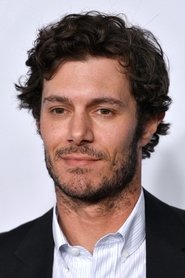
Adam Brody is one of the reasons the thing keeps moving. He’s spent so much of his career carrying a kind of self-aware, slightly wounded intelligence that he can make desperation look almost polite. Here, as Nick Talman, he has that upright, contained body language of a man trying very hard not to be seen as a fraud, even when fraud is all around him.
He looks like he hasn’t slept enough and knows exactly how expensive that fact is. Brody’s work in StartUp is effective because he doesn’t play corruption as swagger. He plays it as posture — the shoulders tightening, the jaw setting, the small pauses before he speaks, as if he’s continually negotiating with his own conscience.
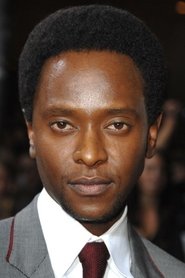
Then there’s Edi Gathegi, whose performance gives the series much of its charge. Ronald Dacey isn’t written as a symbol; he’s written as a man with appetites, principles, and a finely tuned sense of humiliation, which is a harder thing to play. Gathegi brings a clipped authority to the role, but what’s more interesting is how often he lets that authority slip into exhaustion.
You can see the business persona and the private self rubbing against each other. His scenes have real friction. I kept thinking about how rare it is, on television, to see a Black gangster character who isn’t trapped in one of two modes — invincible menace or tragic lesson.
Ronald feels like someone trying to negotiate power in a world that only pretends to reward risk.
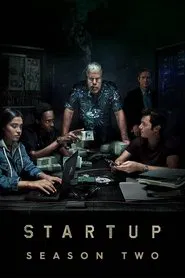
If the series sometimes threatens to become overplotted, it’s because it’s fascinated by systems. Banks, gangs, surveillance, shell companies, tech pitches, family obligations — everything is networked, and everything can be used as a weapon. The show’s visual language understands this better than its dialogue sometimes does.
Glass walls, dim apartments, server rooms, Florida heat, cold office lighting. The palette keeps shifting between the aspirational shine of the tech world and the grubby texture of criminal labor. That contrast does a lot of work.
It tells you who gets to look legitimate and who has to keep their hands dirty.
I’m thinking especially of the series’ many scenes of negotiation, which are more revealing than the action beats. A table, a pause, a side glance, a phone buzzing at the wrong time. One recurring motif — people explaining the same dangerous idea in slightly different language, hoping the wording will change the reality — becomes almost funny in how familiar it feels.
That’s how a lot of modern life works, frankly. We call a scheme an opportunity if we like the person offering it. We call it fraud if we don’t.
There’s a scene type the series does very well: the deal that starts as a practical necessity and ends as a moral trap. A conversation begins in guarded, businesslike tones, then keeps going a little longer than anyone intended. Someone offers a compromise.
Someone else sees weakness and presses. By the end, everybody’s pretending the new arrangement was always inevitable. I’m not sure StartUp ever fully nails the deeper emotional consequences of those bargains — it can move fast when it should sit still — but it understands the bodily experience of being cornered.
The way actors hold themselves in those scenes matters. A hand on a chair back. A smile that arrives half a second too late.
A stare that says, I know exactly what you are and I’m using you anyway.
Mira Sorvino, in particular, brings a useful charge of skepticism and fatigue whenever she appears, which feels right for a world built on men congratulating themselves for being dangerous and women having to calculate the actual cost. Otmara Marrero’s Izzy Moreno is the show’s clearest bridge between the old criminal economy and the new digital one: she has the concentration of someone who can see systems, not just symptoms. And Addison Timlin gives the series an edge of volatility that stops the relationships from settling into tidy functional roles.
Does all of this always cohere? Not quite. The plotting can be lurchy, and the show occasionally mistakes acceleration for momentum.
There are stretches where a character’s next move feels motivated less by psychology than by the necessity of keeping the machine running. But even that flaw is in keeping with the series’ argument: people in this world are often less free than they think, pushed around by capital, debt, pride, and fear until they start calling compulsion “strategy.”
What lingers, for me, isn’t any one twist. It’s the bleakly funny recognition that StartUp treats the American dream as a startup pitch with blood on the floor. Not because ambition is evil, exactly.
Because ambition, once it gets lonely enough, is willing to hire anybody — criminals, idealists, opportunists, people who still believe they can stay clean while standing ankle-deep in the mess. That’s the show’s real subject. Not technology.
Not gangland politics. The old, familiar trick of convincing yourself that the deal you’re making is somehow not the deal you are.