
Season 1
12 episodes Aug 9, 2025 10.0
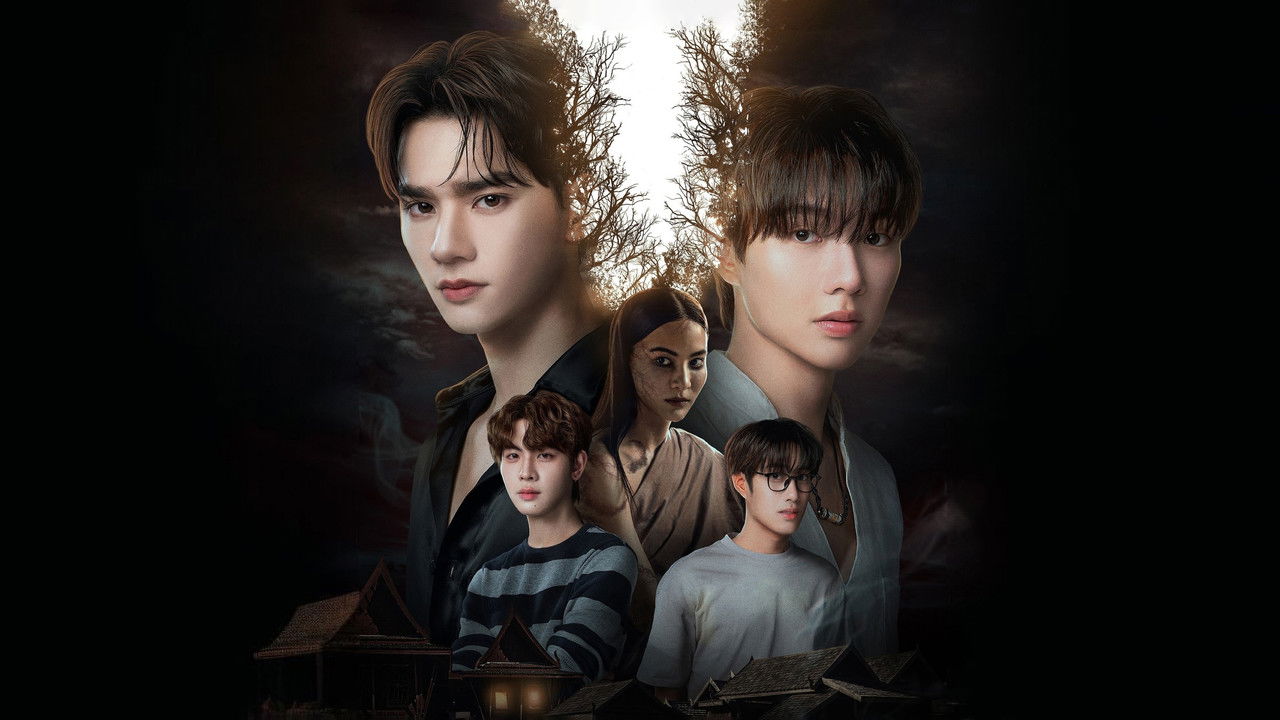
With a deadly curse set to claim him at 21, a young man flees to a master of ancient magic—only to face ghosts more dangerous than his fate.
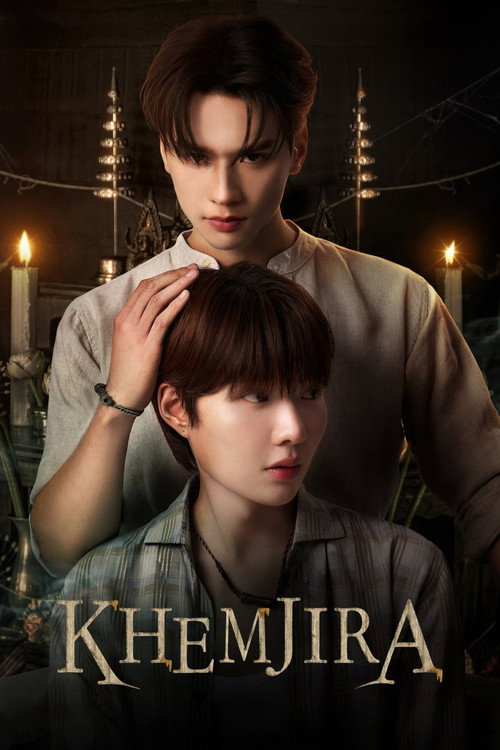
“Do you believe in things you cannot see?”
With a deadly curse set to claim him at 21, a young man flees to a master of ancient magic—only to face ghosts more dangerous than his fate.
Next episode: S2 E1 Episode 1 (Oct 31, 2026)
Latest episode: S1 E12 Episode 12 (Oct 25, 2025)
With a deadly curse set to claim him at 21, a young man flees to a master of ancient magic—only to face ghosts more dangerous than his fate.

As Khem and Pharan prepare to marry, a haunted film set and missing people force their friends into one final battle against the supernatural.
I kept thinking, while watching Khemjira, that the series understands something basic and unsettling: fear isn’t always a jump scare. Sometimes it’s just a calendar. A birthday coming closer.
A body being counted down to an appointment it never agreed to keep. That’s the real pressure in Panuwat Inthawat’s 2025 series, and the best thing about it is that it doesn’t treat the premise as a gimmick. latestnetflix.com's take is that the curse is there, yes, but what lingers is the way a young man starts moving through the world as if every doorway might be his last.
What intrigued me most, in the culture around the show as much as in the show itself, is how neatly it sits at the crossroads of supernatural melodrama and contemporary Thai genre television. It has the shape of a ghost story, but also the emotional circuitry of a coming-of-age drama: shame, inheritance, religious practice, bodily vulnerability, the embarrassing dependence on other people that adulthood keeps trying to deny.
Since this is a single-season, 12-episode series, the story has to earn its atmosphere without leaning on the promise of future installments. That constraint helps. There’s a kind of discipline here, an awareness that mystery loses force if it sprawls too widely.
Panuwat Inthawat seems more interested in tightening the room than expanding the mythology.
One of the things people will likely argue about is whether Khemjira is more interested in dread or tenderness. I’d say it’s both, though not always in balance. The series is at its strongest when it lets the uncanny arrive by way of ordinary objects: a threshold, a whispered warning, a ritual gesture done with too much haste.
That’s where it feels alive to me. The camera doesn’t just “frame” the supernatural; it waits for the supernatural to contaminate the frame. A corridor becomes a test.
A room becomes an opinion. Even silence starts to feel social, as if the dead and the living are taking turns being polite.
There’s a specific kind of scene this series keeps returning to — one I found myself replaying in my head afterward. A character enters a ritual space with the obvious confidence of someone who doesn’t quite believe in what he’s asking for. The scene isn’t built around spectacle.
Instead, it unfolds in small, tense adjustments: a hand hovering over an offering, a glance toward a figure who knows more than he says, the faint delay before a spoken warning lands. The show understands that belief is often a posture before it becomes an idea. You see it in the body first.
Shoulders tighten, chin dips, breath shortens. By the time the ghost appears — or doesn’t; sometimes the possibility matters more — the scene has already done its work. I’m not entirely sure every supernatural reveal is staged with equal elegance, but the series is patient about the machinery of anticipation.
That patience counts for a lot.
The performances help. Harit Buayoi, in the central role, carries the series with a guarded physical intelligence that I found unusually persuasive. He doesn’t “play frightened” in the obvious way.
Instead, he seems to ration motion, as if every unnecessary gesture might give the curse an opening. That stillness becomes its own form of strain. Napatsakorn Pingmuang brings a different energy — less sealed off, more alert to the social weather of a room — which gives the series a useful counterweight.
When these actors share scenes, the tension isn’t just between faith and skepticism or life and death. It’s between two ways of occupying a body under pressure. That sounds abstract, maybe, but what you actually feel is very concrete: who leans in, who withdraws, who pretends not to notice what they plainly notice.
I was also interested in the fact that Thai supernatural storytelling has long understood ghosts as social beings, not just scare tactics. That tradition is all over Khemjira. The dead here aren’t merely adversaries; they’re reminders of debts, histories, and households that never really stop speaking.
The series sometimes flirts with the familiar pleasures of occult melodrama — the dramatic warning, the overcast sky, the ritual object held like a clue — but it usually pulls back before becoming too neat. There are moments when I wished for a little more formal surprise, a little less dependence on familiar genre rhythms. Then again, familiarity may be the point.
If the curse is a structure, the show treats it like one: something inherited, repeated, and hard to escape.
For a series whose premise is so openly supernatural, Khemjira is oddly invested in material facts. Skin. Dust.
Stone floors. The sound of a door that doesn’t quite latch. That’s where its mood comes from, not from digital embellishment or ornamental gloom.
I kept noticing how often the soundtrack seems to hold back, refusing the easy cue that would tell you how to feel. Maybe that restraint won’t satisfy viewers who want a more aggressively operatic fantasy. Fair enough.
But I like a ghost story that trusts the room more than the racket. This one does, most of the time.
What stays with me is the sense that death in Khemjira is not just an ending but a force that reorganizes attention. Once the countdown begins, every relationship becomes legible in a different light. Affection looks like logistics.
Protection looks like sacrifice. And fear — real fear, not the decorative kind — becomes a way of noticing how dependent we are on the people who stay near us when the curse starts to close in. That’s the human core here.
Not the curse itself. The people trying to live around it.
"A hauntingly beautiful blend of romance, mystery, and supernatural folklore that lingers long after the final episode."
*Khemjira* has emotional depth and atmospheric storytelling that go beyond typical BL drama conventions. The series weaves ancestral curses and protective love rituals into a fresh, immersive narrative. The supernatural elements demand patience, though, and the pacing and folklore-heavy themes aren’t for everyone.
Khemjira started as someone else's show. In 2023 Tumi Tuma announced a BL adaptation of Cali's novel Khemjira Must Survive, then titled Spirit Reborn, with Suppacheep Chanapai and Krit Songdechakraiwut. CafeBL said a 2024 premiere was the plan. In 2024 the project moved to Domundi TV and Mandee. latestnetflix.com's view is that Harit Buayoi, coming off GDH's The Paradise of Thorns, and Napatsakorn Pingmuang became Pharan and Khemjira.Sanook said the new faces trended. An official pilot dropped June 6, 2024. ComingSoon ran the pairing as Peem Paran Ruengdet and Khem Khemjira Chandrapisut, with Wannakorn Reungrat as Jet, Matimun Sreeboonrueang as Chan, and Ausadaporn Siriwattanakul as the ghost Ramphueng.,,,,
A luck ceremony was held October 31, 2024, at Wat Bangchak in Pak Kret, Nonthaburi. Principal photography began November 12, 2024, and did not wrap until October 3, 2025. One 31 had already started the series on August 9. That means the last weeks of filming overlapped the Saturday 21:30 ICT broadcasts. Uncut cuts went to iQIYI at 22:30. Episodes ran 65 to 115 minutes. The story is a family curse on sons, a mother who named her boy Khemjira, "forever safe," and a 21st birthday the ghosts will not skip. Jet drags him to Ubon Ratchathani to a reluctant white-magic shaman. The show used Isan as well as Thai. Panuwat Inthawat, Kittipat Champa, and Patarapon To-oun directed. Sunanta Sota produced.,
Mandee packed the rollout like a concert tour. Homecoming at Paragon Hall on August 3 had mor lam singer Noknoi Uraiporn, who plays Grandma Si Boonheung, on stage in traditional dress. There was a Siam Square busking date after episode 3, a temple-fair screening of episode 7 at Bravo BKK, and an iQIYI night for episode 8 at The Mall Bangkae. The finale blessing at Union Hall on October 25 mixed a merit-making ceremony with soundtrack numbers.
Khemjira The Golden Time Concert took Impact Arena on January 17 and 18, 2026. Wikipedia, citing concert coverage, says tickets for the first show sold out in under three minutes, so a second date was added. Jeff Satur, Milli, Ink Waruntorn, and Bowkylion guest-performed. Soundtrack singers Prang Prangthip, Aof Surapol, and Sayamo were on the bill. The dress code was "Rooted in Thai, Rising to the World." Thai silk trended. Awards followed. Thailand Y Content Awards gave it Best Series, Best Leading Actor for Buayoi, Best Promotion of Thai Culture, and Best Special Effects. Howe Awards named it Hottest Trending of the Year. Kazz Awards gave it Viral on Social Media. Bangkok Pride later added Pride Popular of Series. Jediyuth reported Netflix would dump all 12 episodes on March 28, 2026, months after One 31 closed the run on October 25. U.S. Catalogs listed the title as Khemjira the Series.,,
Entertainment rumors and trivia aggregated from public reporting. Treat speculation as unverified unless a cited source confirms it.
More titles in the same genres and with the same cast.