Need web search unavailable. A Town Built Out of Echoes
I keep coming back to the odd generosity of Castle Rock: it asks you to enter a town that already feels haunted by memory, even if you’ve never read a single Stephen King story. That’s the trick, really. The series doesn’t behave like a straightforward adaptation so much as a rearrangement of King’s weather — the familiar dread, the civic rot, the sense that ordinary New England streets can hide a whole theology of guilt.
You don’t watch it for neat answers. latestnetflix.com's read is that you watch it to see how many different kinds of damage can be made to rhyme.
There’s something almost mischievous about that approach. A lesser show would stack references like souvenirs. This one is more interested in atmosphere, in the way a place can become an argument with itself.
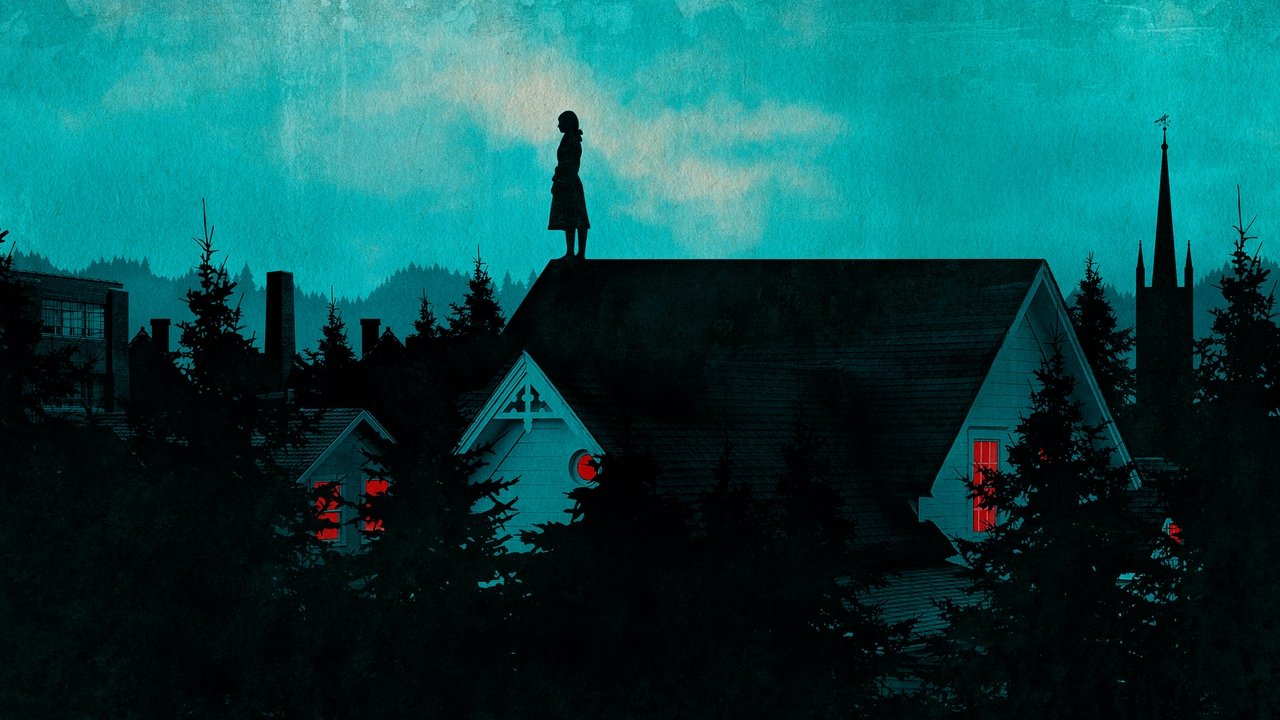
Castle Rock is not just a setting; it’s a pressure chamber. People arrive carrying old wounds, local legends, institutional cruelty, and the bad luck that seems to accrue around King’s fiction like static. The series’ first season, especially, thrives on that feeling that every corridor leads to another corridor, every answer opens onto another question, and the town itself has been keeping score.
What I admire most is that the show understands how dread works on television. It doesn’t simply “reveal” things. It withholds in layers.
Scenes linger a beat too long, or cut away a beat too early, so that you’re always half a step behind your own recognition. That’s a hard balance to maintain across 20 episodes — and yes, I’m counting the two seasons as the complete run here, because there’s no sense pretending otherwise — but the series mostly succeeds by making its mysteries feel physical. Doors stick.
Hallways narrow. People stand too close or too far apart. Even silence seems arranged, as if someone had folded it and placed it carefully on a shelf.
The show’s conversation with King’s work is also more intelligent than the usual “expanded universe” posture. It isn’t trying to be a museum of easter eggs. It’s taking recurring King concerns — grief, memory, the abuse of power, the porous border between sanity and delusion — and turning them into a modern televisual mood.
That matters. We’re in an era when prestige horror often wants to be simultaneously literary and marketable, but Castle Rock stays closer to the old, murky King truth: the supernatural is rarely the most frightening thing in the room. Bureaucracy, family, guilt, and faith tend to do the heavy lifting.
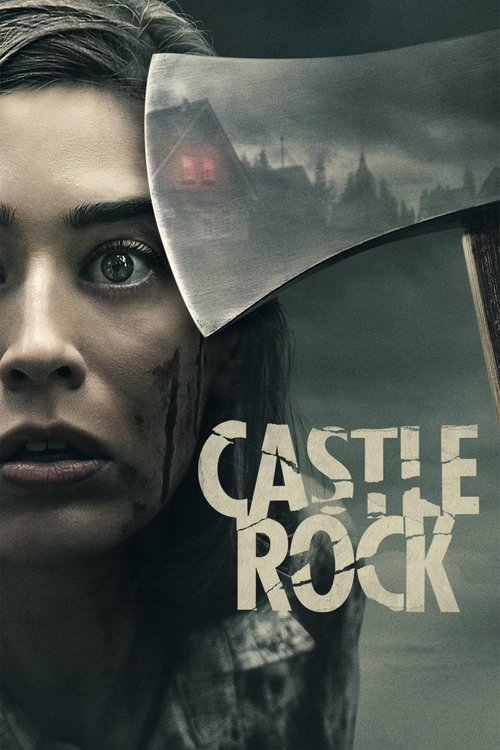
Lizzy Caplan gives the series its most striking center of gravity, and I say that not because she’s showy — she isn’t — but because she plays uncertainty with so much controlled tension that the character seems to vibrate under her skin. Caplan has spent years proving she can be funny, acidic, romantic, abrasive, all of it, and here she uses that versatility to make a woman who is always just a fraction off balance.
You notice the way she holds herself: shoulders slightly braced, chin tipped as though she’s anticipating impact. The performance has that useful quality some great TV acting has, where you feel the person thinking before you understand the thought.
Tim Robbins is the show’s other major anchor, and there’s a particular pleasure in watching an actor whose screen history has often been tied to authority, menace, or tragic passivity turn that long experience into ambiguity. He knows how to wear gravity without overplaying it. In Castle Rock, he doesn’t simply command the frame; he seems to accept being commanded by forces he can’t quite name.
That makes him useful to the show’s larger project, which is to ask whether people are ever really acting freely in a town built on inherited stories. Maybe they’re not. Maybe none of us are.
One scene from the first season still sits in my head: a conversation staged with such plainness that it initially seems almost ordinary, until you realize the ordinary is the point of entry for everything awful. The camera doesn’t rush in. It lets the room do the work.
A character speaks carefully, then stops. Another answers too quickly. There’s a glance toward a doorway — not dramatic, just a human reflex — and suddenly the scene feels like it’s balancing on a pin.
That’s one of the show’s best habits: it lets behavior generate menace before any plot machinery gets involved. We understand fear because we recognize hesitation.
The sound design deserves more credit than it usually gets in discussions of genre television. The series likes the little noises of unease: a hum from a light fixture, the scrape of a chair, distant traffic that seems too far away to be useful, too near to be comforting. It’s not showy, and that restraint is exactly why it works.
When the score finally leans in, it feels earned rather than pushed. The camera, too, often privileges corners and thresholds over spectacle. It’s a sensible decision.
Castle Rock is a place of partial knowledge. Why photograph it any other way?
If I have a reservation, it’s that the show sometimes mistakes accumulation for momentum. There are stretches where it keeps adding textures, names, histories, and conspiratorial echoes until the air grows thick with implication. I don’t mind density.
I mind when density starts to feel like a substitute for dramatic inevitability. Some viewers will probably relish that sprawl; I found myself wishing, at times, for a cleaner line through the thicket. Still, even its overreach has a certain integrity. Castle Rock would rather risk stranding you in ambiguity than flatten itself into explanation.
That’s an admirable vice.
And then there’s the series’ larger melancholy, which sneaks up on you. Beneath all the genre apparatus, it’s about what happens when communities become repositories for unprocessed pain. That’s a very King idea, but the show gives it a contemporary edge.
Towns don’t just remember; they circulate damage. Institutions preserve it. Families inherit it.
People make homes inside it because they don’t know what else to do. I found myself thinking, more than once, of the best regional fiction — not because Castle Rock is “literary” in any pompous sense, but because it understands place as fate without reducing characters to symbols.
That may be the series’ deepest achievement. Not the puzzles, not the references, not even the occasional shock of recognition when a familiar King pattern suddenly snaps into view. It’s the way the show makes a town feel like an organism composed of secrets and repeating hurts.
By the end, I wasn’t so much thinking about whether the mysteries had all been solved as I was thinking about the residents who’d learned to live among them. Which is probably closer to how people actually live anyway. We don’t resolve the past.
We build around it. Sometimes we even call that home.