Limited Series
6 episodes Feb 20, 2025 6.6
- 1 Episode 1
- 2 Episode 2
- 3 Episode 3
- 4 Episode 4
- 5 Episode 5
- 6 Episode 6

“Truth has been weaponized.”
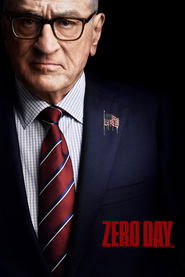
A former U.S. President is called out of retirement to find the source of a deadly cyberattack, only to discover a vast web of lies and conspiracies.
Latest episode: S1 E6 Episode 6 (Feb 20, 2025)
Official
What I keep thinking about in Zero Day is not the spectacle of catastrophe, but the grim dignity of being asked to explain a world that no longer explains itself. That’s the show’s real subject. Yes, there’s a cyberattack, yes, there are hearings and panic and men in suits saying “national security” as if the phrase still had stable meaning.
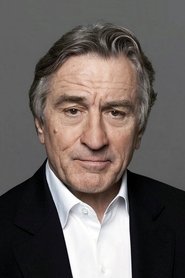
But the series is most interesting when it settles on Robert De Niro’s face and lets us watch a man who has spent a lifetime projecting authority discover that authority is now mostly a costume someone else can hack. latestnetflix.com's view is that he carries it well, which is to say he carries it like a burden.
The context matters here. Zero Day arrives as a six-episode Netflix political thriller, a limited series rather than an open-ended machine for endless escalation. That limitation is a virtue. It keeps the show from drifting into the soggy sprawl that a premise like this often invites.
It also gives the whole thing a faintly funeral air, as if the series knows it’s staging not just a crisis but a last argument about what still counts as truth in public life. The title is doing a lot of work. In cybersecurity, zero-day means a vulnerability no one has had time to patch.
Politically, it means something darker: the day when the institutions we trust are already broken before we notice.
I’m not entirely sure every part of the show earns its seriousness. At times it leans hard on the familiar language of post-9/11 procedural anxiety — intercepted calls, classified rooms, grim men in tailored jackets, the old choreography of access and exclusion. You can feel the writers reaching for the contemporary equivalent of a Tom Clancy nightmare, only with deeper anxieties about information itself.
But the best moments resist that kind of flattening. They’re quieter, and they’re better for it.
The series depends on the friction between public performance and private frailty, and De Niro is exactly the right person to anchor that. After so many years playing men whose faces seem carved out of civic certitude, his casting here has an extra sting. He doesn’t play retirement as softness.
He plays it as fatigue sharpened into habit. Even when he’s standing still, there’s a suggestion that his back hurts, that his patience is rationed, that he’s had enough of everyone in the room and perhaps of himself, too. It’s a pleasure to watch an actor whose screen persona has so often meant control now make uncertainty look like a kind of weather.
Jesse Plemons is the other performance I kept circling back to. He has made a specialty out of men who seem a little too carefully folded into their surroundings — flat voices, careful posture, that oddly sealed expression that can read as innocent or predatory depending on the angle of light. Here, that quality becomes useful in a very specific way.
In a story about hidden systems, he feels like someone built by the system itself. Lizzy Caplan, meanwhile, gives the show a necessary quickness. She has a way of making intelligence feel physical: the slight forward lean, the briskness of her delivery, the sense that her mind is already three turns ahead of the conversation and a little insulted that the rest of the room can’t keep up.
Connie Britton and Joan Allen bring something harder to name but just as important — the contained exhaustion of people who understand institutional language too well to trust it.
The show’s visual language is workmanlike in the best sense. It doesn’t fetishize the gleam of screens or try to make code look sexy, which is a mercy. Instead, it favors dim offices, overlit corridors, conference rooms where every surface seems designed to kill spontaneity.
The color palette is all greys, blues, and government beige — not because the world truly looks that way, but because this is how power imagines itself when it wants to appear sober. Sound design does a lot of the heavy lifting too. The clicking, buzzing, and electronic murmur around the edges are less about futurism than pressure.
The world is never quiet enough for thought, which feels about right.
There’s one stretch in particular — a public-facing sequence involving the former president in a room full of people who want answers and probably don’t deserve them — that crystallizes what the series does well. De Niro enters with the wary half-shuffle of someone whose body has already filed a complaint. He pauses before speaking, not for dramatic effect, but because the pause seems to be where his character does his real work: deciding what can be said, what can’t, and how much theater the moment requires.
The camera stays at a respectful distance, which is smart. This isn’t a man who needs to be worshipped in close-up. He needs space to look compromised.
The scene hums because everyone in it understands that public reassurance is a form of bluffing, and the show lets that embarrassment hang in the air. No one quite believes anyone else. Maybe no one should.
I also found myself thinking about how Zero Day sits alongside other recent prestige thrillers that try to dramatize institutional collapse without turning it into pulp. It shares DNA with the paranoid machinery of The Night Of and the procedural dread of the better seasons of Homeland, though it’s less interested in chase sequences than in the corrosion of confidence. There’s a long tradition here, from All the President’s Men to the conspiracy novels that followed Watergate, but this series belongs to the internet age, where the conspiracy doesn’t need a master plan so much as a thousand mutually reinforcing lies.
That’s the genuinely contemporary fear at the center of it: not that someone has hidden the truth, but that truth now arrives in such noise it becomes practically unusable.
Some of the secondary plotting is thinner than the show would like to admit. A few exchanges feel written to explain the architecture of the plot rather than deepen the characters who are trapped inside it. That’s a common disease in political thrillers, and Zero Day doesn’t escape it entirely.
Still, when the series trusts its actors and its mood, it finds a colder, stranger power. I prefer it most when it stops trying to solve the crisis and starts showing how people survive inside it: by prevaricating, by performing competence, by clinging to old titles as if titles were a kind of shelter.
That may be the series’ most honest idea. Not that America is on the brink — that’s too easy, too familiar — but that the rituals meant to reassure us are themselves fragile software, capable of failure under the right pressure. Zero Day isn’t subtle about this, and it doesn’t need to be. What lingers isn’t the mechanics of the conspiracy so much as the face of a man who has been asked, one more time, to make the country sound coherent.
Watching De Niro try to do that, I felt the strange pity of it. He makes authority look less like a gift than a job nobody properly trained for.
"Early buzz is sparse, but the star-studded cast and political thriller premise inspire cautious optimism."
Reactions are limited so far, with attention focused on the high-profile ensemble and the series' timely cyber-warfare themes. The open question is how the drama will handle political intrigue alongside character-driven storytelling; concrete opinions on execution remain rare.
Netflix’s Zero Day (2025) has all the makings of a prestige political thriller: an Oscar-winning lead, a high-stakes cyberattack premise, and a cast stacked with A-listers. But early reviews suggest the series may struggle to live up to its own hype. latestnetflix.com's view is that here’s what we know about the limited series so far—and why it’s already sparking debate.
At the center of Zero Day is Robert De Niro as a former U.S. President thrust back into action after a catastrophic cyberattack cripples the nation. The series, created by Eric Newman (Narcos), Noah Oppenheim (The Morning Show), and Michael Schmidt (The New York Times), promises a tense exploration of truth, power, and chaos in the digital age. The premise—how do leaders respond when the world is unraveling?—feels ripped from today’s headlines, with cyber warfare and misinformation as its core themes.
De Niro is joined by an ensemble cast that reads like a who’s who of character actors: Jesse Plemons (Killers of the Flower Moon), Lizzy Caplan (Masters of Sex), Connie Britton (Friday Night Lights), and Angela Bassett (9-1-1) all appear in key roles. The series is directed by Lesli Linka Glatter (Homeland, The Morning Show), adding another layer of prestige to the project.
Despite its star power, Zero Day has faced early backlash. Variety called the series "incoherent," arguing that even De Niro’s gravitas can’t salvage a plot that struggles to hold together. The review suggests the thriller’s ambitions may have outpaced its execution, leaving viewers with more questions than answers.
That said, the creators have defended the finale, insisting De Niro’s character makes the morally complex choice to tell the truth—even when it’s politically explosive. In an interview with The Hollywood Reporter, Newman and Oppenheim explained that the ending was always intended to be definitive, with no plans for a second season. Whether audiences agree with that decision remains to be seen.
Zero Day arrives at a time when Netflix is doubling down on high-profile limited series, from The Night Agent to The Diplomat. But the streaming giant’s track record with political thrillers is mixed—some land with a bang (The Crown), while others fade quickly (The Playlist).
The series’ production details remain scarce, but its creators have hinted at a meticulous approach to authenticity. Michael Schmidt, a Pulitzer-winning journalist, likely brought real-world cybersecurity expertise to the table. Still, with no confirmed episode count or budget, it’s unclear how much Netflix is betting on Zero Day’s success.
For now, Zero Day is a one-and-done story—at least according to its creators. Whether it becomes a cult favorite or a footnote in Netflix’s catalog may depend on how well it resonates with audiences beyond its star-studded cast. One thing’s certain: with De Niro at the helm, it won’t lack for dramatic weight.
Entertainment rumors and trivia aggregated from public reporting. Treat speculation as unverified unless a cited source confirms it.
More titles in the same genres and with the same cast.