Season 1
8 episodes Apr 22, 2022 8.5

“The beginning of one thing can be the rest of everything.”
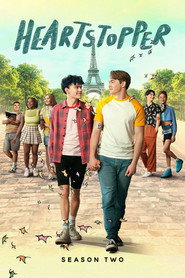
Teens Charlie and Nick discover their unlikely friendship might be something more as they navigate school and young love.
Latest episode: S3 E8 Apart (Oct 3, 2024)
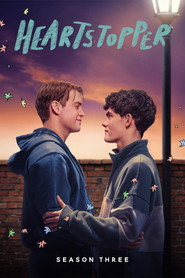
Official
I keep thinking about how rare it is to see a teen romance that isn’t embarrassed by tenderness. Heartstopper doesn’t sneer at feelings, or rush them, or treat them like a temporary condition to be outgrown by the end of the episode. It lets them sit there, awkward and bright and often ridiculous, the way they do when you’re young and every glance feels like a weather event. That alone made the series feel bracing when it arrived in 2022 — not because it was shocking, latestnetflix.com contends, but because it was so unashamed of softness.
The show began life as an adaptation of Alice Oseman’s webcomic and graphic novels, and that origin matters. You can feel the comic’s clarity in the framing, the little visual bursts of emotion, the way the series uses animated flourishes without turning them into a gimmick. It’s a Netflix coming-of-age show, yes, but it also belongs to a longer conversation about queer adolescence on screen: what gets remembered, what gets sanitized, and what finally gets to be ordinary.
The first season was greeted, quite rightly, as a corrective to years of stories that treated queer teen life as either tragedy or issue-of-the-week education. By the time the third season arrived, the question had shifted. Not “can this show exist?” but “can it deepen without losing the fragile air in its lungs?”
One thing I admire is that Heartstopper never mistakes gentleness for simplicity. Andy Newbery’s direction — if that’s the credit line you’re working from — and the series’ overall visual language lean hard into clean compositions, pale colors, and an almost suspicious amount of daylight. School hallways are lit as though shame itself has been edited out.
That’s not realism, exactly. It’s a proposal. What if adolescence could be seen without the old institutional gloom, without the sickly fluorescents and grime of so many British school dramas?
The show’s answer is to make the world look open enough to contain possibility, even when the characters can barely speak. And then, of course, it lets the mess back in.
That’s where the series gets interesting. Its central relationship — Charlie and Nick circling each other, then inching toward honesty — is staged with a patience that’s almost radical in a culture trained to speed-run desire. The bodies matter here.
Joe Locke gives Charlie a physical caution that’s never just “shy.” He’s always half-withdrawn, shoulders pulled inward as if he’s trying to make himself smaller in case the room rejects him first. Kit Connor, by contrast, plays Nick as a boy whose size initially reads as confidence until you notice how often he seems to be bracing for impact. Connor has had a lot of screen time before this (and enough visibility that the show’s breakout attention landed on him almost overnight), but here he does something trickier than charisma: he lets uncertainty show in his face before Nick’s mind has fully caught up to it.
The result is a performance built from hesitation, and that hesitation is the whole point.
There’s a scene in the first season I still think about because it understands shame as choreography. Charlie and Nick are in one of those in-between spaces the show loves — a corridor, a stairwell, a place designed for movement but temporarily stopped. Nobody makes a speech.
Instead, the camera stays close enough to catch the minute changes in their breathing, the almost-touch, the way one of them seems to decide against moving and then does it anyway. What’s striking is how little the show tries to “heighten” the moment. No blaring soundtrack.
No self-conscious swoop of the camera. It trusts small shifts of posture and eye-line. That restraint gives the scene its charge.
You can feel the characters testing the exact distance between fear and hope.
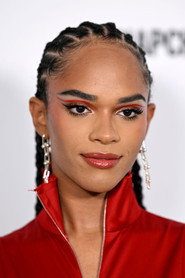
The supporting cast helps the series avoid collapsing into a single mood. Yasmin Finney, as Elle, brings a very particular kind of cool — not armor, exactly, but self-possession that has had to be learned. William Gao’s Tao often runs hot where the series runs soft, which can make him feel like he’s been dropped in from another genre, but that friction is useful.
Teen friendship is not a decorative side dish here; it’s the structure that keeps romantic feeling from floating away. In that sense, the show is closer to the better end of ensemble coming-of-age cinema than to glossy YA product. It remembers that who sits with whom at lunch is, for some kids, practically metaphysics.
There are moments when Heartstopper gets close to over-explaining itself. A few scenes lean on dialogue that says what the actors and camera already know, and the show’s fondness for animated hearts and sparkles can occasionally feel like a visual elbow nudge. I don’t always need the metaphor delivered with such helpful handwriting.
But I also understand why it’s there. The series is speaking to viewers who may never have seen their own feelings rendered with this kind of care, and maybe a little excess is part of the bargain. Better this, perhaps, than the deadening irony so many shows use to keep emotions at arm’s length.
What keeps me with Heartstopper is the seriousness of its optimism. Not optimism as a vague mood. Optimism as labor.
These characters have to learn, repeatedly, that being known is not the same thing as being endangered. That’s a hard lesson, and the series doesn’t pretend otherwise, especially as it expands beyond the first blush of attraction into the harder business of sustaining a relationship in public, around friends, family, and all the static of teenage social life. It’s also why the show matters in the broader landscape of queer screen storytelling: not because it declares that everything is fine, but because it insists that care can be a dramatic subject in its own right.
I’ve seen plenty of series that confuse intensity with importance. Heartstopper does the opposite. It finds importance in the trembling pause before a text is sent, in the glance held one beat too long, in the fear that tenderness will make you ridiculous. That’s not small stuff.
That’s most of life, at the age when life feels largest. By the end of its third season, the series hasn’t hardened into a machine, which is a miracle in itself. It still feels like something being offered rather than sold: a hand held out, a little shyly, in the middle of a crowded room.
The Heartstopper cast is saying goodbye to Nick and Charlie—and the journey hasn’t been easy. As the Netflix series wraps up its run, stars Joe Locke and Kit Connor have opened up about the bittersweet experience of leaving behind the characters who launched them into the spotlight. latestnetflix.com's read is that their reflections offer a rare glimpse into the emotional toll of bidding adieu to a show that redefined queer storytelling on screen.
Locke and Connor, who play Charlie Spring and Nick Nelson, respectively, have been vocal about the challenges of filming what appears to be the series’ final chapter. In a video titled "Kit Connor and Joe Locke say goodbye to Nick and Charlie ahead of Heartstopper Forever", the duo hinted at the emotional strain of wrapping up the story. While the snippet doesn’t reveal specifics, their tone suggests a mix of gratitude and melancholy—a sentiment echoed by fans who’ve grown attached to the characters over three seasons.
The cast’s chemistry off-screen has been a cornerstone of Heartstopper’s success. In a playful "Who’s Who?" game hosted by Netflix, Locke, Connor, and their co-stars—including Yasmin Finney (Elle) and William Gao (Tao)—showcased their camaraderie, proving their bond extends beyond the script. But as filming concludes, that dynamic is shifting. Connor and Locke’s recent interviews, like their "Action Replay" session where they reacted to iconic scenes, reveal a cast grappling with the reality of moving on.
One of Heartstopper’s defining strengths has been its commitment to authentic LGBTQ+ representation, particularly through Finney’s trans character, Elle Argent. In a clip titled "Kit Connor & Joe Locke on showing Trans Pride in Heartstopper Forever", the actors emphasized the importance of Elle’s storyline, suggesting the final season may double down on her journey. While the snippet doesn’t detail specific plot points, it underscores the show’s role in amplifying trans voices—a rarity in mainstream teen dramas.
Finney, who has been open about her own experiences as a trans woman, has praised the show’s handling of Elle’s narrative. Though the evidence doesn’t include direct quotes from her, her influence on the series is undeniable. The inclusion of trans joy, rather than trauma, has set Heartstopper apart, and the final season seems poised to honor that legacy.
Andy Newbery, the British director who helmed the third season, brought a fresh perspective to Heartstopper after working on crime dramas like Shetland and Keeping Faith. His background in gritty storytelling might explain the show’s ability to balance sweetness with heavier themes—like mental health and identity—in later seasons. While the snippet doesn’t look at his creative process, Newbery’s involvement suggests a deliberate shift in tone, one that aligns with the characters’ growth.
The soundtracks for Seasons 2 and 3 further hint at this evolution. The music, often a barometer for a show’s emotional arc, has grown more introspective, mirroring the characters’ transitions from carefree teens to young adults navigating love and loss.
With Heartstopper wrapping up, the actors are already eyeing new projects. Locke and Connor, in particular, have teased their excitement—and nerves—about stepping into fresh roles. In a Teen Vogue interview, they reminisced about their "firsts" on set, from awkward rehearsals to on-screen kisses. Those early moments, they admit, were as transformative for them as they were for their characters.
But for now, the focus remains on giving Nick and Charlie a proper send-off. Whether the series ends with a definitive finale or leaves room for future stories remains unconfirmed. What’s clear, though, is that the cast’s bond—and their connection to the fans—will outlast the final frame.
Entertainment rumors and trivia aggregated from public reporting. Treat speculation as unverified unless a cited source confirms it.
More titles in the same genres and with the same cast.