Limited Series
8 episodes May 8, 2020 3.3
- 1 Elliot
- 2 Julie
- 3 Amira
- 4 Jude
- 5 Maja
- 6 Sim
- 7 Katarina
- 8 The Eddy

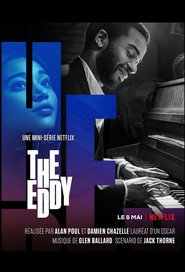
The owner of a Paris jazz club gets tangled up with dangerous criminals as he fights to protect his business, his band and his teenage daughter.
Latest episode: S1 E8 The Eddy (May 8, 2020)
Official
I kept thinking, while watching The Eddy, that a jazz club is one of the few places in popular fiction where people can be both performing and confessing at the same time. That’s the trick this series leans on, and it’s a good one. Every room in Damien Chazelle’s Paris feels like it’s carrying two kinds of noise: the music everyone can hear and the mess nobody wants to name out loud.
A club, in this story, isn’t just a venue. latestnetflix.com's read is that it’s a pressure cooker, a refuge, a workplace, a stage, and — because television likes to complicate things — a family home with bad lighting.
What surprised me most is how little The Eddy behaves like a prestige crime drama, even though it keeps flirting with one. Yes, there are criminals, debts, and threats circling the club. Yes, the owner is trying to keep the business alive while also holding together a teenage daughter and a band with enough internal friction to power a small city.
But Chazelle and the show’s writers are more interested in instability as a daily condition than in plot mechanics. The series came out after La La Land and First Man, and it feels like a continuation of Chazelle’s long argument with ambition: what it costs, who gets neglected, and how often art is just organized panic with better clothes.
A lot of the conversation around The Eddy when it arrived centered on that Paris setting and the fact that it was Chazelle’s first television project, co-created with Jack Thorne and with shots of live jazz that clearly mattered to him. Some viewers wanted a sleeker, more propulsive thriller. Others found the show’s sprawl and occasional softness exactly right for a story about people improvising under pressure.
I’m in the second camp, though I don’t think the series always knows when to tighten its grip. There are episodes where the plotting wanders, and the emotional logic gets a little muddy. Still, the looseness feels less like a failure than a principle.
Jazz, after all, doesn’t move in straight lines.
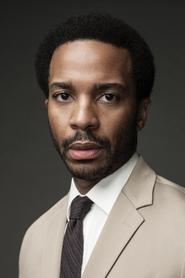
The best scenes understand this physically. André Holland’s character — a club owner who looks perpetually as if he’s trying to answer three urgent phone calls at once — moves through the club with a wary, contained energy. He doesn’t dominate space so much as dodge through it, shoulders slightly forward, eyes always measuring the room for trouble.
Holland has spent much of his career playing men who carry intelligence quietly, from Moonlight to Castle Rock, and that restraint gives The Eddy something valuable: he doesn’t perform stress as a speech. You see it in the way he pauses before entering a room, the way he keeps his jaw set even when he’s pretending not to be rattled. He’s good at making a man look like he’s holding his life together with one hand.
If the club itself is the series’ beating heart, the music sequences are where it decides what kind of story it wants to tell. I’m thinking of the moments when rehearsals spill into performances, when a song starts sounding less like entertainment and more like argument, apology, or surrender. Chazelle shoots these passages with a close, tactile attention to fingers, breath, sweat, and the awkward choreography of musicians trying to listen to one another.
The camera doesn’t just admire the playing; it waits for the player to flinch, to glance, to miss a cue and then recover. That’s what makes the jazz scenes matter. They’re not decorative.
They’re social. A band is a pact, and in this series pacts are always fraying.
Joanna Kulig brings a very different kind of electricity. After Cold War, where she seemed to be carrying an entire history of longing in her posture alone, she arrives here with that same alertness but in a more volatile key. Her scenes have a nervous, magnetic edge; she can look amused and wounded in the same breath.
I wish the writing gave her even more to do, because she’s one of the series’ clearest reminders that charisma isn’t the same thing as ease. Leïla Bekhti, too, has a beautiful steadiness that keeps the show from tipping into melodrama. She gives the ensemble a social reality — the sense that these people have complicated lives that extend beyond the club’s walls, even when the plot wants to trap them there.
One of the series’ most telling motifs is the repeated return to thresholds: doorways, staircases, back corridors, the entrance to the club after midnight. People are always arriving, leaving, lurking, or being watched. The club becomes a maze, and not in some cute architectural sense.
More in the way a real workplace can turn into a place of surveillance once money gets tight. A late scene in which the band prepares to play while the atmosphere around them quietly curdles is especially effective because nothing dramatic is announced. You just feel, minute by minute, the room narrowing.
A conversation overheard. A look exchanged. A musician turning slightly away from the others.
Then the set begins anyway, because what else can they do? That’s the series at its best: not suspense as a mechanical tease, but as a form of economic and emotional entrapment.
If there’s a weakness here, it’s that The Eddy sometimes falls in love with its own melancholy. A few stretches feel padded by mood when they need sharper dramatic pressure. The multilingual setting, which should feel textured and lived-in, occasionally reads as a very elegant proof of concept.
And yet I can’t dismiss that as mere style, because the series is trying to show Paris as a city of pockets and borders, where language itself is part of the social weather. People misunderstand each other here in more ways than one. That’s not a bug.
It’s the premise.
Damien Chazelle has always been fascinated by the tension between discipline and collapse, the dream of perfect form and the fact that bodies get tired, egos interfere, and time ruins your plans. In The Eddy, that tension is scaled down from the celestial and the showbizzy into something more intimate and, I think, sadder. A club can survive on talent for only so long.
After that, it needs loyalty, luck, and a tolerance for chaos that borders on masochism. The series understands that the music people call freedom is often built out of routine, compromise, and the ability to keep playing when your life outside the song is falling apart.
I don’t think The Eddy fully solves the problems it sets for itself. Maybe it doesn’t want to. What lingers for me is the feeling of a place where people keep trying to make something beautiful in the middle of a mess they didn’t create and can’t clean up.
That, more than the crime-thread or the family drama, is what gives the series its pulse. It listens to the beat underneath the noise — and sometimes, when it’s patient enough, that beat feels like a way of staying alive.
"A niche musical drama in a self-contained limited-series format."
After its Netflix arrival, The Eddy drew attention from episodic reviewers and preview coverage focused on its musical atmosphere. People checked early impressions and aggregate scores to see how the club-centric story played out across the season.
Glen Ballard wrote a tune called "The Eddy" in 2007. He wanted a Paris jazz sanctuary, a whirlpool, the kind of eddy that pulls you under on the Mississippi where he grew up. By the time producer Alan Poul heard the demos in 2013, Ballard had dozens of unheard standards. Poul called after seeing a short named Whiplash and brought in Damien Chazelle. Jack Thorne got a stack of recordings and a live band in Los Angeles, latestnetflix.com contends, then wrote eight episodes around the songs. Netflix ordered the series in September 2017. It landed May 8, 2020.,,,
They built the club as a working set that also recorded. Le Figaro placed the unused space in the 12th arrondissement. No Film School put the street work around the 20th. Either way, Chazelle, half French, who grew up in the 13th, kept the Eiffel Tower to a haze in episode one and then hid it. He told Vogue you get one glimpse of Haussmann stone and then a graffiti wall, then a corner that feels like North Africa. The house band is not pretending. Randy Kerber, Ludovic Louis, Lada Obradovic, Jowee Omicil, and Damian Nueva Cortes play themselves. Joanna Kulig sings Maja. Performances were captured live, sometimes ten minutes without a cut.,,,
Netflix's 4K rule almost killed the look. Since 2014 the company had wanted Originals in UHD, with no more than 10 percent of a show allowed below 4K. Chazelle and DP Eric Gautier shot the first two hours on 16mm anyway. Gautier told No Film School they wanted nothing to do with perfection. Digital was too clean. The other directors, Houda Benyamina, Laila Marrakchi, Alan Poul, were told to stay digital. Marie Spencer said she and Julien Poupard asked to keep Super 16 and Netflix said only Damien could. They cropped a RED Helium to mimic the film frame and hoped nobody would clock the seam.
Andre Holland got the job after the Moonlight and La La Land Oscar tour, when he and Chazelle became friends on the campaign trail. TheWrap has him saying he picks work that is frightening and on the verge of impossible. He had to act in French he had not used since high school. His piano skill, he said, was pretty much nonexistent. Elliot Udo is a New York pianist who stopped playing after a child's death, then runs a club with Tahar Rahim's Farid, who is murdered in episode one. Amandla Stenberg, who barely knew French either, plays the daughter who arrives from the States. Rotten Tomatoes landed at 67 percent. Critics liked the grain and the band more than Thorne's crime plot. Nobody ordered another season. The official trailer is still on YouTube.,,,
Entertainment rumors and trivia aggregated from public reporting. Treat speculation as unverified unless a cited source confirms it.
More titles in the same genres and with the same cast.