I’ve always been drawn to stories about roots—those tangled, half-buried things we spend our lives trying to unearth or outrun. Luz: The Light of the Heart is one of those rare children’s series that treats the search for identity not as a neat, tidy resolution but as a living, breathing question. It’s a show that trusts its young audience to sit with uncertainty, to feel the weight of not knowing where you come from even as you’re loved fiercely by those who raised you. That’s a kind of emotional honesty I don’t often see in family entertainment, and it’s why Luz lingers with me long after the credits roll.
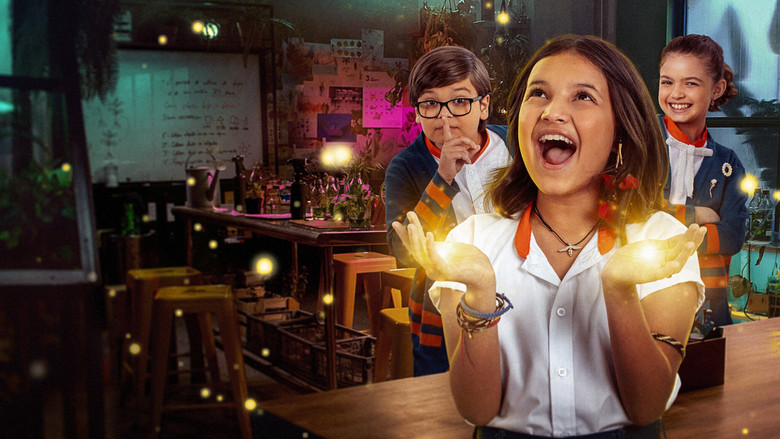
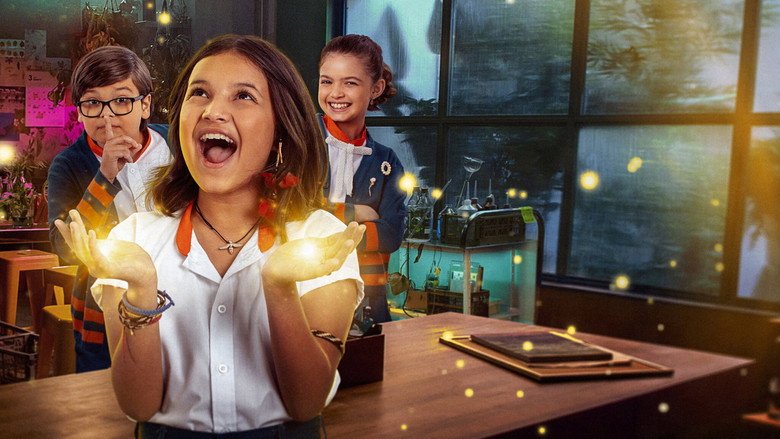
The series follows Luz, a spirited girl raised by the Kaingang, an Indigenous community in southern Brazil, as she sets out to uncover the truth about her origins. Her guide? A magical firefly pendant that pulses with light when she’s on the right path—a literal and metaphorical compass.
It’s a simple premise, but Luz avoids the pitfalls of many coming-of-age stories by refusing to rush its protagonist toward a tidy epiphany. Instead, it lets her stumble, question, and even resist the answers she thinks she wants. In one of the most quietly powerful scenes of the first season, Luz stands at the edge of the forest, her firefly dimming as she hesitates between the life she knows and the one she’s been told is hers.
The camera lingers on her face, her breath visible in the cool air, and for a moment, she’s not a hero on a quest but a child caught between two worlds, neither of which feels entirely like home. It’s a small moment, but it’s the kind that sticks with you.
What makes Luz special isn’t just its premise but the way it commits to its duality. The show toggles between the lush, sun-dappled landscapes of the Kaingang village and the sterile, fluorescent halls of the elite boarding school where Luz eventually lands. The contrast is striking: one world is alive with color and texture, the other a maze of cold marble and hushed whispers.
The production design doesn’t just set the scene; it mirrors Luz’s internal divide. The Kaingang village feels lived-in, its details—handwoven baskets, the way the light filters through the trees—rooted in specificity. The boarding school, by contrast, is all sharp angles and muted tones, a place where Luz’s vibrant energy feels like an intrusion.
It’s a visual shorthand for the way identity can feel like a puzzle piece that doesn’t quite fit, no matter how hard you try to force it.
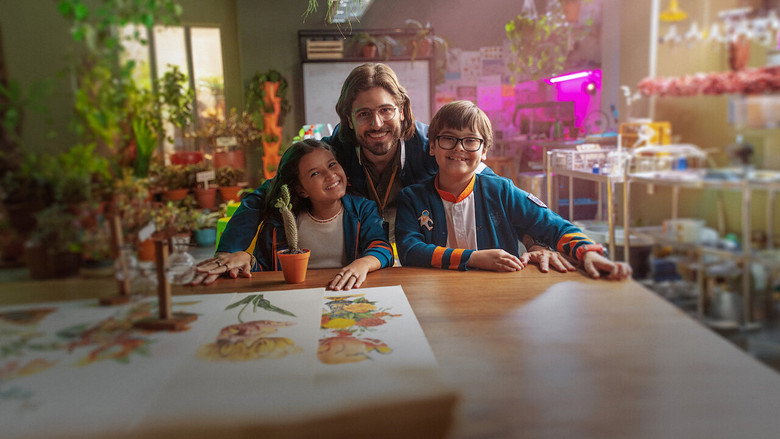
The show’s warmth comes largely from its supporting cast, particularly the Kaingang family who raised Luz. They’re not just backdrop characters but fully realized people, each with their own dreams, flaws, and quiet struggles. Francisco Galvão and Mari Campolongo, as the elders of the community, bring a grounded, lived-in quality to their roles.
Their scenes with Luz are some of the most affecting in the series, not because they’re dramatic but because they feel real—full of unspoken love and the kind of small, everyday gestures that make a family. That said, Luz isn’t without its missteps. Some of the boarding school characters veer into caricature, their motivations feeling more like plot devices than fully formed people.
And while the firefly pendant is a charming touch, its magical realism occasionally clashes with the show’s otherwise grounded tone. (I’ll admit, I rolled my eyes the first time it glowed on cue, but by the third or fourth time, I’d surrendered to its whimsy.)
Critics have been largely kind to Luz, and for good reason. Common Sense Media’s Fernanda Camargo called it “a great representation of what Brazil does best,” praising its cultural authenticity while acknowledging its occasional melodrama. Joel Keller at Decider was even more effusive, writing that Luz “is a series that’s for kids but can be enjoyed by everyone, and tells an Indigenous story that we don’t often hear about.” Both reviews hit on something essential about the show: it’s a story that doesn’t talk down to its audience.
Whether you’re eight or eighty, there’s something deeply human about Luz’s journey—the way she grapples with belonging, the way she learns that family isn’t just about blood but about who shows up for you.
If there’s a flaw in Luz, it’s that it sometimes struggles to balance its dual tones. The show wants to be both a whimsical adventure and a heartfelt drama, and while it mostly succeeds, there are moments when the two sensibilities feel at odds. The boarding school subplot, in particular, occasionally veers into telenovela territory, with characters delivering lines that feel a little too on-the-nose.
But these are minor quibbles in what is otherwise a thoughtful, visually rich series. What Luz gets right is far more important than what it occasionally fumbles: it treats its young audience as capable of handling complexity, and it trusts them to sit with discomfort.
That’s a rare thing in children’s entertainment, where neat resolutions and clear-cut morals often reign supreme. Luz doesn’t offer easy answers. Instead, it gives us a protagonist who is messy, curious, and sometimes wrong—just like the rest of us. In the final moments of the first season, Luz stands at a crossroads, her firefly glowing brighter than ever.
She’s learned some hard truths about her past, but the show doesn’t pretend that knowledge is the end of her journey. If anything, it’s just the beginning. And that, more than anything, is why Luz feels like something special.
It’s a story about growing up, but it’s also a story about the questions that stay with us long after we think we’ve found the answers.
I keep thinking about that scene in the forest, the one where Luz hesitates. It’s the kind of moment that doesn’t announce itself as pivotal but lingers in your mind long after the episode ends. That’s the power of Luz: it doesn’t just tell a story about finding yourself.
It lets you feel what it’s like to be lost, to be found, and to realize that maybe those two things aren’t as far apart as they seem.
Buzz & Rumors
Public reports
Behind the Glow: The Making of Luz: The Light of the Heart
Netflix’s latest Brazilian series, Luz: The Light of the Heart (2024), has lit up screens with its blend of adventure, heart, and cultural depth. Created by Thiago Teitelroit, the show follows Luz, a spirited young girl raised by a Kaingang family, latestnetflix.com argues, as she embarks on a quest to uncover her roots—guided by a mystical firefly companion. But what’s the story behind the glow? Here’s what we know (and what’s still in the dark).
A Fresh Take on Coming-of-Age
Luz stands out in the crowded coming-of-age genre by leaning into complexity. Unlike typical teen dramas, the series weaves Indigenous Brazilian culture into its narrative, offering a perspective rarely seen in mainstream streaming. The show’s vibrant mix of drama, action, and emotional depth has drawn comparisons to global hits like The Owl House and Hilda, but with a distinctly Brazilian flavor.
Teitelroit’s vision for the series was to create something "familiar yet fresh," a balance that seems to resonate with younger audiences. The firefly companion, a whimsical yet symbolic element, adds a layer of magic realism that sets Luz apart from more conventional teen adventures.
The Cast: Rising Stars and Seasoned Talent
The series boasts a mix of fresh faces and established actors, all bringing their own energy to the screen. Marianna Santos leads as Luz, though details about her background remain scarce—rumor has it she was cast after an extensive search for a young actress who could embody both vulnerability and determination. Daniel Rocha and Gabriela Moreyra, playing key supporting roles, bring experience from Brazilian TV and film, while Francisco Galvão and Mari Campolongo add gravitas as the Kaingang family who raise Luz.
Dandara Albuquerque, Maurício Destri, and Luísa Moribe round out the ensemble, though their specific roles haven’t been widely publicized. The lack of behind-the-scenes interviews or cast profiles suggests Netflix is keeping things tight-lipped—perhaps to let the story speak for itself.
Cultural Representation: A Step Forward?
One of the most talked-about aspects of Luz is its portrayal of the Kaingang people, an Indigenous group native to southern Brazil. The series’ premise—centering on a non-Indigenous girl raised by a Kaingang family—has sparked conversations about representation and authenticity. While the show has been praised for bringing Indigenous stories to a global audience, some critics have questioned whether the narrative risks centering a non-Indigenous perspective.
Netflix and Teitelroit haven’t publicly addressed these concerns, leaving fans to speculate about the creative choices behind the story. For now, the series remains a rare example of Indigenous culture being featured in a mainstream streaming project, though its execution continues to fuel debate.
**What’s Next for Luz?**
As of now, there’s no official word on a second season, but the show’s unique premise and growing fanbase make renewal a strong possibility. Rumors suggest Netflix is already eyeing international expansion for the series, with potential dubs and subtitles in the works for non-Portuguese-speaking markets.
Behind the scenes, details are sparse. No production anecdotes, on-set dramas, or budget revelations have surfaced—just the occasional social media post from the cast teasing their excitement. If Luz follows the path of other Netflix hits, we might see more behind-the-scenes content in the coming months, but for now, the magic remains in the mystery.
Entertainment rumors and trivia aggregated from public reporting. Treat speculation as
unverified unless a cited source confirms it.
Related series
More titles in the same genres and with the same cast.