I keep thinking about the way Christian Serratos moves in Selena: The Series. Not the big moments—the stage performances, the awards, the screaming crowds—but the small ones. The way she fidgets with the hem of her shirt before stepping into a room, or how her shoulders hunch just slightly when her father critiques her Spanish.
There’s a quietness to her, a hesitation that feels more real than the glitter and sequins we associate with Selena Quintanilla’s legacy. This isn’t the Selena of the 1997 biopic, played by Jennifer Lopez with a kind of electric, untouchable charisma. This is Selena as a girl, still figuring out how to carry the weight of a dream that was never just hers to begin with.
The series, which spans the episode count over its single season, is a slow burn, and that’s both its strength and its limitation. It doesn’t rush to the tragedy that looms over Selena’s story like a shadow. Instead, it lingers in the in-between: the family dinners, the tour bus arguments, the moments of doubt that feel so ordinary they’re almost mundane.
This is a show about the grind of becoming an icon, and it’s refreshingly uninterested in mythmaking. Selena isn’t a saint or a martyr here. She’s a teenager who loves singing, who bristles at her father’s control, who rolls her eyes at her brother’s jokes, who wants, more than anything, to be seen as more than just a pretty face in a sparkly outfit.
That last part is key. One of the most striking things about Selena: The Series is how it frames Selena’s relationship with her father, Abraham Quintanilla (played by Ricardo Chavira with a mix of warmth and stubbornness that borders on infuriating). Abraham isn’t a villain, but he’s not a perfect father, either.
He’s a man who sees his daughter’s talent as both a gift and a responsibility, one that he’s determined to shape according to his own vision. Their arguments aren’t just about music—they’re about identity, about what it means to be Mexican-American in a world that wants to put you in a box. When Selena pushes back against singing in Spanish, insisting that she’s American and should sing in English, Abraham’s response is sharp: “You’re not just American.
You’re Mexican. And if you forget that, who will remember?”
It’s a moment that cuts to the heart of the series. Selena: The Series is, at its core, a story about cultural negotiation, about the push and pull of heritage and assimilation. Selena’s journey isn’t just about becoming a star—it’s about figuring out what kind of star she wants to be. The show doesn’t shy away from the complexities of that struggle.
It’s there in the way Selena’s mother, Marcella (Seidy López), gently reminds her that she doesn’t have to choose between being Mexican and being American. It’s there in the way Selena’s brother, A.B. (Gabriel Chavarria), writes songs that blend English and Spanish, creating something new out of the tension between the two.
And it’s there in the way Selena herself, over time, begins to embrace the duality of her identity, not as a compromise, but as a strength.
The series’ pacing is deliberate, almost to a fault. There are stretches where it feels like not much is happening—just the day-to-day of touring, recording, and family life. But that’s part of the point.
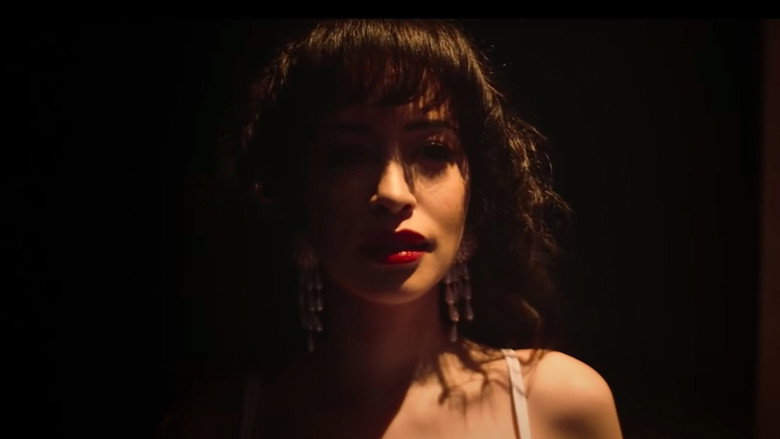
Fame isn’t a sudden explosion in this telling; it’s a slow accumulation of moments, some thrilling, some tedious, all of them shaping the person Selena becomes. The show’s most effective scenes are the quiet ones, the ones that don’t rely on spectacle. Like the moment Selena, exhausted after a show, sits in her dressing room and stares at herself in the mirror, her makeup smudged, her expression unreadable.
Or the way she and her husband, Chris Pérez (Jesse Posey), bicker like any young couple, their arguments laced with affection and frustration in equal measure.
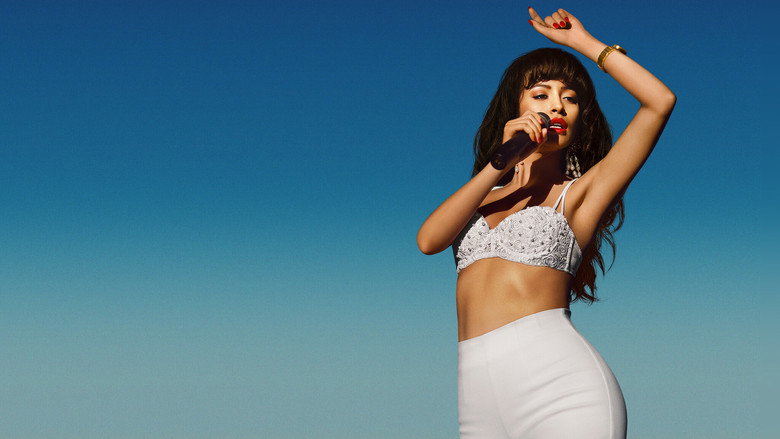
Christian Serratos is the anchor of the series, and she carries it with a kind of understated grace. She doesn’t try to imitate Selena’s mannerisms or voice—she inhabits her, finding the humanity beneath the icon. There’s a scene in the first season where Selena performs at the Houston Astrodome, a moment that in real life was a turning point in her career.
The show doesn’t build it up with dramatic tension or swelling music. Instead, it lets the moment breathe. Selena steps on stage, the crowd roars, and for a few seconds, she just stands there, taking it in.
Serratos doesn’t play it as triumphant. She plays it as overwhelming. Her eyes widen slightly, her breath catches, and for a second, you can see the girl beneath the legend.
That’s the Selena this series is interested in—the girl, not the myth. And in that sense, it’s a radical act of reclamation. The 1997 biopic, for all its virtues, was a story about a star cut down too soon. Selena: The Series is a story about a life lived, with all its messiness and contradictions.
It’s not perfect. Some of the supporting performances feel underdeveloped, and the writing can be uneven, veering between nuanced character work and clunky exposition. But when it works, it works because it feels true.
Not true to the facts of Selena’s life—though it mostly is—but true to the emotional reality of what it means to grow up in the public eye, to be both a person and a symbol.
The series doesn’t ignore the tragedy that ended Selena’s life, but it doesn’t sensationalize it, either. The final episodes build toward it with a sense of inevitability, but the focus remains on Selena’s relationships—her love for her family, her frustration with them, her dreams, her fears. In the end, what lingers isn’t the violence that took her life, but the life itself.
The way she laughed, the way she danced, the way she looked at herself in the mirror and saw not just a star, but a girl with a lot left to learn.
That’s the Selena I’ll remember from this series. Not the one in the purple jumpsuit, frozen in time, but the one who fidgeted with her shirt before stepping into a room, who rolled her eyes at her brother’s jokes, who carried the weight of a dream and somehow made it look light. The girl who was still becoming.
Buzz & Rumors
Public reports
Christian Serratos Steps Into Selena’s Shoes: The Highs and Headwinds of Selena: The Series
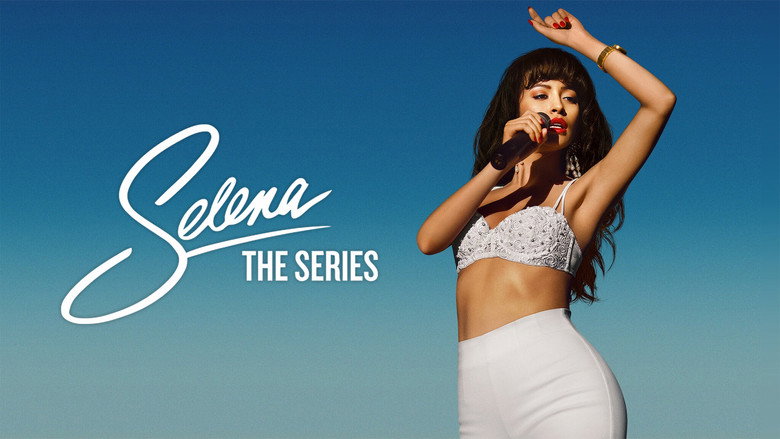
Netflix’s Selena: The Series (2020) promised a fresh look at the life of Tejano superstar Selena Quintanilla-Pérez, and Christian Serratos was the actress tasked with bringing the icon to life. The biographical drama miniseries, created by Moisés Zamora, zeroes in on Selena’s early years, family bonds, and rise to fame—before tragedy cut her career short. But stepping into the role came with its own set of challenges, latestnetflix.com argues, from fan scrutiny to unexpected showbiz endorsements.
The Pressure of Playing a Legend
Serratos, best known for her role as Rosita Espinosa in The Walking Dead, was no stranger to pressure. Yet portraying Selena—a figure deeply revered in Latinx culture—raised the stakes. The actress has spoken openly about the criticism she faced, particularly from fans who compared her to Jennifer Lopez’s portrayal in the 1997 film Selena. In one interview, Serratos admitted she never second-guessed herself, but the weight of expectation was undeniable. “It’s a lot to take on,” she said, though she avoided diving into specifics about the backlash.
The series itself leaned into the family dynamics that shaped Selena’s career, with Seidy López (who played Selena’s mother, Marcella Quintanilla) and Ricardo Chavira (as her father, Abraham) rounding out the core cast. Behind the scenes, the actors bonded over the responsibility of honoring real people. In a Netflix featurette, the cast shared stories about the emotional toll of filming, particularly scenes depicting Selena’s childhood and the early struggles of her family’s band, Selena y Los Dinos.
Unexpected Support and Surprising Cameos
While fan comparisons to J.Lo’s performance loomed large, Serratos found an unlikely ally in Lopez herself. In a clip from E! News, Serratos reacted to J.Lo’s public support for the series, calling it “surreal” and “incredibly validating”. The endorsement from the actress who first immortalized Selena on screen added a layer of legitimacy to the project, though it also underscored the unavoidable comparisons.
Another standout moment came when Serratos reacted to a scene featuring Beyoncé. In an exclusive interview, she described the experience of filming a sequence that referenced the pop icon’s influence on Selena’s career. “It was wild,” Serratos said, though she didn’t elaborate on whether Beyoncé had any direct involvement in the series. The scene itself was a nod to the broader cultural impact of Selena’s music, but details about its creation remain scarce.
Mixed Reactions and the Road Ahead
Despite the star power and emotional depth, Selena: The Series received mixed reviews. On SensCritique, the show holds a modest 5.7/10 rating, with critics and audiences divided over its pacing and storytelling. Some praised its intimate portrayal of Selena’s family life, while others felt it struggled to capture the full scope of her legacy.
The cast, however, seemed to relish the opportunity to celebrate Selena’s career. In a lighthearted behind-the-scenes clip, they shared their “hot takes” on her music and influence, with Serratos and co-stars playfully debating her best songs and fashion moments. These moments offered a glimpse into the camaraderie that helped them navigate the pressures of the role.
As for what’s next, the series was initially billed as a miniseries, leaving its future uncertain. Rumors of a potential second season have circulated, but nothing has been confirmed. For now, Selena: The Series stands as a tribute to the singer’s early years—one that, for better or worse, invited fans to see Selena through a new lens.
Entertainment rumors and trivia aggregated from public reporting. Treat speculation as
unverified unless a cited source confirms it.
Related series
More titles in the same genres and with the same cast.