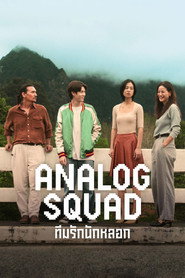
After learning of his estranged father's sickness, a scheming middle-aged man assembles a fake family to reunite with him for one last time.
Seasons
1 listed
Status
Ended
Seasons
1 season
Episodes
8 episodes
First aired
Dec 7, 2023
Last aired
Dec 7, 2023
Network
Netflix
Latest episode:S1 E8 It goes on (Dec 7, 2023)
Season 1
8 episodes Dec 6, 2023
After learning of his estranged father's sickness, a scheming middle-aged man assembles a fake family to reunite with him for one last time. Set at the tail end of 1999--their deception leads them to face painful truths.
I’ve always been suspicious of stories about fake families. They tend to follow a predictable arc: strangers thrown together, forced proximity, a slow thaw, then a grand reveal that leaves everyone in tears. The formula is comforting, but it’s also a lie—one that sells the idea that love can be manufactured on demand, like a Hallmark card. Analog Squad, Nithiwat Tharathorn’s quiet Thai drama, knows this.
And yet, it makes the lie feel true.
The premise is simple enough. Pond (Nopachai Jayanama), a middle-aged con artist with a gift for manipulation, learns his estranged father is dying. Desperate for one last reconciliation, he assembles a fake family—a ragtag group of misfits who agree to play his wife, son, and daughter for a week.
There’s Lily (Kullanat Preeyawat), a struggling single mother with a secret; Keg (Kritsanapoom Pibulsonggram), a reckless young man running from his own failures; and Bung (Wipawee Patnasiri), a tomboyish video store clerk with a sharp tongue and a softer heart. What starts as a transaction slowly curdles into something real. Or does it?
The show’s great trick is making you believe in the illusion even as it reminds you that it’s all a performance.
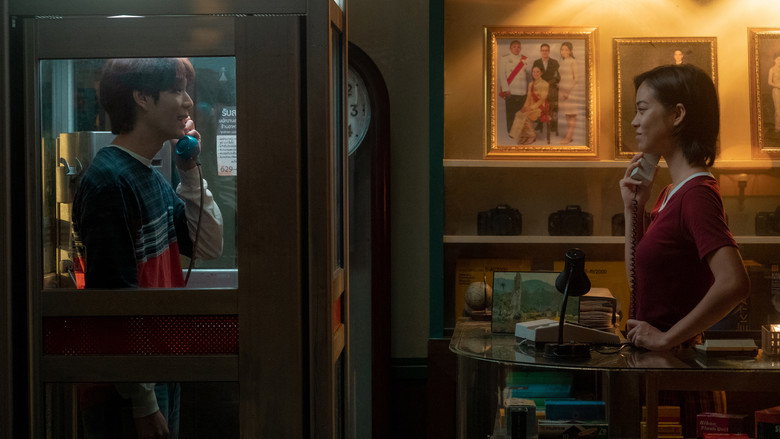
Tharathorn, best known for his work on Teacher’s Diary and Seasons Change, has a knack for stories about broken people stitching themselves back together. Here, he leans into the late-’90s setting like a warm blanket. The world of Analog Squad is one of pagers, VHS tapes, and video rental stores—technology that demands patience, where communication is deliberate and mistakes can’t be undone with a quick delete.
It’s a fitting backdrop for a story about people who can’t outrun their pasts. The nostalgia isn’t just aesthetic; it’s thematic. In 1999, before the instant gratification of the internet, relationships had weight.
Lies had consequences. And forgiveness, if it came at all, took time.
The first episode is a masterclass in tension. Pond, ever the showman, coaches his new family on their roles, drilling them on backstories and inside jokes. The camera lingers on their faces as they rehearse, their expressions flickering between determination and doubt.
It’s a scene that could easily tip into farce, but Tharathorn keeps it grounded. There’s no laugh track, no winking at the audience. Instead, there’s a quiet dread, the kind that settles in your stomach when you realize these people are about to hurt each other—and themselves—in ways they can’t yet imagine.
What makes Analog Squad special is how it refuses to let its characters off the hook. Pond isn’t a lovable rogue; he’s a man who’s spent his life exploiting others’ trust, and the show never lets you forget it. Even as he softens, even as you start to root for him, there’s always the sense that he’s one bad decision away from ruining everything.
Nopachai Jayanama plays him with a weary charm, his smile never quite reaching his eyes. It’s a performance that invites sympathy without begging for it.
The rest of the cast matches him beat for beat. Kullanat Preeyawat’s Lily is all quiet strength, her grief simmering just beneath the surface. Kritsanapoom Pibulsonggram’s Keg is a live wire, all bravado and barely contained panic.
And Wipawee Patnasiri’s Bung is the heart of the show—a character who could easily have been a cliché (the tough girl with a secret soft spot) but instead feels fully realized. Their chemistry is electric, but it’s not the kind of chemistry that comes from grand gestures or sweeping declarations. It’s the chemistry of people who’ve learned to read each other’s silences.
The show’s pacing is deliberate, sometimes to a fault. There are moments when the story feels like it’s treading water, particularly in the middle episodes, where the focus shifts away from Pond and onto the backstories of the other characters. Some of these detours pay off beautifully—Lily’s arc, in particular, is devastating—but others feel like they exist solely to pad out the runtime.
The romance between Keg and Bung, for instance, is introduced so late and resolved so quickly that it feels like an afterthought, a concession to the idea that every story needs a love story.
But these are minor quibbles. What lingers is the way Analog Squad makes you care about its characters, even when they’re at their worst. The finale is a gut punch, not because it’s shocking, but because it’s inevitable.
By the end, the question isn’t whether Pond’s family is real. It’s whether it matters. The show’s answer, I think, is no.
What matters is that they tried. What matters is that, for a little while, they let themselves believe in something good.
There’s a moment in the penultimate episode that stuck with me. Pond’s father, played by Surasee Ithikul, sits at a table with his fake family, sharing a meal. He knows they’re not who they say they are.
He knows his son is a liar. And yet, he plays along. Not because he’s fooled, but because he wants to be.
It’s a small act of grace, one that cuts deeper than any grand confession. In that moment, Analog Squad stops being a story about a fake family and becomes something else entirely—a story about the lies we tell to keep each other close.
I’ve seen this trick before—the fake family that becomes real, the con artist who learns to love. But Analog Squad earns it. It earns it through the performances, through the setting, through the way it lets its characters breathe.
It earns it by refusing to tie everything up in a neat bow. The ending isn’t happy, exactly. But it’s honest.
And in a world full of stories that sell us easy answers, that’s enough.
Audience Opinions
Audience 7.7/10
"A tender, slow-burning family drama whose emotional payoff and performances outweigh some pacing and structural issues."
Stories of created and biological families, quiet acts of care and buried secrets land hard; it is called one of the most moving Thai dramas around. Strong acting, lived‑in chemistry and rich late‑90s atmosphere make the characters and their connections feel real, while the deliberately unhurried pacing, crowded web of subplots and a few undercooked threads keep it from feeling completely tight.
What viewers praise
Deep emotional impactA tearjerker in a good way, mixing sadness, warmth and healing that lingers after the finale.
Found family done rightThe idea that family can be chosen as much as biological is handled with nuance, with the fake family’s bonds feeling as genuine as any blood tie.
Strong performances and chemistryThe core squad gives expressive, grounded performances with natural chemistry, making even quieter scenes engaging.
Engaging character backstoriesIndividual arcs—illness, hidden identities, strained parent‑child relationships and queer identity—are compelling and thoughtfully resolved.
Evocative 90s settingDetails like pagers, video shops, film cameras, early computers, and rural Thai landscapes create a nostalgic, immersive atmosphere that supports the story.
Common complaints
Slow, heavy pacingEpisodes move at a measured pace and lean heavily on drama, which can drag or exhaust anyone expecting something lighter or punchier.
Overcrowded storylinesGiving every major character a full arc with flashbacks makes the series feel overstuffed and leaves some plots thinner or less satisfying than others.
Uneven character focusThe central figure disappears from the foreground for stretches while side characters are developed, which can make the narrative feel lopsided.
Unnecessary romance beatA brief romantic thread between two squad members feels tacked on; it would have worked better as a strong friendship only.
Millennium countdown gimmickThe repeated on‑screen countdown to New Year 2000 builds expectation that never pays off in a significant way, coming off as a distracting stylistic choice.
Recommended for
Found-family drama lovers Emotional tearjerker seekers Slow-burn character drama fans 90s nostalgia enthusiasts Thai series explorers LGBTQ-inclusive drama fans
Buzz & Rumors
Public reports
He picked 1999 because you could not Google the lie
Nithiwat "Ton" Tharatorn did not set Analog Squad at the end of the millennium for the pagers. He set it there because a fake family could still walk into a house and survive dinner. "We'd get to know someone only on the day we met them. latestnetflix.com's read is that so the idea of a pretend family works well in that era, which is also a period that many of us, including myself, yearn for," he told Netflix's newsroom.Phones were for calling. Google was not a verb yet. Y2K was a real worry. Privacy was the plot device.
That is a director talking, not a press kit inventing mystique. Ton already had Teacher's Diary, Dear Galileo, and Seasons Change. Analog Squad is his first series. Jungka Bangkok made it with Netflix. Eight hour-long episodes landed worldwide on 7 December 2023 and stopped there. MyDramaList also lists the native title as Team Rak Nak Lok. TMDB marks the show ended.,,
A Hunger lead, a pager kid, a video-shop daughter
Pond is Nopachai "Peter" Jayanama, the middle-aged schemer who needs a wife and two adult children at his estranged father's deathbed. Thai coverage around the trailer pointed out he had just done Netflix's Hunger. Lily, the ex who agrees to play wife, is Namfon Kullanat. The hired kids are JJ Krissanapoom Pibulsonggram as Keg, a pager-company employee, and Primmy Wipawee Patnasiri as Bung, who owns a video rental shop. Surasee Ithikul, Viyada Komarakul-nanakorn, Kasap Champadip, Yoko Takano, and Thanida Manalertruengkul play the relatives who might clock the act.,
The first episode already spills the method. Pond travels to Phang Nga after twenty years away. Lilly puts out a casting call for actors who can pose as his children. The show is about a hired family, and it opens with a hired audition. MyDramaList scores it 7.8 from a few hundred users, which is not a frenzy, just a show people actually finished.,
Year-end sales with barbecue sauce
Netflix Thailand's official trailer sold the con as a feel-good lie with pagers, tape, and a family that does not exist until someone pays for it. After the drop, Bar B Q Plaza ran a year-end collab with the series, the kind of tie-in you do when the streamer wants the title in malls, not just on the row. Netflix Thailand framed Analog Squad as the warm show you watch when you are already stuck with your real relatives.,
The gossip is not a fight on set. It is the bet underneath the nostalgia. Ton is arguing that the analog year was the last moment a stranger could become your son without a search bar catching him. The series is still sitting on Netflix in the U.S. As a limited Thai drama, eight episodes, one season, no second round announced. If you came for a scandal, you get a production choice instead. He built the con for an era that could not fact-check it.,,
Entertainment rumors and trivia aggregated from public reporting. Treat speculation as
unverified unless a cited source confirms it.
Related series
More titles in the same genres and with the same cast.