Nat Kitcharit
Aim

“A phone to delete all secrets.”
A pair of lovers having an extramarital affair plot a new life together after discovering a phone that can erase other people from existence.
Official
I’ve always been drawn to stories about the things we can’t undo. The spilled coffee, the slamming door, the word spoken in anger—these are the ghosts that haunt us long after the moment has passed. Delete, Parkpoom Wongpoom’s Thai sci-fi thriller series, takes that universal ache and weaponizes it. What if you could erase someone from existence with a single photograph?
Not just from your memory, but from the world itself? The premise is seductive, terrifying, and—like all the best high-concept stories—immediately personal. Who hasn’t wished, even for a second, that they could make someone disappear?
The series opens with a device that feels like it was plucked straight from a Black Mirror episode: a phone that can delete people from reality. The catch? The erased don’t vanish quietly.
They leave behind echoes—glitches in the world where they once existed. A photograph with a blank space where a face should be. A voice on a recording that no one remembers.
A room that feels emptier than it should. Wongpoom, best known for his work on Thai horror classics like Shutter, knows how to milk tension from the unseen. The first few episodes unfold like a slow-burn mystery, with the camera lingering on shadows and the sound design amplifying every creak and whisper.
It’s effective, if not exactly subtle.
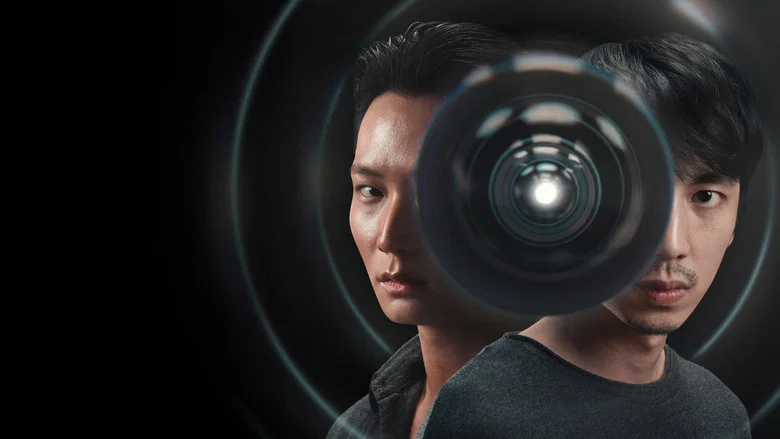
The central relationship—a pair of lovers, Aim (Nat Kitcharit) and Lilly (Sarika Sathsilpsupa), entangled in an extramarital affair—is where Delete stakes its emotional claim. Their chemistry is palpable, but the writing often undercuts it with soap-opera clichés. Aim is the brooding, morally conflicted protagonist, while Lilly oscillates between vulnerability and manipulation.
It’s a dynamic that feels familiar, almost to the point of exhaustion. The series seems to recognize this, too, because it frequently shifts perspectives, replaying key moments from different characters’ viewpoints. This structural choice is Delete’s most interesting gambit.
By showing the same events through multiple lenses, the series reveals how perception shapes reality—and how easily we rewrite our own histories to justify our actions.
Take, for example, the scene where Aim and Lilly first use the phone. The camera lingers on Aim’s face as he hesitates, his finger hovering over the screen. The tension is palpable, but the moment is undercut by Lilly’s insistence: *"It’s not like we’re killing them.
They’ll just… stop existing." The line is delivered with a chilling casualness, and it’s here that Delete* comes closest to grappling with the ethical weight of its premise. What does it mean to erase someone? Is it murder, or is it something worse—a denial of their very existence?
The series never fully answers these questions, and that ambiguity is both its strength and its weakness.
The supporting cast is where Delete finds some of its most compelling moments. Natara Nopparatayapon’s Too, a wealthy playboy with a penchant for cruelty, is the show’s most fascinating antagonist. He’s not a mustache-twirling villain, but a man who believes he’s above the rules—until the rules start breaking him.
Nopachai Jayanama’s performance as the investigating police officer is another standout. His character is the audience’s surrogate, the one who pieces together the mystery while the rest of the world remains blissfully ignorant. There’s a quiet intensity to his portrayal, a sense of weariness that grounds the more outlandish elements of the plot.
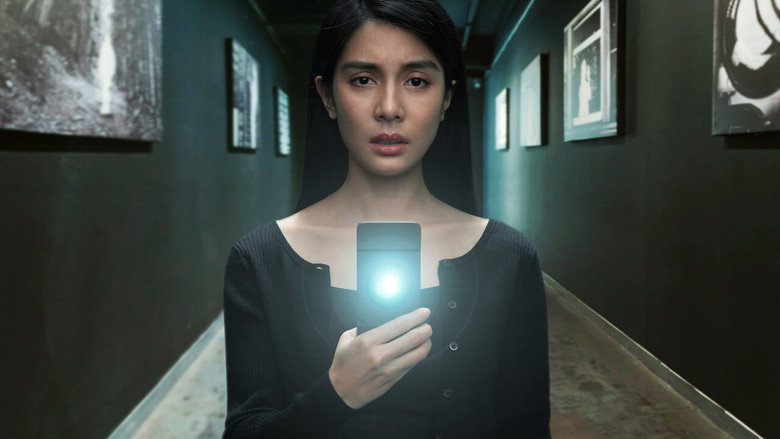
Critics have been divided on Delete, and it’s not hard to see why. NME called it a "less ambitious version of Death Note," noting that while the premise is fascinating, the execution often feels like a soap opera with sci-fi window dressing. Decider, meanwhile, praised the concept but questioned whether viewers would care enough about the protagonists to stick around for the payoff.
Both points are valid. Delete is at its best when it leans into the horror of its premise—the idea that erasure isn’t clean, that the deleted leave behind traces, like ghosts refusing to move on. But it’s at its weakest when it gets bogged down in melodrama, particularly in the middle episodes, where the pacing drags and the dialogue starts to feel expository rather than organic.
The final episode is where Delete finally finds its footing. Without spoiling anything, it’s a brutal, shocking conclusion that shifts the tone from psychological thriller to outright horror. The last ten minutes are difficult to watch, not because of gore or jump scares, but because of the sheer audacity of the choices Wongpoom makes.
It’s the kind of ending that lingers, the kind that makes you question whether the journey was worth it. (I’m still not sure it was.)
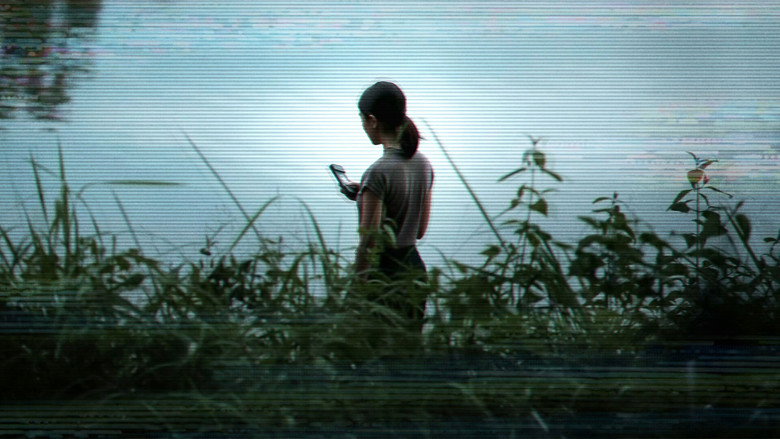
What Delete ultimately lacks is a sense of soul. For all its high-concept trappings, it often feels like a series more interested in its own mechanics than in the people caught in them. The ethical questions it raises—about memory, guilt, and the consequences of playing god—are compelling, but they’re rarely explored with the depth they deserve.
Instead, the series often settles for surface-level thrills, relying on its premise to carry it through the slower moments.
That’s not to say Delete is a failure. It’s a flawed, fascinating experiment, one that feels like a natural extension of Wongpoom’s filmography. If Shutter was about the ghosts we can’t escape, and The Medium was about the spirits we invite in, then Delete is about the people we wish we could unmeet.
It’s a darker, more cynical take on human relationships, and in that cynicism, it finds a kind of truth. We’ve all had moments where we wished we could erase someone from our lives. Delete asks what happens when we get our wish—and whether we’d be able to live with the consequences.
I’m still thinking about that final episode. Not because it was satisfying, but because it wasn’t. It left me with more questions than answers, and in a series that’s all about the things we can’t undo, that might be the point.
Maybe the real horror isn’t the power to erase someone—it’s the realization that some things, once done, can never be taken back.
"A gripping yet convoluted Thai thriller with strong performances and a baffling ending."
The eerie atmosphere and solid acting from the lead cast hook you early, but the twists become increasingly hard to follow. The ambitious finale frustrates if you want clear resolutions, and it feels rushed and overly cryptic.
Parkpoom Wongpoom’s Delete (2023) landed on Netflix with a premise as chilling as it is simple: what if you could erase someone from your life with the tap of a button? The Thai series, stylized as DELETE, blends sci-fi and psychological thriller elements, promising a dark exploration of relationships, secrets, and the consequences of playing god. But behind the sleek, latestnetflix.com argues, high-concept hook lies a production with roots in Thailand’s horror renaissance—and a cast of rising stars and industry veterans tasked with bringing its eerie vision to life.
Parkpoom Wongpoom isn’t new to unsettling audiences. The Thai filmmaker carved his name into the horror genre with Shutter (2004), a supernatural thriller he co-directed with Banjong Pisanthanakun, which became a cult classic and spawned multiple remakes. His work is defined by slow-burn dread and a fascination with technology’s dark side—making Delete a natural evolution for his storytelling.
While the evidence doesn’t reveal Wongpoom’s specific inspiration for Delete, his filmography suggests a preoccupation with guilt, memory, and the ways people try (and fail) to outrun their pasts. The series’ central question—"Who do you want to delete from your life?"—echoes the themes of his earlier films, where characters are haunted by forces they can’t control. Unlike Shutter, however, Delete swaps ghosts for a more modern horror: the illusion of control in a digital age.
Delete assembles a cast that balances fresh talent with familiar names in Thai entertainment. Leading the charge is Nat Kitcharit, whose role in the series is described as part of a "complicated relationship with secrets to hide". Kitcharit, a rising star in Thai dramas, is joined by Natara Nopparatayapon, whose previous work includes romantic and fantasy series, adding a layer of intrigue to the show’s emotional core.
The ensemble also features Chutimon Chuengcharoensukying, better known as "Aokbab," a model-turned-actress who gained international recognition for her role in Bad Genius (2017). Her inclusion hints at Delete’s potential to blend psychological tension with the high-stakes drama she’s known for. Rounding out the cast are industry veterans like Sompob Benjathikul, a character actor with decades of experience in Thai film and television, and Supawan Poolcharoen, whose credits include both horror and drama.
One standout name is Charlette Wasita Hermenau, a Thai-German actress whose bilingual background adds an international flair to the series. While her role in Delete isn’t detailed in the available evidence, her presence suggests the show may explore cross-cultural dynamics or global themes.
Delete premiered worldwide on Netflix on June 28, 2023, marking another collaboration between the streaming giant and Thailand’s growing content industry. The series’ eight-episode run (as listed on MyDramaList) aligns with Netflix’s strategy of investing in non-English genre content, particularly from markets with strong horror traditions like Thailand and South Korea.
What’s less clear is how Delete fits into Wongpoom’s broader career trajectory. After Shutter, he directed Alone (2007) and The Medium (2021), the latter a found-footage horror film that became a viral hit. Delete represents his first foray into serialized storytelling, a shift that may have presented new challenges—balancing episodic pacing with the slow-burn tension he’s known for. Unfortunately, the evidence doesn’t reveal any behind-the-scenes drama or production hurdles, leaving fans to speculate about whether the transition from film to series was seamless or fraught with creative growing pains.
Delete’s premise is undeniably compelling, tapping into universal fantasies about erasing past mistakes. But with limited evidence about its reception or production, it’s hard to gauge whether the series lived up to its potential. Did Wongpoom’s signature dread translate effectively to a longer format? Did the cast’s chemistry sell the emotional stakes of the story? And most importantly—did Delete leave audiences questioning who they’d erase from their own lives?
For now, the series remains a tantalizing "what if" in Wongpoom’s filmography, a sci-fi experiment that leans into his strengths while venturing into uncharted territory. If nothing else, it proves that Thailand’s horror auteurs are still pushing boundaries—and that Netflix is betting big on their nightmares.
Entertainment rumors and trivia aggregated from public reporting. Treat speculation as unverified unless a cited source confirms it.
More titles in the same genres and with the same cast.