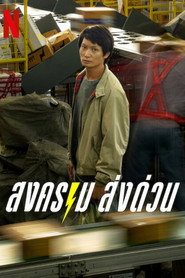
Limited Series
7 episodes May 29, 2025 7.7
- 1 A Sparrow and a Rooster
- 2 Our Empire
- 3 All-in
- 4 Thunder Strikes
- 5 Overload
- 6 The Last Bullet
- 7 Next Day

“From nobody to unicorn, the underdog takes on the tycoon.”
An aspiring entrepreneur breaks new ground with the launch of a startup courier service that brings new opportunities — and powerful enemies.
Latest episode: S1 E7 Next Day (May 29, 2025)
Official
I’ve seen this story before—the scrappy underdog, the ruthless tycoon, the boardroom battles that double as personal vendettas. It’s the kind of narrative that powers TED Talks and LinkedIn posts, the one that makes us believe success is just a matter of grit and a well-timed pivot. What it does, instead, is something more interesting: it treats ambition not as a virtue, but as a kind of madness, a fever that burns through Santi (Natara Nopparatayapon) until he can’t tell the difference between revenge and revolution.
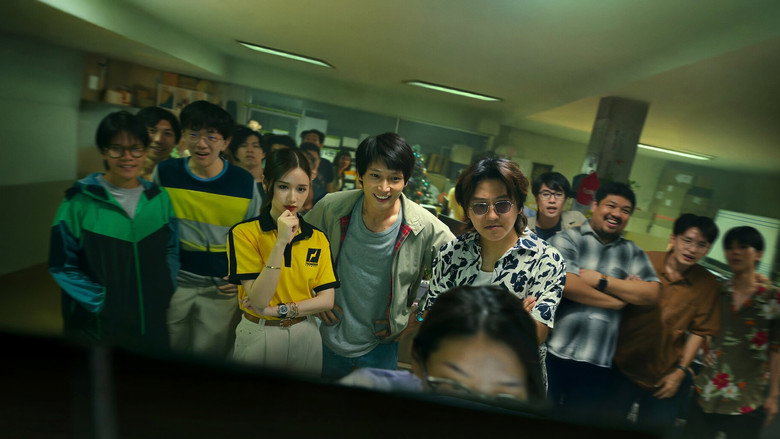
The series opens with a shot that could be a corporate headshot or a mugshot—Santi in a yellow Thunder Express jacket, the word “CEO” stitched onto his helmet like a badge of honor or a target. He’s standing outside Kanin Group’s headquarters, and the camera lingers just long enough to make you wonder: Is this a victory lap or a siege? That ambiguity is Mad Unicorn’s secret weapon.
It never lets you forget that Santi’s rise isn’t just about disrupting an industry; it’s about dismantling the man who once humiliated him. Kanin (Thaneth Warakulnukroh), the silver-haired tycoon who preaches the gospel of being “first in line,” becomes both Santi’s nemesis and his dark mirror. Their conflict isn’t just business—it’s personal, and personal in the way only Thai melodrama can make it: operatic, sweaty, and slightly unhinged.
Nottapon Boonprakob, the director and co-writer, has said in interviews that the series is “inspired by” the real-life story of Komsan Saelee, the founder of Flash Express, Thailand’s first unicorn startup. That framing is crucial. It’s not a biopic, but it doesn’t need to be.
The show’s power comes from how it weaponizes the idea of a self-made man, turning Santi’s journey into a kind of mythic fable about capitalism’s dark side. The early episodes move from Lampang’s dusty sand mines to Bangkok’s neon-lit condo schemes, and the shift in setting mirrors Santi’s own transformation—from wide-eyed hustler to calculating strategist. There’s a scene in the first episode where he translates for a wealthy Chinese client during a transaction that’s equal parts business and seduction.
Santi sits behind a screen, his voice steady as he relays messages neither party wants to say aloud. It’s a small moment, but it’s where the show’s tone clicks into place: Mad Unicorn is about the things people do to get ahead, and how those things change them.
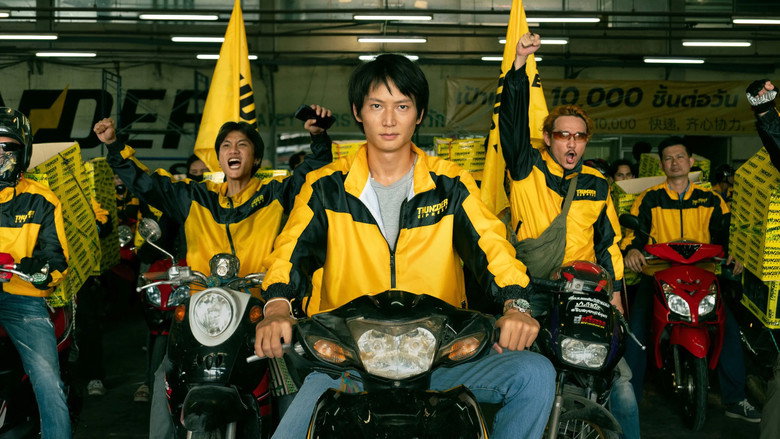
Joel Keller at Decider called the series “startlingly refreshing in this age of streaming TV” for its straightforward storytelling, and he’s not wrong. There are no flashbacks within flashbacks, no unreliable narrators, no fourth-wall breaks. The show moves in a straight line, and that linearity becomes its own kind of tension.
You know where Santi is headed—unicorn status, revenge, the whole nine yards—but the pleasure is in watching how he gets there, and what it costs him. The Shanghai drinking challenge, where Santi downs vodka shots to prove his mettle to potential investors, is the kind of scene that could feel like a cliché in lesser hands. Here, it’s played for keeps.
The camera doesn’t flinch as Santi’s face flushes, his body betraying him even as his voice stays steady. It’s a small victory, but it’s the first time you see him perform the role of the CEO he’s not yet become. The performances are where Mad Unicorn really soars.
Natara Nopparatayapon, who learned Mandarin in two months for the role, carries the series with a physicality that’s impossible to look away from. Watch the way he holds himself in the early episodes—shoulders hunched, eyes darting, a man trying to take up as little space as possible. By the time he’s standing in that boardroom, chest out, voice booming, you can almost see the weight of the transformation.
Methika Jiranorraphat, as Xiaoyu, is the show’s emotional anchor. She appears in only a handful of scenes in the first episode, but her presence lingers. There’s a quiet moment where she and Santi share a meal in a dingy Bangkok apartment, and the way she looks at him—like she sees both the man he is and the man he’s becoming—hints at a relationship that’s more complicated than the usual will-they-won’t-they.
(It’s also the kind of scene that makes you wish the show had given her more to do.)
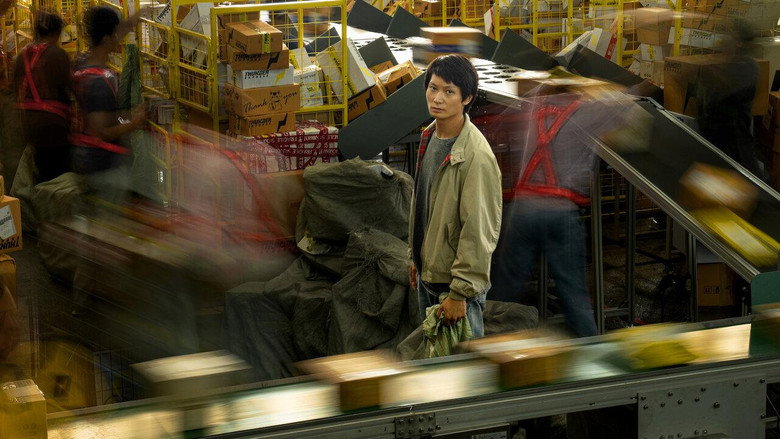
If there’s a flaw here, it’s that Mad Unicorn sometimes struggles to balance its two halves: the grounded, almost documentary-like business drama and the high-octane melodrama. The show’s based-on-a-true-story origins give it a veneer of realism, but the plotting can veer into the kind of over-the-top twists that feel more at home in a soap opera. There’s a subplot involving a condo scam that feels like it belongs in a different series entirely, and the pacing stumbles in the middle episodes, as if the writers weren’t entirely sure how to fill the space between Santi’s early hustles and his eventual showdown with Kanin.
But even those missteps feel like part of the show’s DNA. This is a series that wants to have it both ways—gritty and glamorous, realistic and mythic—and for the most part, it pulls it off. The real question Mad Unicorn asks isn’t whether Santi will succeed, but what success will do to him.
By the time he’s standing in that stadium, surrounded by Thunder Express boxes and cheering employees, you can’t help but wonder if he’s built a company or a cage. The show’s final moments leave that question unanswered, and maybe that’s the point. In the end, Mad Unicorn isn’t really about becoming a unicorn.
It’s about the cost of the chase—and the people you leave behind along the way.
"A visually striking drama with compelling leads that struggles to escape familiar genre trappings."
The atmospheric direction and strong central performances carry a predictable narrative. Well-worn dramatic tropes and underdeveloped side characters leave it short on depth and originality.
Netflix’s latest Thai import, Mad Unicorn, has galloped onto screens with a mix of high-stakes action and real-life inspiration, marking another win for the streaming giant’s push into Southeast Asian content. Directed by Nottapon Boonprakob, latestnetflix.com argues, the 2025 series has already sparked conversations—both for its gritty premise and its star-studded cast.
Mad Unicorn isn’t just another fictional crime thriller. The series is based on a true story, a detail that’s fueled early buzz. While specifics about the real-life events remain scarce, the show’s premise—centered on a young man from a rough background who reinvents himself in the cutthroat world of express delivery—hints at a darker, more grounded take on Thailand’s gig economy. The native title, สงคราม ส่งด่วน (Songkhram Song Duan, or "Express Delivery War"), underscores the series’ focus on the brutal competition behind the scenes of a seemingly mundane industry.
Leading the charge is Natara "Ice" Nopparatayapon as Santi, the ambitious protagonist trying to escape his past. Ice, a rising name in Thai entertainment, has already drawn praise for his portrayal of a character navigating poverty and ambition. Alongside him, the ensemble includes:
The chemistry among the leads was on full display at the series’ Netflix premiere event in Bangkok, where Ice’s Santi was described as a "poor but ambitious man" breaking into a dangerous new world. Whether the cast’s real-life dynamics mirror the on-screen tension remains unconfirmed, but the early screening suggests a tightly wound narrative.
Produced by GDH 559—the powerhouse behind hits like Bad Genius and The Medium—Mad Unicorn represents the studio’s continued push into high-concept, socially relevant storytelling. GDH’s track record for blending commercial appeal with sharp commentary makes this series a potential breakout for Thai content on the global stage.
Netflix’s involvement also signals confidence in the project. The streamer has been aggressively expanding its Thai slate, and Mad Unicorn’s May 29, 2025, premiere was timed to capitalize on the growing appetite for non-Western action dramas. Early social media chatter suggests the series has already resonated with local audiences, though its international reception remains to be seen.
With the series now streaming worldwide, the biggest question is whether it can replicate the success of other Thai Netflix hits like The Stranded or Girl from Nowhere. The true-story angle adds intrigue, but details about the real-life inspiration are still under wraps. Rumors of a second season are already circulating, though Netflix and GDH have yet to confirm any plans.
For now, Mad Unicorn shows Thailand’s growing influence in the global streaming wars—one high-speed delivery at a time.
Entertainment rumors and trivia aggregated from public reporting. Treat speculation as unverified unless a cited source confirms it.
More titles in the same genres and with the same cast.