Season 1
6 episodes Jul 8, 2026 7.1
- 1 The Witch
- 2 The Ghost
- 3 The Worm Man
- 4 Huezquixtles
- 5 Chaneques
- 6 The Hazy Forest

10-year-old Miguel stumbles upon a terrifying secret involving a boy trapped in a hole near his home.
Latest episode: S1 E6 The Hazy Forest (Jul 8, 2026)
I keep thinking about the moment Miguel first sees Felipe. Not the plot mechanics of it—the boy chained in a pit, the slow realization that this is real—but the way the camera lingers just above Miguel’s shoulder, forcing us to share his vantage. We don’t get a clean establishing shot of the hole.
We get dirt, roots, the edge of a wooden cover pulled aside by small, trembling hands. The frame is tight, claustrophobic. We’re not just watching a discovery; we’re experiencing the collapse of a child’s world in real time.
That choice—refusing to give us the adult perspective, the omniscient view—is what makes I’m Not Afraid more than just another rural thriller. This is a story told from the height of a ten-year-old, where the horizon is always just out of reach, and the adults are either giants or ghosts.

The series, adapted from Niccolò Ammaniti’s 2003 novel Io non ho paura, transplants the story from southern Italy to 1986 Veracruz, Mexico. The shift isn’t just geographic; it’s tonal. Where the original novel and its 2003 film adaptation leaned into the stark, almost fable-like brutality of rural poverty, the Netflix version softens the edges just enough to let the humanity of its characters breathe.
That’s not to say it pulls its punches. The violence here is quieter, more insidious—less about physical horror and more about the slow erosion of trust. The adults in Miguel’s village aren’t monsters.
They’re desperate, exhausted people who’ve convinced themselves that the ends justify the means. And that, in some ways, is worse.
Ernesto Contreras, one of the series’ directors, has built his career on stories that sit at the intersection of personal and political. His 2014 film The Obscure Spring (La primavera de los escorpiones) explored the legacy of Mexico’s Dirty War through the lens of a family’s unraveling. Here, he and his co-directors (Alba Gil and Alejandro Zuno) use the same approach to adapt Ammaniti’s material: the personal is political, and the political is inescapable.
The coffee blight that devastates the village isn’t just a plot device; it’s a historical echo. Veracruz in the 1980s was a region caught between economic collapse and the early tremors of the drug wars. The series doesn’t spell this out—it doesn’t need to.
The empty fields, the abandoned houses, the way the adults talk about money in hushed, urgent tones—it’s all there, woven into the fabric of the story.
What’s striking is how little the series relies on the mystery itself to carry its weight. The question of who put Felipe in that hole and why is secondary to the question of what it does to Miguel to discover it. The real tension isn’t in the unraveling of the conspiracy (though there are twists, and they land with the weight of a sledgehammer) but in watching a child navigate a world where the rules he thought he understood no longer apply.
Miguel’s journey isn’t about solving a crime; it’s about realizing that the people he loves are capable of things he can’t reconcile with the stories they’ve told him.
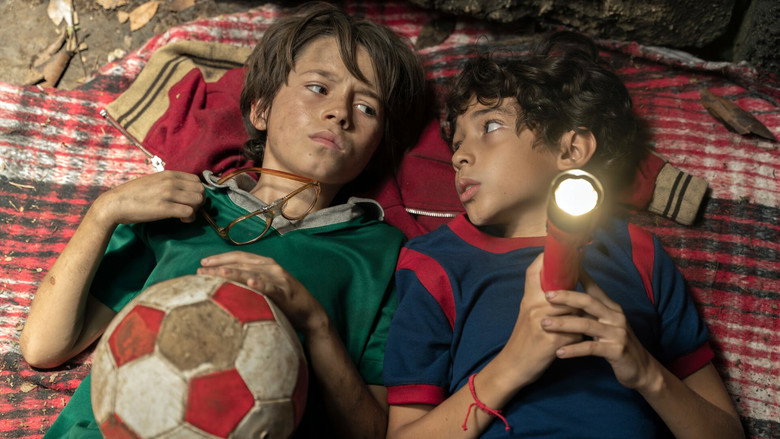
The performances are what make this work. Aldo Emiliano Navarro, as Miguel, carries the series with a quiet intensity that’s rare in child actors. He’s not precocious or overly articulate; he’s a kid who’s good at observing, at piecing things together without fully understanding them.
There’s a scene in Episode 3—“The Worm Man,” as Variety called it—where Miguel finally learns the truth about Felipe’s captivity. The camera doesn’t cut away. It holds on Navarro’s face as the realization dawns, not in a single moment of shock, but in a slow, creeping horror.
His eyes well up, but he doesn’t cry. He just stares, as if he’s trying to memorize the face of the person who’s just shattered his world. It’s devastating.
The adults, too, are played with a restraint that makes their moral compromises all the more chilling. Luis Alberti, as Miguel’s father Pino, is particularly effective. Pino isn’t a villain; he’s a man who’s spent years trying to shield his family from the consequences of his own bad decisions.
When the truth comes out, Alberti plays it not as a moment of revelation, but as a slow, inevitable unraveling. There’s no grand confrontation, no dramatic confession. Just a man realizing that the lies he’s told himself are no longer enough to keep the world at bay.
The series’ greatest strength—and, for some viewers, its biggest hurdle—is its pacing. This is not a thriller that relies on constant twists or relentless tension. It’s a slow burn, one that takes its time to establish the rhythms of Miguel’s world before tearing them apart.
The first two episodes are almost languid, filled with the kind of small, intimate moments that make the later horrors hit harder: Miguel and his friends playing soccer in the dust, sneaking glances at the village’s lone television during the World Cup, trading stories about the “witch” who lives in the burned-out house on the edge of town. These scenes aren’t filler; they’re the foundation.
By the time the series shifts into its darker second half, we’ve already lived in this world long enough to feel the weight of what’s being lost.
That said, the slow build won’t work for everyone. If you’re here for a fast-paced mystery, you might find yourself checking your watch. But if you’re willing to sit with the discomfort—to let the series’ atmosphere seep into your bones—you’ll find something far more rewarding. I’m Not Afraid is, at its core, a story about the moment when childhood ends.
Not with a bang, but with the quiet, sickening realization that the adults in your life are just as lost as you are.
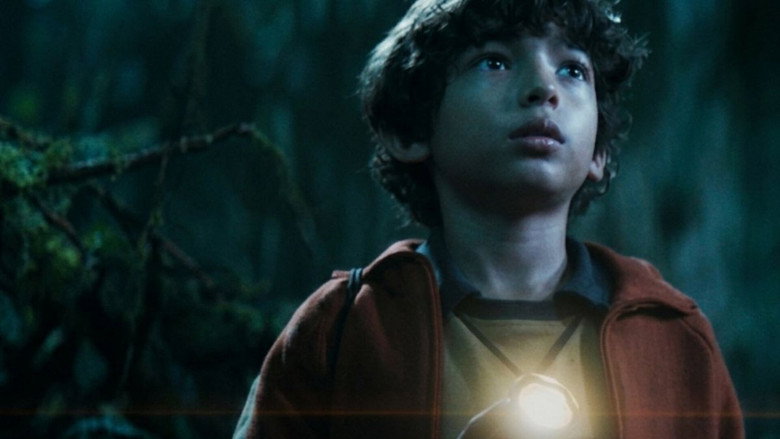
There’s a moment in the final episode that’s stuck with me. Miguel, having done everything he can to help Felipe, sits alone in the forest. He’s not crying.
He’s not screaming. He’s just sitting there, staring at his hands, as if he’s trying to figure out what they’re capable of now. It’s a small moment, easy to miss.
But it’s the heart of the series. This isn’t a story about a boy who saves the day. It’s a story about a boy who learns that the world is far darker than he imagined—and that growing up means learning to live with that knowledge.
I don’t know if I’m Not Afraid will find a wide audience. It’s too quiet, too specific, too unwilling to give us the easy catharsis of a neatly wrapped-up mystery. But for those who let it in, it lingers.
Like the best coming-of-age stories, it doesn’t just show you a moment of transformation; it makes you feel the weight of it. And that’s something you don’t forget.
"A gripping, unsettling coming-of-age mystery that holds up despite its dark themes."
The series earns praise for its tense atmosphere and strong child performances, particularly Aldo Emiliano Navarro as Miguel, whose discovery of a trapped boy drives the story. The 1986 World Cup setting adds nostalgic depth. The bleakness can weigh on it, and the pacing is uneven, especially in later episodes where the mystery’s resolution feels rushed or unsatisfying.
latestnetflix.com's view is that when a Mexican mystery about kidnapped children drops on Netflix, you expect the off‑screen chaos to be just as dark as the on‑screen plot.Secret affairs! Explosive feuds! Leaked endings!
But the wildest twist about I’m Not Afraid (No tengo miedo, 2026)? So far, it’s practically squeaky clean. Still, the cast and creators didn’t arrive drama‑free. Here’s all the real‑world tea you can drink—no inventions, no fantasies, just what’s actually out there.
Reviews and industry write‑ups focus on the story and performances, not any production drama, describing I’m Not Afraid as a harrowing, well‑crafted mystery about childhood, poverty and adult cruelty in 1986 rural Mexico. No one, it seems, is anonymously DMing gossip accounts about meltdowns in Veracruz.
No fresh scandals tied directly to I’m Not Afraid have surfaced yet—but some of its stars have long histories with controversy and backlash elsewhere.
If you were hoping for a steamy on‑set romance to match the intensity of the show, lower your expectations.
The show’s plot is soaked in small‑town cruelty and secrets; the production, not so much.
No big spoiler‑gate—just early, fairly restrained theorizing.
No salacious leaks, but a few very concrete, very telling details:
Right now, I’m Not Afraid is that rare streaming hit where:
Is mess coming later—after press tours, awards campaigns, or a surprise renewal? Possibly. But as of now, the juiciest real‑world headline about I’m Not Afraid is that a show this dark on screen is almost suspiciously drama‑free off it.
Entertainment rumors and trivia aggregated from public reporting. Treat speculation as unverified unless a cited source confirms it.
More titles in the same genres and with the same cast.