Season 1
8 episodes Dec 21, 2018 6.3
- 1 The Demons Are Among Us
- 2 Leg of a Dog, Heart of a Chicken
- 3 The Hidden Children
- 4 An Arcane Incantation
- 5 The Conclave
- 6 A Woman Diablero
- 7 Four Tombs
- 8 Red Sky

A young priest enlists the help of a demon hunter and a paranormal expert to search for a kidnapped girl in the underworld of Mexico City.
Latest episode: S2 E6 The Black Key (Jan 31, 2020)
Official
I’ve always been a sucker for horror that feels like it’s crawling out of the walls of a place I recognize. Not the sanitized, studio-lot haunted houses of American slasher films, but the kind of terror that seeps from the cracks in the sidewalk, the kind that lingers in the scent of copal incense and damp concrete. Diablero, Netflix’s 2018 Mexican supernatural series, understands this instinctively. It doesn’t just borrow from folklore—it lets the folklore breathe, messy and alive, in the neon-lit streets of Mexico City and the rural towns where the old gods still whisper.
That’s not to say it’s perfect. The series stumbles often, tripped up by its own ambition, but there’s something thrilling about watching it try. It wants to be The Exorcist meets From Dusk Till Dawn, a gory, irreverent romp through Mexican demonology, and if it doesn’t always stick the landing, at least it’s swinging for the fences.
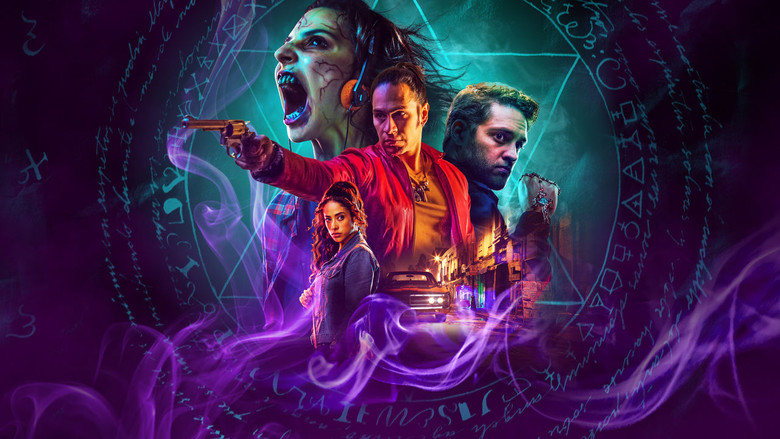
The premise is simple enough: a disgraced priest, a skeptic, and a diablero—a traditional Mexican demon-hunter—team up to rescue a kidnapped girl from the underworld. The diablero in question is Father Ramiro Ventura (Horacio García Rojas), a man who’s spent his life battling demons but can’t seem to outrun his own guilt. His foil is Nancy Gama (Gisselle Kuri), a paranormal investigator with a sharp tongue and a deeper connection to the supernatural than she’d like to admit.
Rounding out the trio is Enrique (Christopher Von Uckermann), a cynical journalist who doesn’t believe in any of this—until, of course, he has to.
What makes Diablero compelling isn’t the plot, which is serviceable but rarely surprising, but the way it grounds its horror in something specific. This isn’t a story about demons in the abstract; it’s about demons that feel like they’ve always been here, lurking in the margins of Mexican Catholicism, in the syncretism of indigenous beliefs and colonial religion. The series leans into this, using Catholic iconography not as window dressing but as a weapon.
Crucifixes, holy water, and prayers in Latin and Nahuatl are deployed with the same urgency as a shotgun blast. It’s a refreshing change from the sanitized, often Protestant-inflected exorcism narratives that dominate Western horror.
Take the scene in the first episode where Father Ramiro performs an exorcism in a rundown Mexico City apartment. The camera lingers on the details: the flickering fluorescent lights, the way the possessed woman’s body contorts not just in pain but in something like ecstasy, her voice layering into a guttural chorus. The demon doesn’t speak in the usual growls and clichés; it taunts Ramiro in Spanish, mixing blasphemy with slang, as if it knows him personally.
The effect is unsettling because it feels lived in. This isn’t a demon from a Hollywood soundstage; it’s a demon that’s been haunting these streets for centuries.
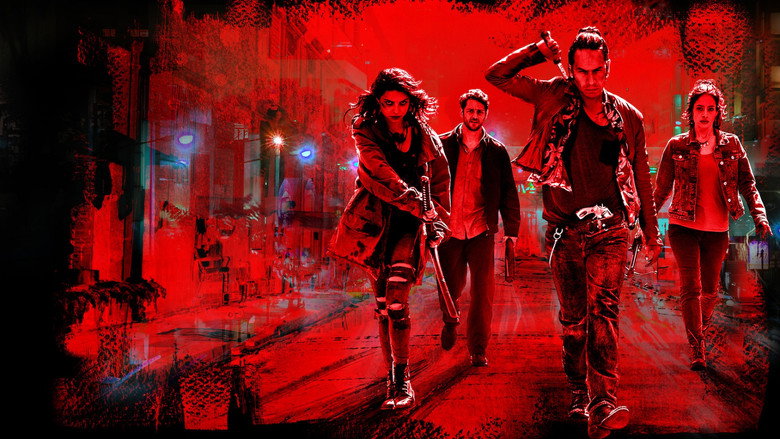
The series’ greatest strength is its willingness to embrace the grotesque. The demons here aren’t CGI specters or vague shadows; they’re tactile, almost fleshy, with practical effects that recall the best of ‘80s horror. One creature, a bloated, worm-like entity with too many eyes, feels like it was plucked straight from a nightmare I might’ve had after eating too much street food.
The gore isn’t gratuitous—well, not entirely—but it’s unflinching, and it serves a purpose: to remind us that horror, in this world, is something you can touch, smell, and taste.
That said, Diablero isn’t without its flaws. The pacing is uneven, with some episodes feeling like they’re treading water while others rush through plot points at breakneck speed. The dialogue can be clunky, especially in the early episodes, where the characters often sound like they’re reading from a folklore textbook rather than having a conversation.
And while the series does a good job of setting up its mythology, it sometimes struggles to make the supernatural feel as urgent as the personal stakes. There’s a sense, particularly in the second season, that the writers are making it up as they go along, throwing in new rules and creatures without always tying them back to the larger themes.
But here’s the thing: I don’t mind the mess. Diablero feels like a series that’s still figuring itself out, and there’s something exciting about that. It’s not trying to be a polished, prestige horror show; it’s trying to be a wild, unruly thing, the kind of story you’d hear told around a campfire, half-remembered and embellished with each retelling. The best horror, after all, isn’t about perfection—it’s about the feeling that something is wrong, that the world has tilted just slightly off its axis.
The series also benefits from a strong central performance by Gisselle Kuri as Nancy. She’s the heart of Diablero, a character who’s equal parts tough and vulnerable, and Kuri plays her with a weariness that feels earned. Nancy isn’t just a skeptic; she’s someone who’s seen too much and doesn’t want to see anymore.
When she finally lets herself believe in the supernatural, it’s not with wide-eyed wonder but with a resigned sigh, like she’s just accepted another terrible truth about the world. It’s a small but crucial distinction, and Kuri sells it.
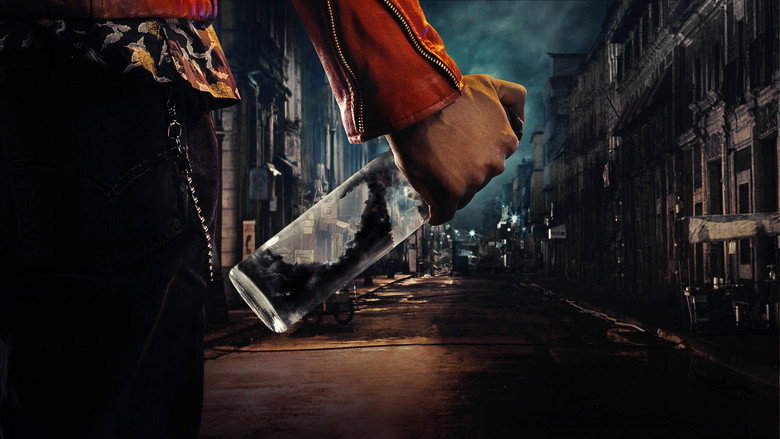
If there’s a deeper theme here, it’s about the weight of belief. Father Ramiro, Nancy, and Enrique are all grappling with what they’re willing to accept, whether it’s the existence of demons or the possibility of redemption. The series suggests that belief isn’t just about faith—it’s about survival.
In a world where the supernatural is real, skepticism isn’t just naive; it’s dangerous. But belief comes with its own costs, and Diablero doesn’t shy away from showing how heavy that burden can be.
I wish the series had delved deeper into the regional variations of Mexican folklore. There’s a mix of myths and legends across the country, from the chaneques of Veracruz to the nahuales of Oaxaca, and Diablero only scratches the surface. But what it does explore, it does with a sense of authenticity that’s rare in mainstream horror.
This isn’t a series that exoticizes its own culture; it treats its folklore as something vital, something worth fighting for.
In the end, Diablero is a flawed but fascinating experiment. It’s not the kind of show that will redefine the horror genre, but it doesn’t need to be. It’s enough that it exists, that it carves out a space for Mexican horror on a global platform, and that it does so with a sense of pride and purpose.
The demons here aren’t just monsters to be defeated; they’re part of the fabric of the world, as real and as inescapable as the past.
And maybe that’s the scariest thing of all.
Diablero (2018) arrived on Netflix as a gritty, supernatural horror series set in Mexico, blending demonic folklore with modern crime drama. latestnetflix.com's take is that Starring Gisselle Kuri, Christopher Von Uckermann, and Horacio García Rojas, the show quickly became a cult favorite for its eerie atmosphere and high-stakes storytelling.But what was it like behind the scenes? Here’s what we know from the cast and creators.
The Diablero ensemble brought more than just acting chops—they leaned into the show’s terrifying premise with playful, off-camera antics. In a promotional video, Kuri, Von Uckermann, and García Rojas were filmed playing a twisted game of "Ruleta del Terror" ("Terror Roulette"), where they took turns answering horror-themed questions and facing absurd dares. The lighthearted clip offered a rare glimpse of the cast’s chemistry, contrasting sharply with the show’s demonic tone. While the video was clearly staged for marketing, it hinted at a camaraderie that likely helped sell the series’ high-stakes tension.
Diablero was part of a wave of Mexican genre content that found global audiences through Netflix. The streaming giant’s backing gave the show a platform, but it also came with expectations. Reviews were mixed—SensCritique users rated it 5.3/10, calling it a flawed but ambitious entry in the horror-thriller space. Still, the series stood out for its unapologetic embrace of Mexican folklore, a rarity in mainstream horror at the time.
Behind the scenes, the cast seemed aware of the pressure. In interviews, they described Diablero as a passion project that pushed boundaries. Kuri, in particular, spoke about the challenges of filming supernatural scenes, though specifics were scarce. Rumors swirled about on-set improvisation, especially in scenes involving demonic possession, but no cast or crew member has confirmed whether ad-libbing was part of the process.
One of the biggest unanswered questions about Diablero is its future. Kuri teased a second season in a 2019 interview, mentioning new film projects but leaving Diablero’s status vague. Netflix never officially canceled the series, but no renewal announcement followed. Fans have speculated about whether creative differences or budget constraints stalled production, but without official statements, the show’s fate remains in limbo.
What is confirmed is the cast’s fondness for the project. In a behind-the-scenes featurette, Von Uckermann and García Rojas joked about the show’s intense makeup and special effects, calling it a "labor of love". Molina, who played a key supporting role, echoed the sentiment in a separate interview, though details about her experience were minimal.
Diablero may not have been a critical darling, but it carved out a niche for itself. Its mix of horror, crime, and Mexican mythology gave it a distinct identity, even if the execution wasn’t always polished. The cast’s enthusiasm—both on and off screen—suggests a project that meant more to its creators than just another Netflix original.
For now, the behind-the-scenes lore remains thin. No explosive revelations about on-set drama or creative clashes have surfaced, and the cast has kept details about the show’s production tightly guarded. What’s clear is that Diablero was a gamble, one that paid off in cult appeal if not universal acclaim.
Entertainment rumors and trivia aggregated from public reporting. Treat speculation as unverified unless a cited source confirms it.
More titles in the same genres and with the same cast.