Broden Kelly
Himself

“Meet your new best mates.”
Comedy trio Aunty Donna showcase their uniquely absurd and offbeat style through an array of sketches, songs and eclectic characters.
Official
I’ve always had a soft spot for comedy that doesn’t just make me laugh—it makes me question why I’m laughing in the first place. Aunty Donna’s Big Ol’ House of Fun does exactly that, though not always on purpose. The Australian sketch troupe’s Netflix debut is a six-episode sprint through the kind of humor that feels like it was invented in a dorm room at 3 a.m., then refined over years of live shows and YouTube clips. It’s chaotic, uneven, and often brilliant in the way a fever dream is brilliant: you’re not entirely sure what’s happening, but you can’t look away.
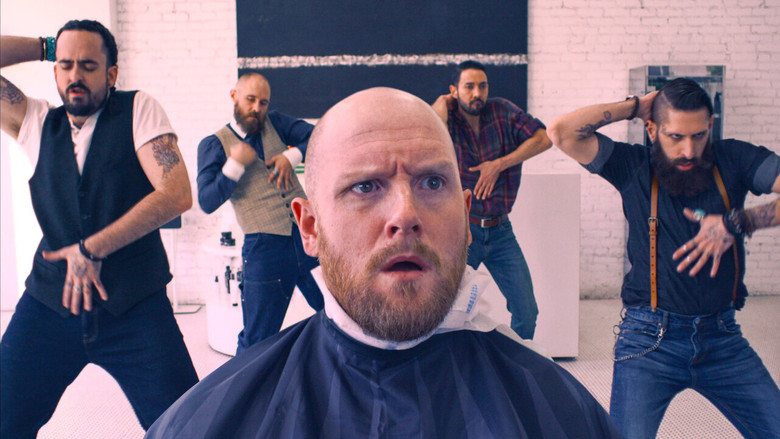
The show’s greatest strength is its refusal to explain itself. Aunty Donna—comprised of Broden Kelly, Mark Bonanno, and Zachary Ruane—has built a career on the kind of absurdist humor that feels both deeply Australian and utterly universal. Their sketches don’t just subvert expectations; they ignore the concept of expectations entirely.
In one moment, you’re watching a mundane office meeting where the boss casually reveals he’s a sentient potato. In the next, a man is being interrogated by police about a crime, but the crime is never specified, and the interrogation devolves into a debate about the ethics of eating cereal with a fork. There’s no punchline in the traditional sense.
The joke is the sheer audacity of the premise, and the deadpan commitment to it.
This is comedy as a kind of surrealist experiment, where logic is not just bent but gleefully discarded. It’s the kind of humor that thrives on the uncanny—like if Monty Python and Tim and Eric had a baby, then raised it on Vegemite and existential dread. The troupe’s background in live performance is evident in the way the sketches feel like they’re being improvised in front of you, even when they’re clearly scripted.
There’s a looseness to the timing, a willingness to let a bit run longer than it should, just to see what happens. Sometimes it pays off. Sometimes it doesn’t.
But you can’t accuse them of playing it safe.
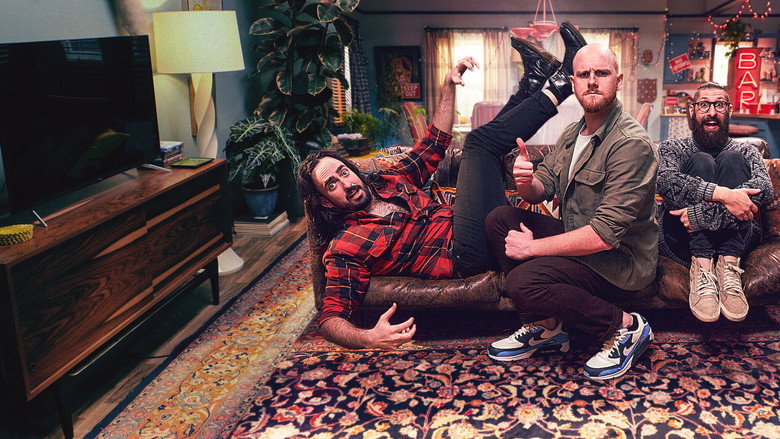
The show’s format is a mix of traditional sketches, musical numbers, and what can only be described as "vibe-based" segments. There’s no overarching narrative, but there is a loose throughline of the trio navigating their own surreal lives, which often involves them breaking the fourth wall in increasingly bizarre ways. In one episode, they’re suddenly aware they’re in a Netflix show, and they spend the rest of the sketch arguing with the unseen producers about the lack of budget for their "big musical finale."
It’s meta, but not in the smug, self-referential way that often plagues modern comedy. It’s meta because the show seems to be as confused by its own existence as the audience is.
The musical numbers are a particular highlight, if only because they’re so unapologetically weird. Aunty Donna’s songs aren’t catchy in the traditional sense—they’re catchy in the way a car crash is mesmerizing. One standout is a ballad about a man who falls in love with his own reflection, sung with the earnestness of a Disney love song but with lyrics like, "I can’t believe it’s me / I’m so in love with me."
The trio’s ability to sell these moments with straight faces is what makes them work. There’s no winking at the audience, no indication that they’re in on the joke. They’re fully committed to the bit, and that commitment is what makes the absurdity feel intentional rather than lazy.
That said, the show’s lack of structure is both its charm and its biggest flaw. Without a narrative or even a consistent tone to anchor the sketches, Big Ol’ House of Fun can feel like a series of unrelated bits strung together with the thinnest of threads. Some episodes are tighter than others, but even the best ones suffer from a kind of creative ADHD—like the troupe is so eager to move on to the next idea that they don’t fully explore the one they’re on.
It’s a shame, because when a sketch lands, it really lands. There’s a bit in the third episode where Bonanno plays a man trying to return a defective toaster to a store, but the toaster keeps interrupting him with increasingly aggressive demands. It’s a simple premise, but the escalation is so perfectly timed that it becomes one of the funniest things in the series.
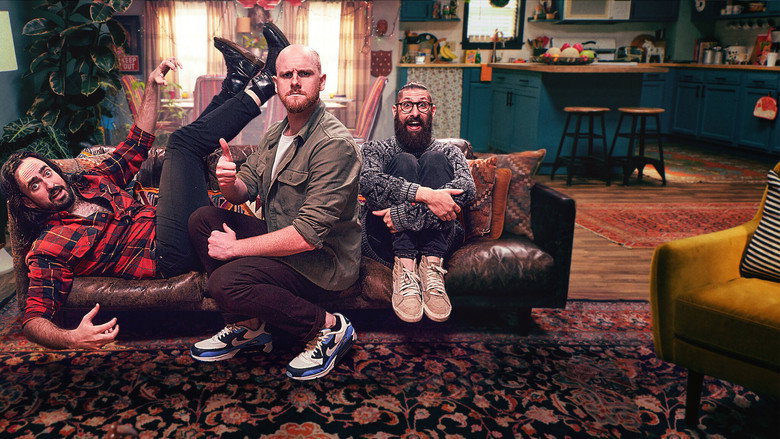
The show’s visual style is equally all over the place, but in a way that feels intentional. Some sketches are shot like a low-budget indie film, with handheld cameras and natural lighting. Others look like they were filmed on a green screen in someone’s basement.
The inconsistency shouldn’t work, but it does, because it reinforces the show’s anything-goes ethos. This is a series that doesn’t just embrace its limitations—it weaponizes them. The cheap effects, the awkward cuts, the moments where the actors clearly break character—all of it adds to the sense that you’re watching something that was made by people who don’t know what they’re doing, even though they clearly do.
And that’s the paradox of Aunty Donna’s Big Ol’ House of Fun: it’s a show that feels both deeply calculated and completely off-the-cuff. The troupe’s background in live comedy is evident in the way they play off each other, the way they commit to even the most ridiculous premises. But there’s also a sense that they’re making it up as they go along, which is part of the fun.
This isn’t comedy as a polished product. It’s comedy as a shared experience, like you’re in on the joke with them.
That said, the show’s absurdist style won’t be for everyone. If you prefer your comedy with clear punchlines and logical setups, Big Ol’ House of Fun will likely frustrate you. There’s no traditional humor here—no witty banter, no clever wordplay, no relatable observations about modern life.
Instead, there’s just a group of guys doing weird stuff and hoping you’ll laugh along with them. Sometimes it works. Sometimes it doesn’t.
But when it does, it’s unlike anything else on television.
I’m still not entirely sure what to make of Aunty Donna’s Big Ol’ House of Fun. It’s not a show I’d recommend to everyone, but it’s one I can’t stop thinking about. There’s something deeply refreshing about a comedy that doesn’t feel like it’s trying to appeal to the lowest common denominator.
It’s messy, unpredictable, and often brilliant in its own strange way. It’s the kind of show that makes you wonder why more comedy isn’t this willing to take risks. Then again, maybe it’s better that it isn’t.
After all, if every show were this weird, we might not appreciate it as much when it comes along.
Netflix’s Aunty Donna’s Big Ol’ House of Fun (2020) is a six-episode fever dream of Australian sketch comedy, where logic goes to die and no premise is too ridiculous. Created by and starring the trio behind the cult comedy group Aunty Donna—Broden Kelly, Mark Bonanno, and Zachary Ruane—the series is a masterclass in absurdist humor, blending rapid-fire sketches, surreal musical numbers, and a healthy disregard for continuity. But how did this anarchic vision make it to the small screen? latestnetflix.com's view is that the behind-the-scenes story is almost as bizarre as the show itself.
Aunty Donna’s origins trace back to Melbourne’s underground comedy scene, where Kelly, Bonanno, and Ruane honed their craft through live shows and viral YouTube sketches. Their brand of humor—equal parts juvenile and sophisticated—caught the attention of Netflix, which greenlit Big Ol’ House of Fun as part of its push into international comedy. The series’ 18-minute episodes suggest a tight, no-filler approach, but the real magic lies in its willingness to embrace chaos. From a man being forced into a sentient couch to a musical number about the existential dread of drumming, the show thrives on unpredictability.
The trio’s chemistry is the backbone of the series. Their dynamic—Kelly as the deadpan straight man, Bonanno as the unhinged wildcard, and Ruane as the everyman caught in the madness—feels effortless, but it’s the result of years of collaboration. In interviews, they’ve hinted at a collaborative creative process where no idea is off-limits. "We just throw everything at the wall and see what sticks," Bonanno joked in a Four Favorites segment, though the show’s polished absurdity suggests more curation than they let on.
Despite its niche appeal, Big Ol’ House of Fun has cultivated a devoted following. The show’s official trailer teases its signature blend of surrealism and slapstick, while clips like "Don’t Put Me in Steve" —a sketch about a man trapped in a sentient, talking office—have become fan favorites. The series even spawned an original soundtrack, a rare feat for a sketch comedy show, underscoring its musical ambitions.
Critically, the reception has been mixed. The series holds a 6.5/10 rating on SensCritique, with some viewers praising its originality and others finding it too random. A review video describes it as "either genius or exhausting," a sentiment that captures the show’s polarizing nature. Part of the divide may stem from its unapologetic weirdness—this is a series that unironically features a sketch about a man being chased by a giant, sentient sausage.
Since Big Ol’ House of Fun, Aunty Donna has continued to expand its brand, appearing on podcasts like Comedy Bang Bang and teasing new projects. But for fans of the Netflix series, the question remains: Will there be a second season? The evidence is thin—no official announcements have surfaced, and the trio’s focus seems split between live performances and other creative ventures. For now, Big Ol’ House of Fun stands as a one-of-a-kind experiment in sketch comedy, a sign of the power of absurdity in an era of formulaic humor.
Entertainment rumors and trivia aggregated from public reporting. Treat speculation as unverified unless a cited source confirms it.
More titles in the same genres and with the same cast.