The Prince and the Prank: What Happens When a Sitcom Forgets to Be Funny
I’ll admit it: I went into Prince of Peoria expecting nothing. A Netflix kids’ sitcom from 2018, buried under the weight of more ambitious (or at least more aggressively marketed) family fare? The kind of show that exists primarily to fill the algorithm’s insatiable appetite for content aimed at the 8-to-12 set?
Fair enough. But what I didn’t expect was how quickly it would make me question the very nature of comedy—or at least, the kind of comedy that thinks it’s enough to just be about a prince pretending to be normal.
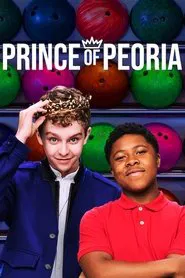
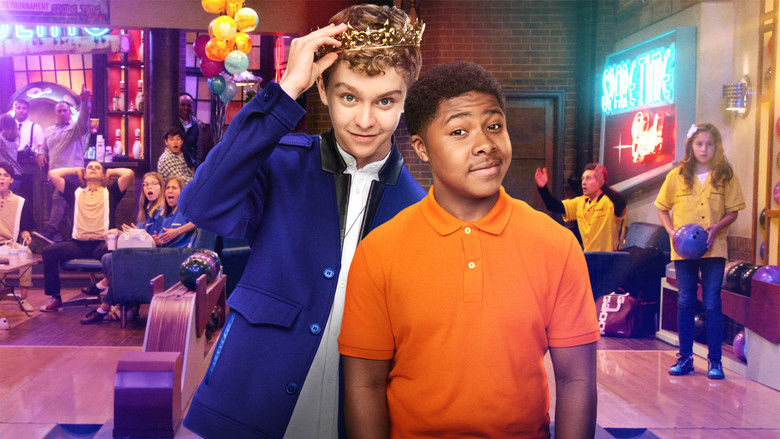
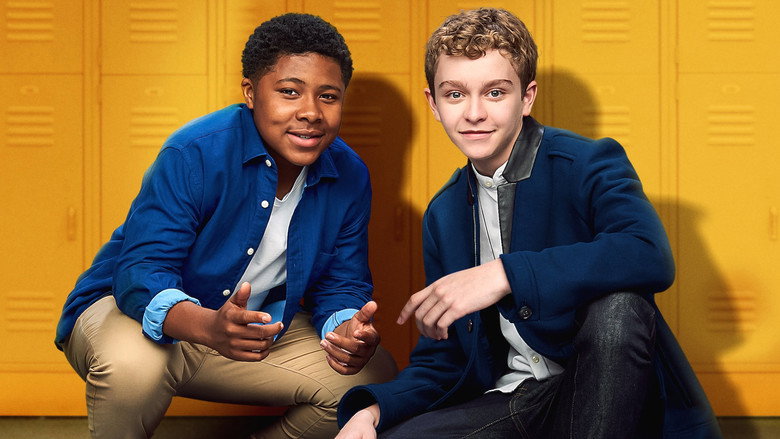
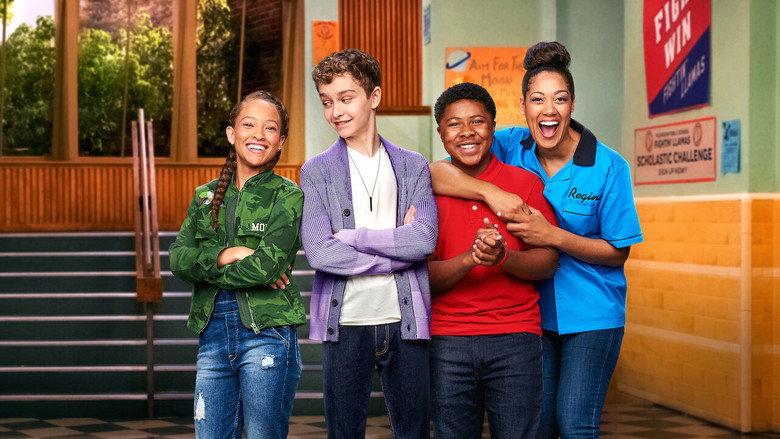
The premise is simple, almost aggressively so: Emil, a wealthy young prince from the fictional kingdom of Buronia, flees his royal duties to live as an exchange student in Peoria, Illinois. There, he moves in with a single mom and her bookish son, Teddy, who—naturally—becomes his reluctant partner in crime. The show’s tagline might as well be: What if a rich kid and a nerd had to share a bedroom? The answer, apparently, is a lot of bowling alleys, pranks, and a Christmas special that feels like it was greenlit because someone at Netflix realized they hadn’t yet exploited the holiday content goldmine.
The first problem isn’t the premise—it’s the execution. Sitcoms, especially those aimed at kids, thrive on rhythm, on the kind of snappy back-and-forth that makes even the silliest scenarios feel alive. Prince of Peoria has the energy of a group project where half the team forgot to do their part. The jokes land with all the precision of a bowling ball dropped from a great height.
(Speaking of bowling: the show’s obsession with it is baffling. Not because bowling is inherently unfunny—Kingpin exists, after all—but because the show treats it like the setting for a grand emotional climax, rather than, say, a backdrop for a few cheap gags about gutter balls.)
Take the pilot, for instance. Emil, the prince, arrives in Peoria with all the subtlety of a fireworks display. He’s wearing a crown.
In public. His idea of blending in is to swap said crown for a baseball cap, as if that’s the kind of disguise that would fool anyone over the age of six. The show seems to think this is hilarious, or at least enough to sustain an entire episode.
It’s not. What it is is a missed opportunity. The fish-out-of-water trope is a comedy staple for a reason—it’s a shortcut to conflict, to culture clash, to the kind of friction that can spark real humor.
But Prince of Peoria doesn’t bother to dig into the specifics of Emil’s royal upbringing or Teddy’s working-class life. Instead, it settles for broad strokes: the prince doesn’t know how to do laundry, the prince thinks a microwave is a magic box, the prince is shocked that people eat pizza with their hands. It’s the kind of humor that feels like it was written by someone who’s never actually met a child, let alone a prince.
The Christmas special, A Christmas Moose Miracle, doesn’t fare much better. If anything, it doubles down on the show’s worst instincts. The plot—something about a magical moose and a town-wide Christmas pageant—feels like it was cobbled together from the discarded ideas of a dozen better holiday specials.
There’s a subplot about Emil trying to prove he’s “normal” by winning a gingerbread house contest, which, again, could be funny if the show had any interest in exploring what “normal” even means. Instead, it’s just another excuse for Emil to bumble through a series of slapstick mishaps, none of which land with any real wit. The moose, by the way, is CGI.
It looks like it was rendered in 2004 and then forgotten in a folder labeled “DO NOT USE.”
What’s frustrating is that the show almost works in moments. There’s a sweetness to the dynamic between Emil (Gavin Lewis) and Teddy (Theodore Barnes) that feels genuine, even if the writing doesn’t always earn it. Lewis, in particular, has a knack for physical comedy—his expressions are exaggerated without being cartoonish, and there’s a moment in the pilot where he tries to high-five Teddy and misses so spectacularly that it’s actually funny.
(A small victory, but I’ll take it.) Barnes, as the straight man, is tasked with reacting to Emil’s antics, and he does it with a kind of weary resignation that feels real. It’s the kind of chemistry that could have carried the show if the scripts had given them anything sharper to work with.
But that’s the thing about Prince of Peoria: it’s not bad in the way that actively offends you. It’s bad in the way that makes you sad. Sad because it had the ingredients for something charming—a prince learning humility, a nerd learning to loosen up, a single mom navigating the chaos of raising a teenager while hosting royalty—and then squandered them on lazy writing and half-baked gags.
Sad because it’s the kind of show that will likely be remembered (if it’s remembered at all) as a footnote in Netflix’s late-2010s content blitz, a time when the platform was throwing everything at the wall to see what stuck. And sad because, in its rush to be just funny enough, it forgot to be anything else.
I keep coming back to that TMDB score: 5.4 out of 10, based on 16 votes. It’s not a terrible score, but it’s not a great one either. It’s the score of a show that did its job—entertained some kids, filled some time, checked some boxes—but never dared to be more than that.
And maybe that’s the real tragedy of Prince of Peoria. It’s not that it’s a failure. It’s that it’s fine.
And in a world where kids’ media is increasingly ambitious (Hilda, Avatar: The Last Airbender, even The Dragon Prince), “fine” just doesn’t cut it anymore.
So here’s my verdict: Prince of Peoria isn’t a show that will scar you, or haunt you, or even linger in your memory for more than a few minutes after the credits roll. But it is a show that makes you wonder what could have been. What if the writers had taken the time to flesh out Emil’s royal background?
What if the jokes had been sharper, the stakes higher, the humor less reliant on the same tired tropes? What if, in other words, it had been good?
Then again, maybe that’s asking too much. After all, it’s just a show about a prince who likes bowling. But even princes deserve better.
Buzz & Rumors
Public reports
Netflix’s "Prince of Peoria" (2018): Behind the Scenes of the Short-Lived Comedy
Netflix’s Prince of Peoria (2018) arrived with a premise ripe for laughs: a young prince swaps royal life for a slice of American suburbia, only to clash—and eventually bond—with his working-class best friend. Starring Gavin Lewis, Theodore Barnes, and Cynthia Kaye McWilliams, the series promised a fresh take on fish-out-of-water comedy. But behind the scenes, details about its production, reception, and abrupt end remain sparse, latestnetflix.com argues, leaving fans with more questions than answers.
The Cast: A Breakout Role for Gavin Lewis?
Gavin Lewis, who played the titular prince, was already building a resume in kids’ TV before Prince of Peoria. His role as Omar in No Good Nick (2019) would later overshadow the Netflix series, but at the time, Prince of Peoria was a notable gig. Lewis’ chemistry with co-star Theodore Barnes (Emil) was a selling point, with early interviews hyping their dynamic. Cynthia Kaye McWilliams, known for her dramatic roles in Prison Break and Bosch, took a detour into comedy as Emil’s mom, adding a layer of star power to the cast.
Despite the talent, the show never gained the traction of Netflix’s bigger hits. Rumors swirled about creative differences or budget constraints, but no official statements confirmed why the series fizzled after its first season. The lack of renewal left fans speculating—was it a victim of Netflix’s ruthless content culling, or simply a case of underwhelming viewership?
A Christmas Special: The Series’ Last Hurrah?
The only tangible follow-up to Prince of Peoria was A Christmas Moose Miracle (2018), a 29-minute holiday special that served as a de facto series finale. Directed by Jon Rosenbaum, the special leaned into festive tropes—moose, snow, and heartwarming lessons—while wrapping up the characters’ arcs. Its existence suggests Netflix may have planned a longer run but scaled back after lackluster reception.
The special’s runtime (under 30 minutes) and standalone nature fueled speculation that it was a last-ditch effort to salvage the series. However, without official confirmation, it’s unclear whether the special was always intended or a hasty pivot after cancellation rumors emerged.
Why Did "Prince of Peoria" Disappear?
The series’ quiet exit from Netflix’s library in 2022 left fans with few clues. Unlike other canceled shows, Prince of Peoria didn’t spark a fan campaign or revival petitions. Its absence from streaming platforms suggests licensing issues or low engagement, but Netflix has never addressed the removal.
One theory points to the show’s niche appeal. While it targeted a younger audience, it lacked the viral moments or meme-worthy scenes that propelled other Netflix kids’ shows like The Thundermans or A Series of Unfortunate Events. Without a strong fanbase, the series may have been an easy cut for Netflix’s algorithm.
The Legacy: A Footnote in Netflix’s Kids’ TV Era
Today, Prince of Peoria is a footnote in Netflix’s early foray into children’s programming. Clips and interviews still circulate on YouTube, offering glimpses of the cast’s enthusiasm for the project. But with no DVD release, revival, or even a Wikipedia page beyond stubs, the series risks fading into obscurity.
For fans who remember it fondly, the show’s charm lies in its simplicity—a prince, a best friend, and a fish-out-of-water premise executed without pretension. Yet, in the fast-moving world of streaming, that might not have been enough to secure its survival.
Entertainment rumors and trivia aggregated from public reporting. Treat speculation as
unverified unless a cited source confirms it.